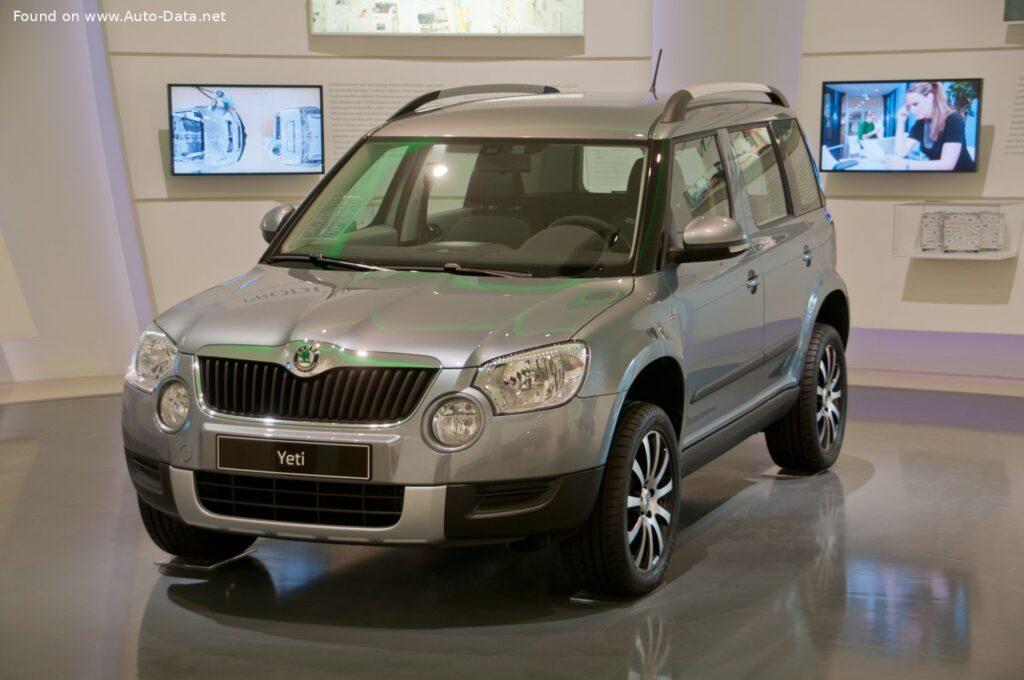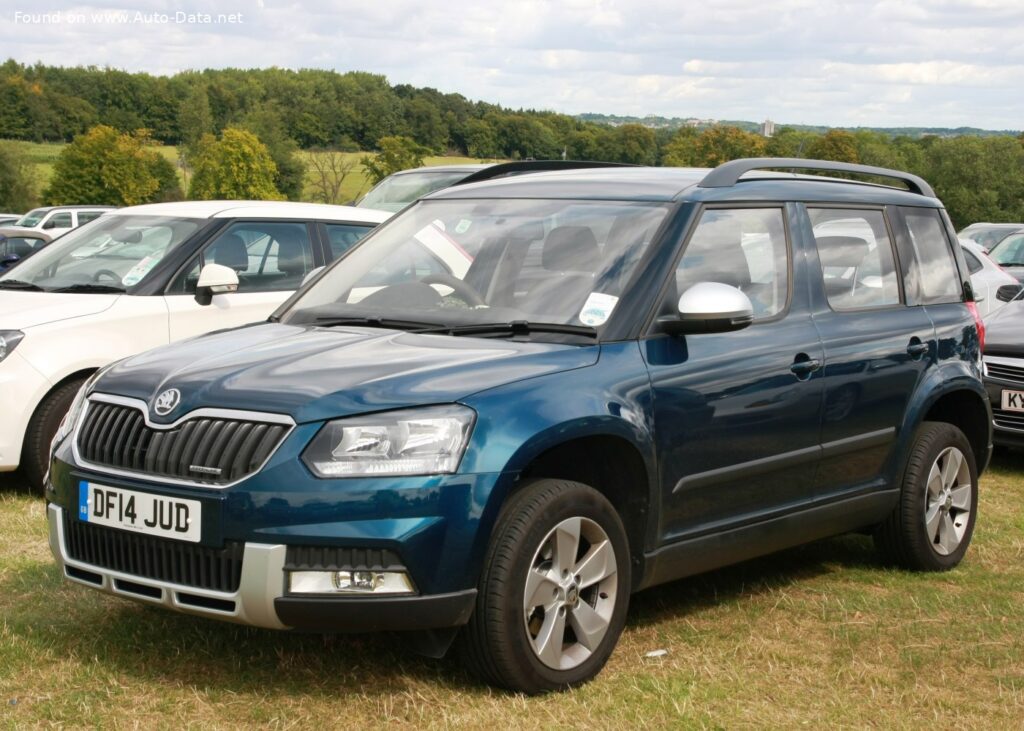
The Skoda Yeti, particularly the facelifted version introduced in 2013, represents a significant entry in the compact SUV segment, though its market presence was primarily focused on Europe. While not officially sold in the United States, the Yeti gained recognition for its practical design, spacious interior, and robust build quality. Positioned as a versatile vehicle for families and individuals seeking a blend of functionality and affordability, the Yeti offered a compelling alternative to more mainstream competitors. The 1.4 TSI (122 Hp) DSG model, equipped with a turbocharged gasoline engine and a dual-clutch transmission, was a popular configuration, balancing performance with fuel efficiency.
Skoda Yeti (Facelift 2013) 1.4 TSI DSG: An Overview
The Yeti facelift, launched in 2013, brought with it revised styling, enhanced equipment levels, and refinements to the powertrain options. The 1.4 TSI engine, paired with the DSG (Direct-Shift Gearbox) automatic transmission, was a key offering. This combination aimed to deliver a smooth and responsive driving experience, suitable for both urban commutes and longer journeys. The Yeti’s design philosophy centered around practicality and maximizing interior space, making it a popular choice for those prioritizing functionality over outright luxury. It’s important to note that Skoda, as part of the Volkswagen Group, primarily targets the European market, and the Yeti was never offered for sale in North America.
Engine & Performance
The heart of the 2013 Skoda Yeti 1.4 TSI DSG is a 1.4-liter, inline-four cylinder gasoline engine. This engine, designated EA111 / CAXA, produces 122 horsepower at 5000 rpm and 200 Nm (147.51 lb.-ft.) of torque between 1500 and 4000 rpm. The turbocharger and intercooler contribute to improved power delivery and efficiency. The engine’s direct injection system further enhances performance and reduces emissions. Paired with the 7-speed DSG automatic transmission, the Yeti achieves a 0-100 km/h (0-62 mph) acceleration time of 10.6 seconds, and a 0-60 mph time of approximately 10.1 seconds. The maximum speed is rated at 182 km/h (113.09 mph). The engine’s power-to-weight ratio is 11.6 kg/Hp, and the torque-to-weight ratio is 7.1 kg/Nm, indicating a reasonably efficient powertrain.
Design & Features
The Skoda Yeti is a five-door SUV with a distinctive, boxy design that maximizes interior space. The 2013 facelift brought subtle styling updates, including revised headlights, a redesigned front grille, and updated interior trim. The Yeti offers seating for five passengers and provides a generous 415 liters (14.66 cu. ft.) of trunk space with the rear seats up, expanding to 1665 liters (58.8 cu. ft.) when folded down. Key features of the Yeti include its robust build quality, comfortable ride, and practical interior layout. Safety features, common for vehicles of this era, include ABS (Anti-lock Braking System). The Yeti’s relatively high ground clearance (180 mm / 7.09 in.) and approach/departure angles (19.0°/26.7°) provide a degree of off-road capability, although it is primarily designed for on-road use. The vehicle’s dimensions are 4222 mm (166.22 in.) in length, 1793 mm (70.59 in.) in width, and 1691 mm (66.57 in.) in height.
Technical Specifications
| Brand | Skoda |
| Model | Yeti |
| Generation | Yeti (facelift 2013) |
| Type (Engine) | 1.4 TSI (122 Hp) DSG |
| Start of production | 2013 |
| End of production | 2015 |
| Powertrain Architecture | Internal Combustion engine |
| Body type | SUV |
| Seats | 5 |
| Doors | 5 |
| Fuel consumption (urban) | 8.3 l/100 km (28.3 US mpg, 34 UK mpg, 12 km/l) |
| Fuel consumption (extra urban) | 5.7 l/100 km (41.3 US mpg, 49.6 UK mpg, 17.5 km/l) |
| Fuel consumption (combined) | 6.6 l/100 km (35.6 US mpg, 42.8 UK mpg, 15.2 km/l) |
| CO2 emissions | 154 g/km |
| Fuel Type | Petrol (Gasoline) |
| Acceleration 0 – 100 km/h | 10.6 sec |
| Acceleration 0 – 62 mph | 10.6 sec |
| Acceleration 0 – 60 mph | 10.1 sec |
| Maximum speed | 182 km/h (113.09 mph) |
| Emission standard | Euro 5 J |
| Weight-to-power ratio | 11.6 kg/Hp |
| Weight-to-torque ratio | 7.1 kg/Nm |
| Power | 122 Hp @ 5000 rpm |
| Torque | 200 Nm @ 1500-4000 rpm (147.51 lb.-ft. @ 1500-4000 rpm) |
| Engine layout | Front, Transverse |
| Engine Model/Code | EA111 / CAXA |
| Engine displacement | 1390 cm3 (84.82 cu. in.) |
| Number of cylinders | 4 |
| Engine configuration | Inline |
| Cylinder Bore | 76.5 mm (3.01 in.) |
| Piston Stroke | 75.6 mm (2.98 in.) |
| Compression ratio | 10:1 |
| Number of valves per cylinder | 4 |
| Fuel injection system | Direct injection |
| Engine aspiration | Turbocharger, Intercooler |
| Valvetrain | DOHC |
| Engine oil capacity | 3.6 l (3.8 US qt | 3.17 UK qt) |
| Coolant | 7.7 l (8.14 US qt | 6.78 UK qt) |
| Kerb Weight | 1410 kg (3108.52 lbs.) |
| Max. weight | 1955 kg (4310.04 lbs.) |
| Max load | 545 kg (1201.52 lbs.) |
| Trunk (boot) space – minimum | 415 l (14.66 cu. ft.) |
| Trunk (boot) space – maximum | 1665 l (58.8 cu. ft.) |
| Fuel tank capacity | 55 l (14.53 US gal | 12.1 UK gal) |
| Length | 4222 mm (166.22 in.) |
| Width | 1793 mm (70.59 in.) |
| Width including mirrors | 1956 mm (77.01 in.) |
| Height | 1691 mm (66.57 in.) |
| Wheelbase | 2578 mm (101.5 in.) |
| Front track | 1541 mm (60.67 in.) |
| Rear (Back) track | 1537 mm (60.51 in.) |
| Front overhang | 877 mm (34.53 in.) |
| Rear overhang | 767 mm (30.2 in.) |
| Ride height (ground clearance) | 180 mm (7.09 in.) |
| Minimum turning circle | 10.32 m (33.86 ft.) |
| Drivetrain Architecture | Front wheel drive |
| Number of gears and type of gearbox | 7 gears, automatic transmission DSG |
| Front suspension | Independent, type McPherson with coil spring and anti-roll bar |
| Rear suspension | Independent multi-link spring suspension with stabilizer |
| Front brakes | Ventilated discs |
| Rear brakes | Disc |
| Assisting systems | ABS (Anti-lock braking system) |
| Steering type | Steering rack and pinion |
| Tires size | 215/60 R16; 225/50 R17 |
| Wheel rims size | 7J x 16; 7J x 17 |