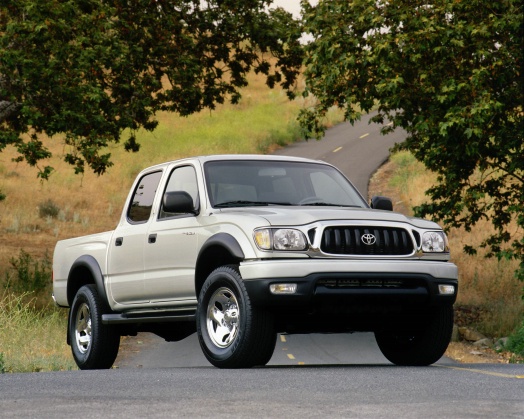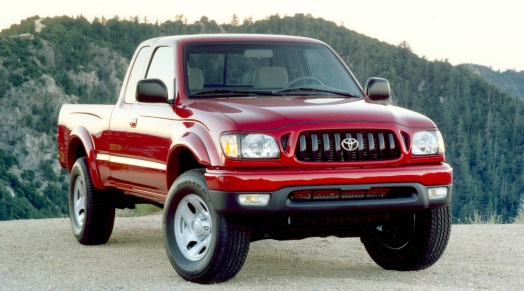
The Toyota Tacoma I xTracab (facelift 2000) 2.7 is a compact pickup truck produced by Toyota from 2000 to 2004. This iteration represents a mid-cycle refresh of the first-generation Tacoma, which debuted in 1995. The Tacoma quickly gained popularity in the North American market, establishing Toyota as a significant player in the competitive mid-size truck segment. The xTracab configuration offered a unique blend of practicality and passenger space, featuring a small rear seat accessible via clamshell doors, differentiating it from standard extended cab designs. The 2.7-liter engine option provided a balance of affordability and capability, making it a popular choice for both work and recreational use.
Toyota Tacoma I xTracab (facelift 2000): A Detailed Overview
The facelifted 2000 Tacoma brought subtle but noticeable improvements to the original design, including revised front fascia styling and interior refinements. While not a complete redesign, these changes helped to keep the Tacoma competitive against newer offerings from Ford, Nissan, and Chevrolet. The truck was primarily marketed towards buyers seeking a versatile vehicle capable of handling daily commuting, light-duty hauling, and off-road adventures. Its reputation for reliability and durability further cemented its position as a leading choice in its class.
Engine & Performance
The 2000 Toyota Tacoma I xTracab 2.7 was powered by the 3RZ-FE 2.7-liter inline-four cylinder gasoline engine. This naturally aspirated engine produced 182 horsepower at 4800 rpm and 240 Newton-meters (177.01 lb.-ft.) of torque at 4000 rpm. The engine featured a double overhead camshaft (DOHC) valvetrain and multi-port fuel injection, contributing to its relatively smooth operation and decent fuel economy for a truck of its size. Power was delivered to the rear wheels via a four-speed automatic transmission. While not a performance powerhouse, the 2.7-liter engine provided adequate power for most everyday driving situations and light hauling tasks. The engine’s longitudinal front-engine layout contributed to a balanced weight distribution. The power-to-weight ratio of 67.6 horsepower per liter was typical for trucks of this era.
Design & Features
The Toyota Tacoma I xTracab (facelift 2000) maintained the rugged and utilitarian aesthetic of the original Tacoma. The body-on-frame construction provided a robust platform for both on-road and off-road driving. The xTracab configuration featured two doors and seating for five passengers, although the rear seats were best suited for shorter trips due to their limited legroom. The clamshell rear doors, hinged at the rear and also swinging outwards, offered easier access to the rear seats compared to traditional extended cab designs.
Standard features included ventilated front disc brakes and drum brakes in the rear. The truck rode on either 15-inch or 16-inch wheels, depending on the trim level, with tire sizes of 205/75 R15 or 235/55 R16 respectively. Ground clearance was a respectable 215 mm (8.46 inches), enhancing its off-road capability. Safety features for the time were relatively basic, consisting primarily of seatbelts and a robust chassis design. The Tacoma’s design prioritized functionality and durability over luxurious appointments, appealing to buyers who valued practicality and reliability.
Technical Specifications
| General Information | |
| Brand | Toyota |
| Model | Tacoma |
| Generation | Tacoma I xTracab (facelift 2000) |
| Type (Engine) | 2.7 (182 Hp) Automatic |
| Start of production | 2000 |
| End of production | 2004 |
| Powertrain Architecture | Internal Combustion engine |
| Body type | Pick-up |
| Seats | 5 |
| Doors | 2 |
| Performance Specs | |
| Fuel Type | Petrol (Gasoline) |
| Power | 182 Hp @ 4800 rpm |
| Power per litre | 67.6 Hp/l |
| Torque | 240 Nm @ 4000 rpm / 177.01 lb.-ft. @ 4000 rpm |
| Engine Specs | |
| Engine layout | Front, Longitudinal |
| Engine Model/Code | 3RZ-FE |
| Engine displacement | 2694 cm3 / 164.4 cu. in. |
| Number of cylinders | 4 |
| Engine configuration | Inline |
| Cylinder Bore | 95 mm / 3.74 in. |
| Piston Stroke | 95 mm / 3.74 in. |
| Compression ratio | 9.5:1 |
| Number of valves per cylinder | 4 |
| Fuel injection system | Multi-port manifold injection |
| Engine aspiration | Naturally aspirated engine |
| Valvetrain | DOHC |
| Engine oil capacity | 5.4 l / 5.71 US qt | 4.75 UK qt |
| Coolant | 8.2 l / 8.66 US qt | 7.21 UK qt |
| Space, Volume and Weights | |
| Max. weight | 1928 kg / 4250.51 lbs |
| Fuel tank capacity | 68 l / 17.96 US gal | 14.96 UK gal |
| Dimensions | |
| Length | 5138 mm / 202.28 in. |
| Width | 1689 mm / 66.5 in. |
| Height | 1715 mm / 67.52 in. |
| Wheelbase | 3096 mm / 121.89 in. |
| Front track | 1461 mm / 57.52 in. |
| Rear (Back) track | 1455 mm / 57.28 in. |
| Ride height (ground clearance) | 215 mm / 8.46 in. |
| Drivetrain, Brakes and Suspension Specs | |
| Drivetrain Architecture | The Internal combustion engine (ICE) drives the rear wheels of the vehicle. |
| Drive wheel | Rear wheel drive |
| Number of gears and type of gearbox | 4 gears, automatic transmission |
| Front brakes | Ventilated discs |
| Rear brakes | Drum |
| Tires size | 205/75 R15; 235/55 R16 |
| Wheel rims size | 15; 16 |
The Toyota Tacoma I xTracab (facelift 2000) 2.7 remains a popular choice among truck enthusiasts and collectors due to its reputation for reliability, durability, and off-road capability. Its relatively simple design and readily available parts make it a relatively easy vehicle to maintain and repair, contributing to its enduring appeal. The xTracab configuration, while somewhat unconventional, offered a unique blend of practicality and passenger space that continues to resonate with buyers seeking a versatile and capable pickup truck.