
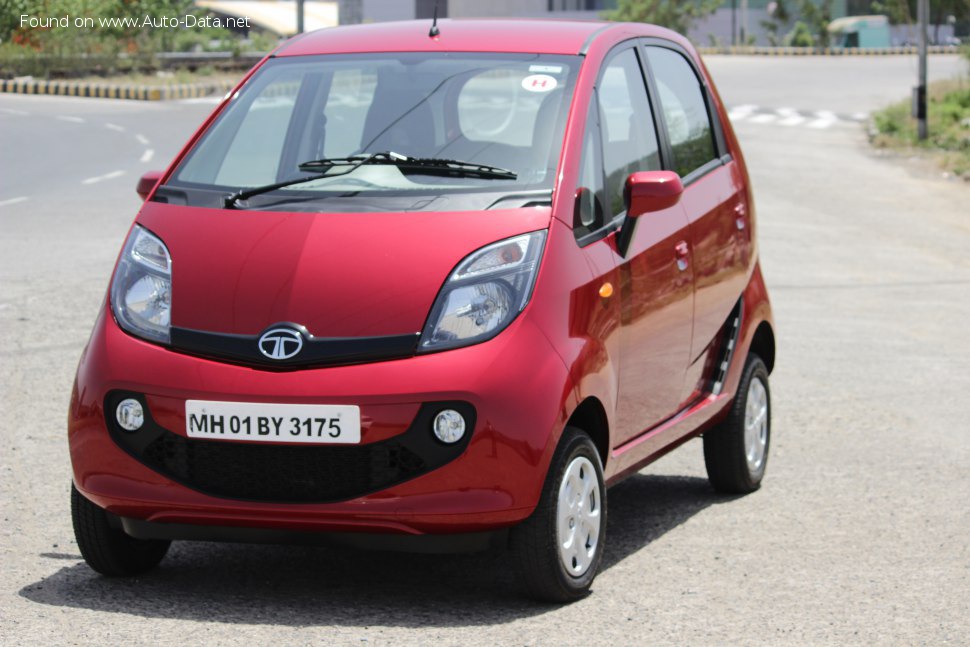
The Tata GenX Nano, a facelift of the original Tata Nano, represents a significant attempt to revitalize the world’s cheapest car. Introduced in 2015 and produced until 2018, the GenX Nano aimed to address criticisms of the initial model while retaining its core affordability. Primarily marketed in India, the GenX Nano offered a compact, fuel-efficient, and accessible transportation solution for a rapidly growing middle class. The “GenX” designation signified a generational update, incorporating design revisions, improved features, and a more refined driving experience. This article details the technical specifications and characteristics of the 2015-2018 Tata GenX Nano 0.6i with the Easy Shift automated manual transmission.
The Tata GenX Nano: A Detailed Overview
The Tata Nano project was ambitious from its inception – to create a safe, reliable, and affordable car for Indian families transitioning from two-wheeled transportation. While the original Nano faced challenges in terms of perceived quality and safety, the GenX Nano sought to overcome these hurdles. The facelift included cosmetic enhancements, interior upgrades, and, crucially, the introduction of an automated manual transmission (AMT) dubbed “Easy Shift.” This AMT aimed to provide the convenience of an automatic gearbox without the associated cost and complexity. The GenX Nano remained a rear-wheel-drive vehicle, a relatively uncommon configuration for modern hatchbacks, and continued to be powered by a small-displacement gasoline engine.
Engine & Performance
The GenX Nano 0.6i is powered by a naturally aspirated, 624 cc (38.08 cubic inches) inline two-cylinder gasoline engine. This engine produces a maximum power output of 38 horsepower at 5500 rpm and 51 Nm (37.62 lb-ft) of torque at 4000 rpm. While these figures are modest, they are sufficient for city driving and navigating congested urban environments. The engine features a multi-port manifold fuel injection system. The power-to-weight ratio is 19.1 kg/Hp, or 52.4 Hp/tonne, and the torque-to-weight ratio is 14.2 kg/Nm, or 70.3 Nm/tonne. The engine’s relatively small displacement results in a power-per-liter figure of 60.9 Hp/l. The engine requires 2.2 liters (2.32 US quarts, 1.94 UK quarts) of engine oil and 2.4 liters (2.54 US quarts, 2.11 UK quarts) of coolant.
Design & Features
The Tata GenX Nano is a five-door hatchback designed to maximize interior space within a minimal footprint. Its compact dimensions – a length of 3164 mm (124.57 inches), a width of 1750 mm (68.9 inches), and a height of 1652 mm (65.04 inches) – make it exceptionally maneuverable in tight spaces. The wheelbase measures 2230 mm (87.8 inches), and the ride height (ground clearance) is 100 mm (3.94 inches). The vehicle’s kerb weight ranges from 725 to 765 kg (1598.35 to 1686.54 lbs). The interior offers seating for four passengers, although space is limited, particularly in the rear. The trunk (boot) space is a modest 94 liters (3.32 cubic feet). A key feature of the GenX Nano is the “Easy Shift” 5-speed automated manual transmission, which allows for clutchless gear changes. The steering is electrically assisted, providing lighter steering effort. The vehicle utilizes drum brakes on all four wheels and a steering rack and pinion system. Tire sizes are either 135/70 R12 or 155/65 R12, mounted on 12-inch wheel rims.
Technical Specifications
| Specification | Value |
| Brand | Tata |
| Model | Nano |
| Generation | GenX Nano (facelift 2015) |
| Type (Engine) | 0.6i (38 Hp) Easy Shift |
| Start of production | 2015 |
| End of production | 2018 |
| Powertrain Architecture | Internal Combustion engine |
| Body type | Hatchback |
| Seats | 4 |
| Doors | 5 |
| Fuel Type | Petrol (Gasoline) |
| Maximum speed | 105 km/h (65.24 mph) |
| Weight-to-power ratio | 19.1 kg/Hp, 52.4 Hp/tonne |
| Weight-to-torque ratio | 14.2 kg/Nm, 70.3 Nm/tonne |
| Power | 38 Hp @ 5500 rpm |
| Power per litre | 60.9 Hp/l |
| Torque | 51 Nm @ 4000 rpm (37.62 lb.-ft. @ 4000 rpm) |
| Engine displacement | 624 cm3 (38.08 cu. in.) |
| Number of cylinders | 2 |
| Engine configuration | Inline |
| Number of valves per cylinder | 2 |
| Fuel injection system | Multi-port manifold injection |
| Engine aspiration | Naturally aspirated engine |
| Engine oil capacity | 2.2 l (2.32 US qt | 1.94 UK qt) |
| Coolant | 2.4 l (2.54 US qt | 2.11 UK qt) |
| Kerb Weight | 725-765 kg (1598.35 – 1686.54 lbs) |
| Trunk (boot) space – minimum | 94 l (3.32 cu. ft.) |
| Fuel tank capacity | 24 l (6.34 US gal | 5.28 UK gal) |
| Length | 3164 mm (124.57 in) |
| Width | 1750 mm (68.9 in) |
| Height | 1652 mm (65.04 in) |
| Wheelbase | 2230 mm (87.8 in) |
| Ride height (ground clearance) | 100 mm (3.94 in) |
| Minimum turning circle (turning diameter) | 8.0 m (26.25 ft) |
| Drivetrain Architecture | Rear wheel drive, Internal Combustion engine |
| Drive wheel | Rear wheel drive |
| Number of gears and type of gearbox | 5 gears, automatic transmission Easy Shift |
| Front suspension | Independent type McPherson |
| Rear suspension | Independent coil spring |
| Front brakes | Drum |
| Rear brakes | Drum |
| Steering type | Steering rack and pinion |
| Power steering | Electric Steering |
| Tires size | 135/70 R12; 155/65 R12 |
| Wheel rims size | 12 |
The Tata GenX Nano, despite its limited production run, represents an interesting case study in automotive engineering and market adaptation. While it didn’t achieve the widespread success initially envisioned, the GenX Nano demonstrated Tata’s commitment to providing affordable mobility solutions and incorporating technological advancements, such as the Easy Shift AMT, into a budget-friendly package. Its legacy lies in its innovative approach to automotive design and its attempt to redefine the concept of personal transportation in a developing market.
