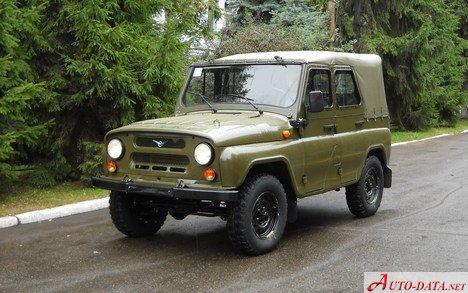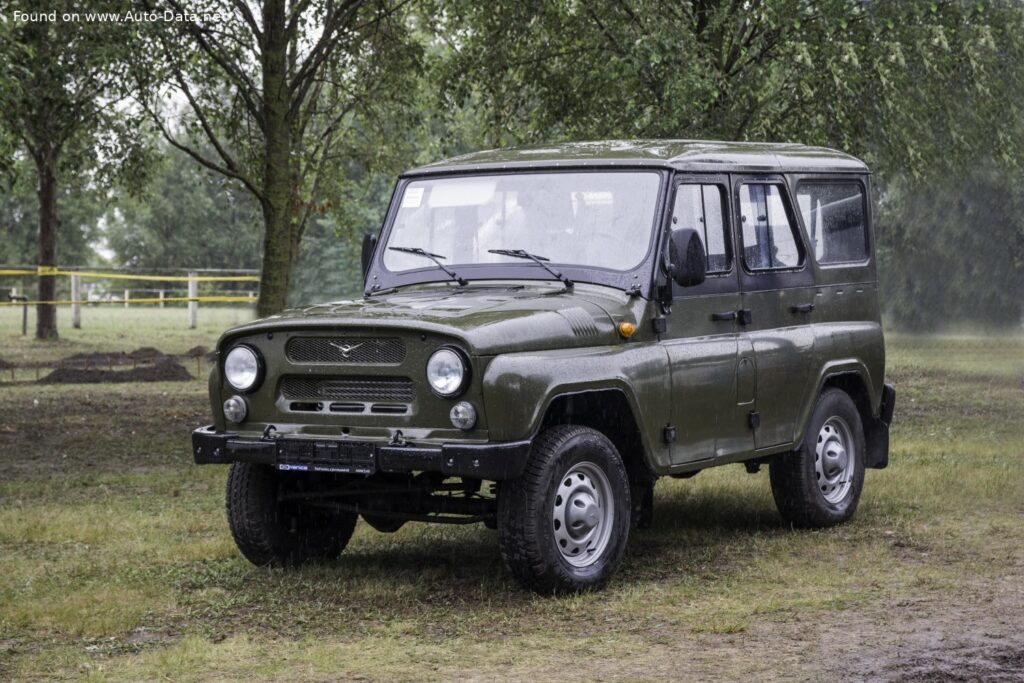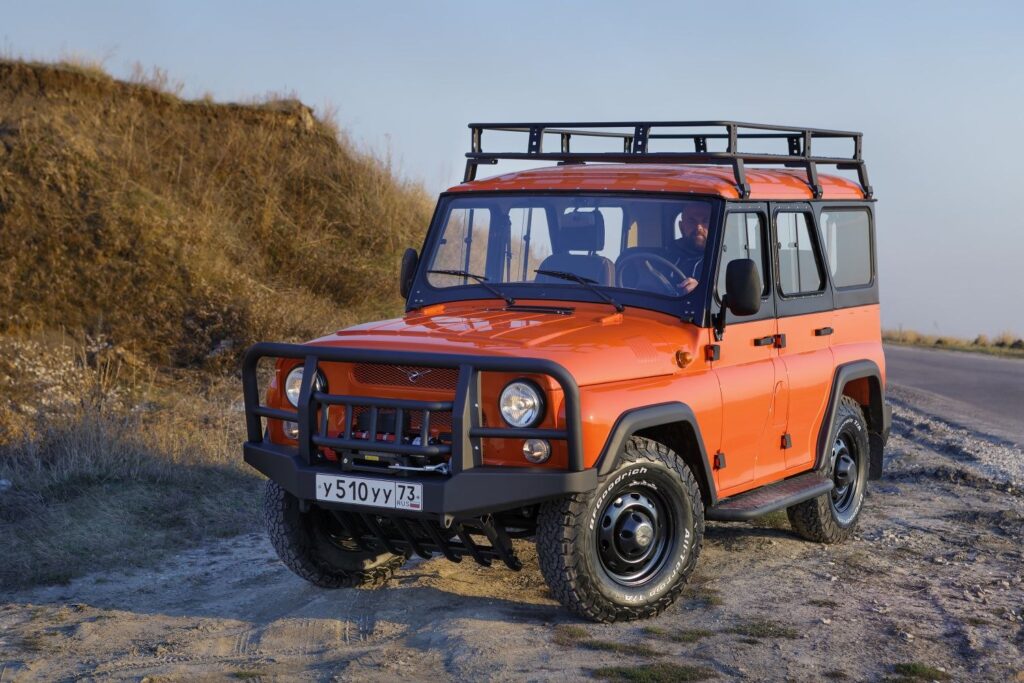
The UAZ Hunter (model 315195) is a four-wheel drive off-road vehicle produced by the Russian manufacturer UAZ. Introduced in 2019, the Hunter represents a modernization of the long-running UAZ-469 lineage, a vehicle originally designed for military use. While not officially sold in the United States, the UAZ Hunter is a significant vehicle in Russia and other Eastern European and Central Asian markets, known for its ruggedness, simplicity, and affordability. It occupies a niche similar to the Suzuki Jimny or older generations of Land Rover Defenders – a utilitarian 4×4 focused on capability rather than luxury.
UAZ Hunter: A Legacy of Russian Off-Road Engineering
The UAZ Hunter builds upon a history stretching back to the 1950s. The original UAZ-469, developed as a Soviet military vehicle, was renowned for its ability to traverse challenging terrain. Successive iterations maintained this focus, and the Hunter continues this tradition. The 315195 designation marks a significant update, incorporating modern components while retaining the core characteristics that have made UAZ vehicles popular for decades. The Expedition 2.7 variant, equipped with a 2.7-liter gasoline engine producing 135 horsepower, is a common configuration.
Engine & Performance
The UAZ Hunter Expedition 2.7 is powered by the ZMZ-40906, a 2.7-liter (164.34 cubic inches) inline four-cylinder gasoline engine. This naturally aspirated engine delivers 135 horsepower at 4600 rpm and 217 Nm (160.05 lb-ft) of torque at 3900 rpm. While not a powerhouse, the engine provides sufficient power for off-road driving and general transportation. The engine’s power-to-weight ratio is 13.6 kg/Hp (73.4 Hp/tonne), and the torque-to-weight ratio is 8.5 kg/Nm (117.9 Nm/tonne). Power is delivered to all four wheels via a permanent rear-wheel drive system with a mechanically engaged front axle for four-wheel drive operation. A five-speed manual transmission is standard. The Hunter achieves a maximum speed of 130 km/h (80.78 mph). Fuel economy is rated at 13.2 l/100 km (17.8 US mpg or 21.4 UK mpg) in extra-urban driving conditions.
Design & Features
The UAZ Hunter retains the classic, boxy silhouette of its predecessors. It’s a five-door, five-seat vehicle with a body-on-frame construction, emphasizing durability and off-road capability. The design prioritizes functionality over aesthetics, with a focus on maximizing ground clearance and approach/departure angles. The vehicle boasts a ground clearance of 241 mm (9.49 inches), an approach angle of 50 degrees, and a departure angle of 39 degrees. These figures contribute to its impressive off-road prowess. Inside, the Hunter offers a spartan but practical interior. Features are basic, reflecting the vehicle’s utilitarian purpose. Modern versions include ABS (Anti-lock braking system) as a standard safety feature. The rear cargo area is highly versatile, offering a minimum of 470 liters (16.6 cubic feet) of space that expands to 1830 liters (64.63 cubic feet) with the rear seats folded down. The fuel tank capacity is 70 liters (18.49 US gallons).
Technical Specifications
| Brand | UAZ |
| Model | Hunter |
| Generation | Hunter (315195) |
| Type | Expedition 2.7 (135 Hp) 4×4 |
| Start of production | 2019 |
| Powertrain Architecture | Internal Combustion engine |
| Body type | Off-road vehicle |
| Seats | 5 |
| Doors | 5 |
| Fuel consumption (extra urban) | 13.2 l/100 km (17.8 US mpg, 21.4 UK mpg) |
| Fuel Type | Petrol (Gasoline) |
| Maximum speed | 130 km/h (80.78 mph) |
| Emission standard | Euro 5 |
| Weight-to-power ratio | 13.6 kg/Hp |
| Weight-to-torque ratio | 8.5 kg/Nm |
| Power | 135 Hp @ 4600 rpm |
| Power per litre | 50.1 Hp/l |
| Torque | 217 Nm @ 3900 rpm (160.05 lb.-ft. @ 3900 rpm) |
| Engine layout | Front, Longitudinal |
| Engine Model/Code | ZMZ-40906 |
| Engine displacement | 2693 cm3 (164.34 cu. in.) |
| Number of cylinders | 4 |
| Engine configuration | Inline |
| Cylinder Bore | 95.5 mm (3.76 in.) |
| Piston Stroke | 94 mm (3.7 in.) |
| Compression ratio | 9.1:1 |
| Number of valves per cylinder | 4 |
| Fuel injection system | Multi-port manifold injection |
| Engine aspiration | Naturally aspirated engine |
| Valvetrain | DOHC |
| Engine oil capacity | 7 l (7.4 US qt | 6.16 UK qt) |
| Coolant capacity | 12.5 l (13.21 US qt | 11 UK qt) |
| Kerb Weight | 1840 kg (4056.51 lbs.) |
| Max. weight | 2495 kg (5500.53 lbs.) |
| Max load | 655 kg (1444.03 lbs.) |
| Trunk (boot) space – minimum | 470 l (16.6 cu. ft.) |
| Trunk (boot) space – maximum | 1830 l (64.63 cu. ft.) |
| Fuel tank capacity | 70 l (18.49 US gal | 15.4 UK gal) |
| Length | 4260 mm (167.72 in.) |
| Width | 1775 mm (69.88 in.) |
| Height | 2165 mm (85.24 in.) |
| Wheelbase | 2380 mm (93.7 in.) |
| Front track | 1465 mm (57.68 in.) |
| Rear track | 1465 mm (57.68 in.) |
| Ride height (ground clearance) | 241 mm (9.49 in.) |
| Minimum turning circle | 13 m (42.65 ft.) |
| Drivetrain Architecture | All wheel drive (4×4). ICE drives rear wheels, front wheels engaged via clutch. |
| Number of gears | 5 |
| Gearbox type | Manual transmission |
The UAZ Hunter, while lacking the refinement of more modern SUVs, remains a popular choice for those seeking a robust, capable, and affordable off-road vehicle. Its enduring appeal lies in its simplicity, durability, and its ability to tackle challenging terrain – a testament to its heritage as a vehicle born from military necessity.