
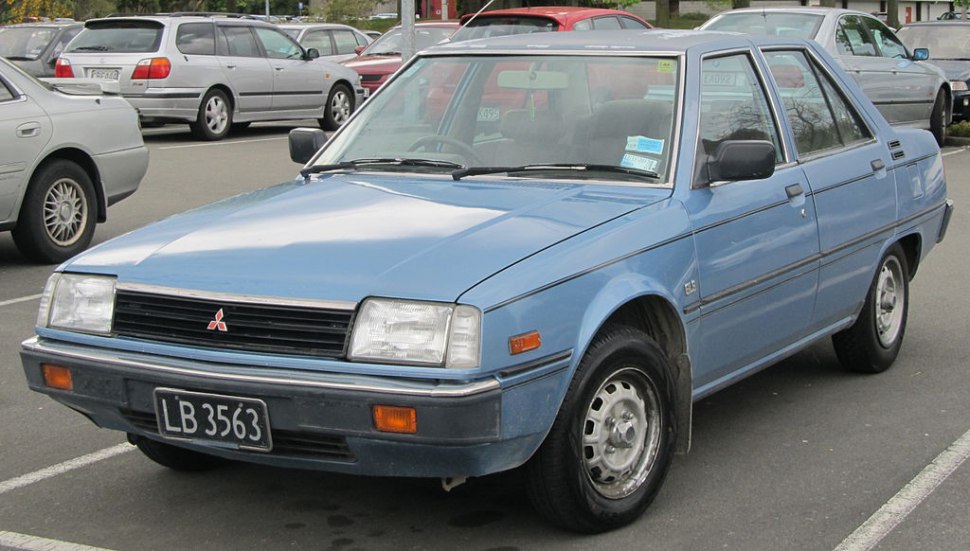
The Mitsubishi Tredia, specifically the A21 series produced between 1984 and 1986, represents a relatively obscure but interesting chapter in Mitsubishi’s automotive history. Positioned as a compact sedan, the Tredia aimed to provide affordable transportation with a focus on practicality and, in the case of the 1.8 Turbo model, a surprising degree of performance for its time. While not widely known in the United States, the Tredia was primarily marketed in Japan and Europe, serving as a competitor to vehicles like the Toyota Corolla, Nissan Sunny, and Ford Escort. The A21 Tredia was a front-wheel-drive vehicle, a configuration becoming increasingly common during the 1980s, and offered a range of engine options, with the 1.8-liter turbocharged variant being the most potent.
Mitsubishi Tredia (A21_) 1.8 Turbo: An Overview
The Tredia’s development occurred during a period of significant change in the automotive industry. Fuel efficiency was becoming a major concern following the oil crises of the 1970s, and manufacturers were increasingly adopting front-wheel-drive layouts to improve space utilization and fuel economy. Mitsubishi, like many other Japanese automakers, was expanding its global presence, and the Tredia was intended to be a key model in this expansion. The A21 generation Tredia was a relatively short-lived model, superseded by a redesigned version in 1989, but it established a foothold for Mitsubishi in the competitive compact sedan segment. The 1.8 Turbo model, while not a high-volume seller, offered a performance edge that appealed to drivers seeking something more than basic transportation.
Engine & Performance
The heart of the Tredia 1.8 Turbo was its 1.8-liter, inline-four cylinder engine equipped with a turbocharger and intercooler. This engine produced 136 horsepower, a substantial figure for a compact sedan of the mid-1980s. The turbocharger significantly boosted the engine’s power output, providing increased acceleration and responsiveness. While precise torque figures are often difficult to ascertain for this model, it’s estimated to have produced around 140 lb-ft of torque. This power was delivered to the front wheels through either a five-speed manual transmission or a four-speed automatic transmission. The combination of turbocharging and front-wheel drive resulted in a vehicle that was surprisingly quick for its class. The Tredia 1.8 Turbo wasn’t designed to be a sports car, but it offered a level of performance that was uncommon in mainstream compact sedans of the era. The engine’s turbocharger required careful management to prevent turbo lag, but once spooled up, it provided a noticeable surge in power. The front-wheel-drive layout contributed to good traction, particularly in adverse weather conditions.
Design & Features
The Mitsubishi Tredia A21 featured a fairly conventional sedan body style for the mid-1980s. Its design was characterized by clean lines, a relatively boxy silhouette, and a focus on practicality. The exterior styling was understated, lacking the aggressive or flamboyant elements found on some other vehicles of the period. The interior was similarly functional, with a focus on providing comfortable seating and easy-to-use controls. The Tredia offered a reasonable amount of space for passengers and cargo, making it a suitable family car. Features included basic instrumentation, cloth upholstery, and a standard AM/FM radio. Power steering was often included, and air conditioning was available as an option. Safety features were relatively limited by modern standards, typically consisting of seatbelts and a collapsible steering column. The Tredia’s build quality was generally considered to be good for its price point, and the vehicle was known for its reliability. The 1.8 Turbo model often featured subtle visual cues to differentiate it from the lower-spec versions, such as a rear spoiler or unique wheel covers. The overall design philosophy of the Tredia was one of sensible practicality, offering a no-frills transportation solution with a touch of added performance in the turbocharged variant.
Market Position and Legacy
The Mitsubishi Tredia, particularly the 1.8 Turbo, occupied a niche position in the European and Japanese markets. It appealed to buyers who wanted a compact sedan with a bit more performance than the standard offerings. While it didn’t achieve the same level of sales success as some of its competitors, it established Mitsubishi as a credible player in the compact car segment. The Tredia’s turbocharged engine was a notable feature, showcasing Mitsubishi’s engineering capabilities. The vehicle’s front-wheel-drive layout and relatively fuel-efficient engine also contributed to its appeal. The Tredia’s legacy is somewhat understated, but it played a role in Mitsubishi’s growth and expansion during the 1980s. It paved the way for future Mitsubishi models and helped to establish the brand’s reputation for building reliable and well-engineered vehicles. The A21 Tredia, while now a relatively rare sight, remains a testament to Mitsubishi’s commitment to innovation and affordability.
Technical Specifications
| Brand | Mitsubishi |
| Model | Tredia |
| Generation | Tredia (A21_) |
| Type (Engine) | 1.8 Turbo (136 Hp) |
| Start of production | 1984 |
| End of production | 1986 |
| Powertrain Architecture | Internal Combustion engine |
| Body type | Sedan |
| Fuel Type | Petrol (Gasoline) |
| Power | 136 Hp |
| Engine aspiration | Turbocharger |
