
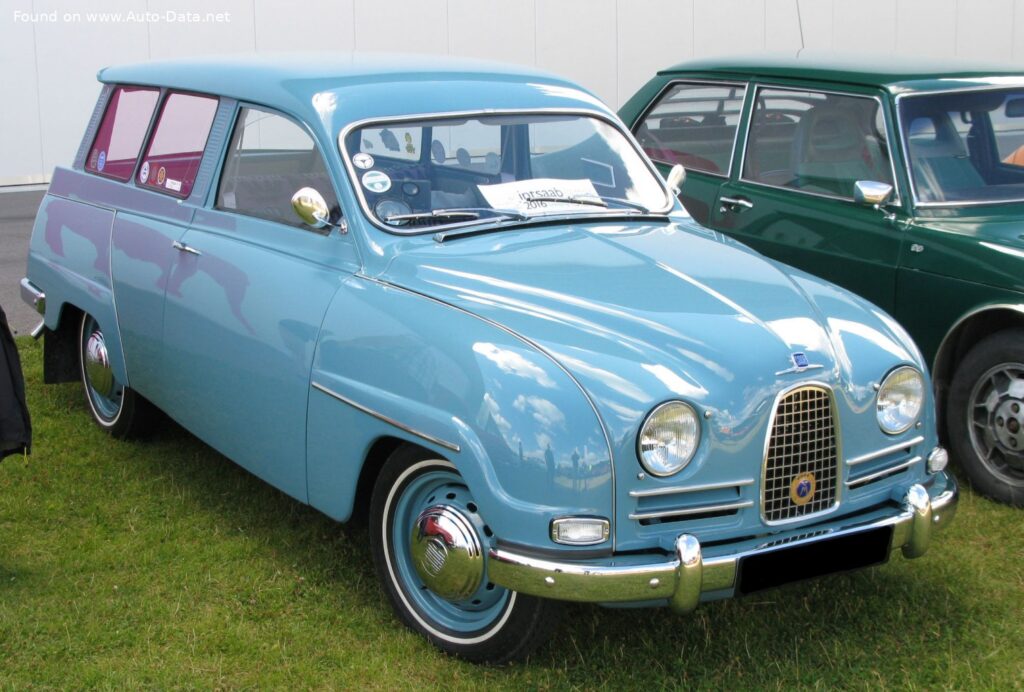
The Saab 95, specifically the 1.5 V4 variant produced between 1977 and 1978, represents a pivotal moment in the Swedish automaker’s history. As a five-door station wagon, or estate as it was commonly known in Europe, the 95 expanded Saab’s lineup beyond its established sedans and coupes. This model wasn’t initially designed for the American market, where station wagons were already popular, but it found a niche following among those seeking a practical, yet distinctly Scandinavian, vehicle. The 95 distinguished itself with its innovative design, prioritizing passenger space and safety – hallmarks of the Saab brand. The 1.5 V4 engine, while modest in power by today’s standards, provided adequate performance for its intended purpose, and the car’s robust construction ensured longevity. The Saab 95, in its various iterations, became a symbol of Swedish automotive engineering and a precursor to the modern crossover SUV.
The Saab 95: A Scandinavian Estate Car
The Saab 95 was introduced in 1969 as a direct response to market demand for a more practical Saab. Prior to the 95, Saab’s offerings were largely focused on sporty, compact vehicles. The 95 aimed to broaden the brand’s appeal by offering a spacious and versatile wagon body style. It was based on the Saab 96, sharing its basic platform and front-wheel-drive layout, but with a significantly extended rear section to accommodate cargo and, uniquely, up to seven passengers. The 95’s design was unconventional for the time, featuring a wrap-around rear window and a distinctive silhouette that set it apart from more traditional station wagons. The model underwent several revisions during its production run, including engine upgrades and cosmetic changes. The 1.5 V4 version, produced from 1977 to 1978, represented one of the later iterations, utilizing a Ford-sourced V4 engine.
Engine & Performance
The 1977-1978 Saab 95 1.5 V4 was powered by a 1.5-liter, naturally aspirated Ford V4 engine. This engine, while not a Saab design, was chosen for its reliability and compact size, fitting well within the 95’s front-wheel-drive configuration. The engine produced 68 horsepower, which, while modest, was sufficient for comfortable cruising and everyday driving. Torque figures were not prominently advertised, but were adequate for the vehicle’s weight and intended use. The engine was paired with a four-speed manual transmission, providing the driver with direct control over gear selection. Performance was not the primary focus of the 95; instead, the emphasis was on practicality and fuel efficiency. The 95’s front-wheel-drive layout contributed to good traction in adverse weather conditions, a significant advantage in Scandinavian climates. The engine’s relatively simple design and robust construction ensured a reasonable level of reliability, although maintenance was essential to keep the V4 running smoothly. The 1.5L engine offered a balance between acceptable performance and reasonable fuel consumption for the era.
Design & Features
The Saab 95’s most defining feature was its body style – a five-door station wagon with a unique, sloping rear design. The wrap-around rear window, a signature Saab element, provided excellent visibility. The 95 was notable for its ability to accommodate up to seven passengers, although the rear-most seats were best suited for children or short journeys. The interior was functional and focused on practicality, with durable materials and a straightforward layout. Safety was a key consideration in the 95’s design. Saab had a long-standing reputation for prioritizing safety, and the 95 incorporated features such as a reinforced passenger compartment and a collapsible steering column. While not standard equipment in the early 1970s, Saab was an early adopter of safety features. The 95’s large cargo area made it ideal for families and those needing to transport bulky items. The car’s relatively compact size made it easy to maneuver in urban environments, despite its wagon body style. The 1977-1978 models received minor cosmetic updates, including revised trim and interior appointments, but retained the core design elements that defined the 95.
Technical Specifications
| Brand | Saab |
| Model | 95 |
| Generation | 95 |
| Type (Engine) | 1.5 V4 (68 Hp) |
| Start of production | 1977 |
| End of production | 1978 |
| Powertrain Architecture | Internal Combustion engine |
| Body type | Station wagon (estate) |
| Seats | 7 |
| Doors | 3 |
| Fuel Type | Petrol (Gasoline) |
| Power | 68 Hp |
| Engine Model/Code | Ford V-4 |
| Engine aspiration | Naturally aspirated engine |
| Engine oil capacity | 3.3 l |
| Engine oil capacity (US qt) | 3.49 US qt |
| Engine oil capacity (UK qt) | 2.9 UK qt |
| Coolant capacity | 5.8 l |
| Coolant capacity (US qt) | 6.13 US qt |
| Coolant capacity (UK qt) | 5.1 UK qt |
| Fuel tank capacity | 43 l |
| Fuel tank capacity (US gal) | 11.36 US gal |
| Fuel tank capacity (UK gal) | 9.46 UK gal |
The Saab 95 1.5 V4, while not a high-performance vehicle, offered a unique combination of practicality, safety, and Scandinavian design. It represented a significant step for Saab, expanding its market reach and establishing its reputation for innovative engineering. Though production of the 95 ceased in 1978, its legacy continues to influence automotive design and engineering today, particularly in the realm of versatile, family-oriented vehicles. The car remains a popular choice among Saab enthusiasts and collectors, appreciated for its distinctive character and enduring appeal.
