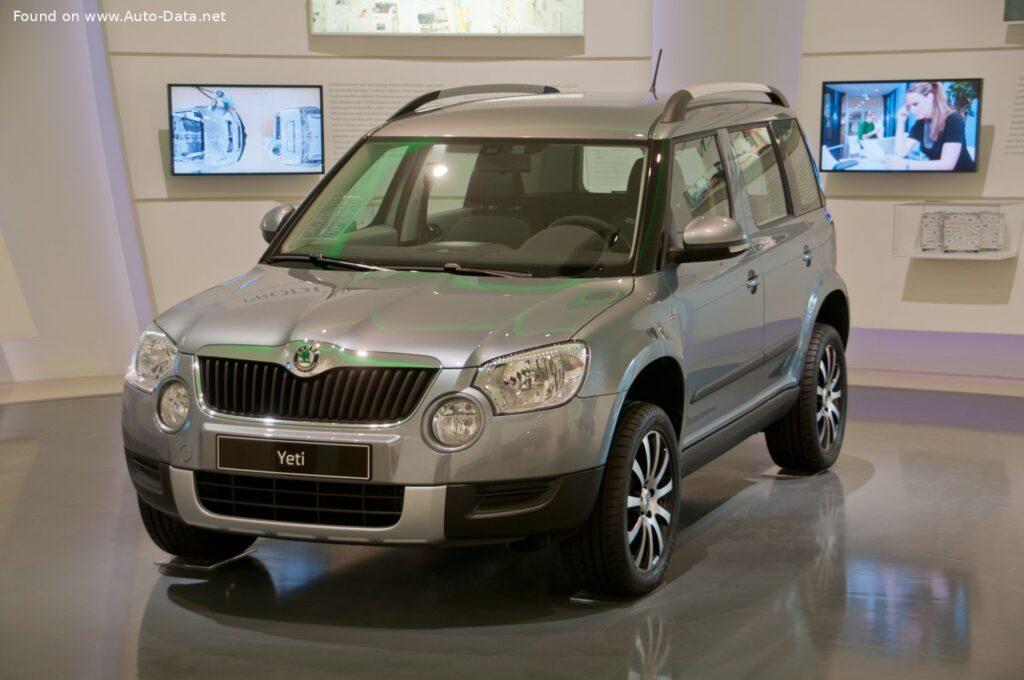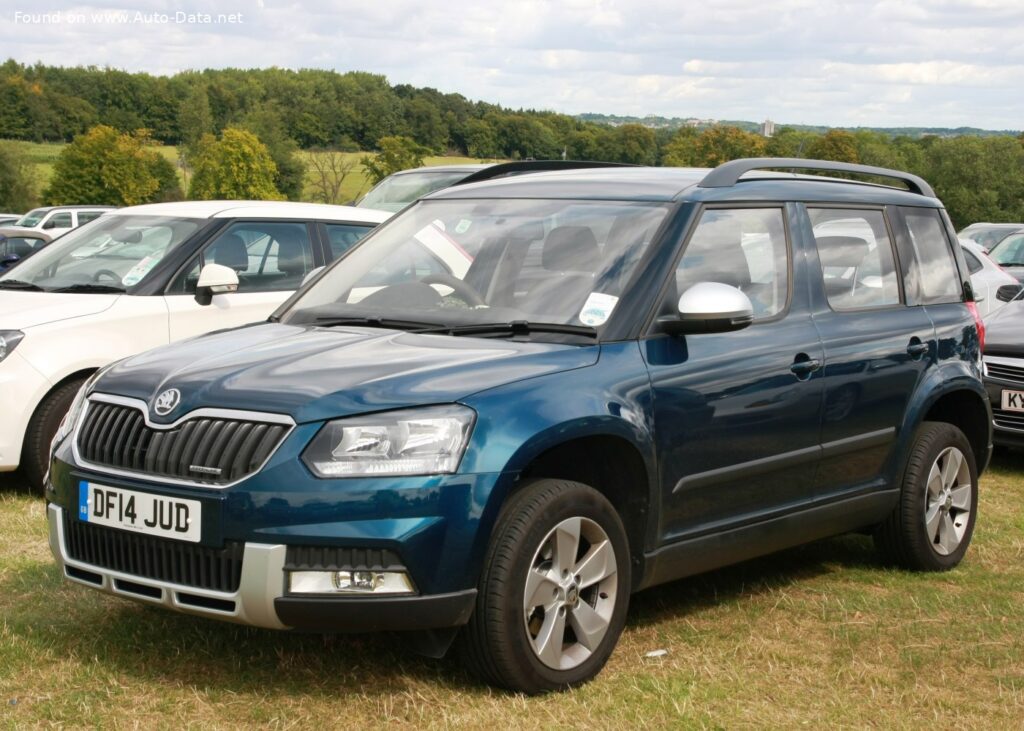
The Skoda Yeti, particularly the facelifted version introduced in 2013, represents a significant offering in the compact SUV segment. While not initially sold in the United States, the Yeti was a popular choice in Europe, known for its practicality, spaciousness, and robust build quality. Positioned as a competitor to vehicles like the Nissan Qashqai and Kia Sportage, the Yeti distinguished itself with its distinctive styling and available all-wheel-drive system. The 1.8 TSI (160 Hp) 4×4 variant, produced from 2013 to 2015, combined a potent turbocharged engine with all-wheel drive capability, making it a versatile vehicle for various driving conditions.
Skoda Yeti (Facelift 2013) 1.8 TSI 4×4: An Overview
The Yeti facelift, launched in 2013, brought with it revised styling cues, improved interior materials, and updated technology. The 1.8 TSI 4×4 model specifically catered to drivers seeking a balance between performance and all-weather capability. Skoda, a Czech automaker now part of the Volkswagen Group, designed the Yeti to be a practical and family-oriented vehicle. Its boxy shape maximized interior space, while the 4×4 system provided enhanced traction and stability. The Yeti’s appeal lay in its ability to function as a comfortable daily driver and a capable vehicle for weekend adventures.
Engine & Performance
The heart of the Yeti 1.8 TSI 4×4 is the EA888 1.8-liter turbocharged four-cylinder gasoline engine. This engine, designated CDAA, produces 160 horsepower at 4,500-6,200 rpm and 250 Nm (184.39 lb.-ft.) of torque between 1,500 and 4,500 rpm. The direct injection system and turbocharger work in concert to deliver responsive performance and reasonable fuel efficiency. The engine’s power output translates to a 0-100 km/h (0-62 mph) acceleration time of 8.4 seconds, and a 0-60 mph time of approximately 8 seconds. Maximum speed is electronically limited to 200 km/h (124.27 mph). The engine’s 9.8:1 compression ratio and DOHC valvetrain contribute to its efficiency and power delivery. The 6-speed manual transmission allows for driver engagement, while the all-wheel-drive system ensures optimal traction in various conditions. The weight-to-power ratio of 9.4 kg/Hp and weight-to-torque ratio of 6 kg/Nm further highlight the vehicle’s performance characteristics.
Design & Features
The Skoda Yeti boasts a distinctive, upright SUV design. The 2013 facelift brought subtle but noticeable changes to the front fascia, including a revised grille and headlights. The vehicle’s boxy shape isn’t merely aesthetic; it’s a functional design choice that maximizes interior space. The Yeti is a five-door SUV with seating for five passengers. A key feature is its versatile interior, with rear seats that can be folded, slid, and even removed entirely, creating a highly adaptable cargo area. Trunk space ranges from a minimum of 415 liters (14.66 cu. ft.) to a maximum of 1665 liters (58.8 cu. ft.) with the rear seats folded. Standard safety features included ABS (Anti-lock Braking System) and a robust chassis designed for stability. The Yeti’s ride height of 180 mm (7.09 in) provides adequate ground clearance for navigating varied terrain. Approach, departure, and ramp-over angles of 19.0°, 26.7°, and 19.6° respectively, further enhance its off-road capability. The steering utilizes a rack and pinion system for precise control.
Technical Specifications
| Brand | Skoda |
| Model | Yeti |
| Generation | Yeti (facelift 2013) |
| Type (Engine) | 1.8 TSI (160 Hp) 4×4 |
| Start of production | 2013 |
| End of production | 2015 |
| Powertrain Architecture | Internal Combustion engine |
| Body type | SUV |
| Seats | 5 |
| Doors | 5 |
| Fuel consumption (urban) | 9.8 l/100 km (24 US mpg, 28.8 UK mpg, 10.2 km/l) |
| Fuel consumption (extra urban) | 6.6 l/100 km (35.6 US mpg, 42.8 UK mpg, 15.2 km/l) |
| Fuel consumption (combined) | 7.8 l/100 km (30.2 US mpg, 36.2 UK mpg, 12.8 km/l) |
| CO2 emissions | 184 g/km |
| Fuel Type | Petrol (Gasoline) |
| Acceleration 0 – 100 km/h | 8.4 sec |
| Acceleration 0 – 62 mph | 8.4 sec |
| Acceleration 0 – 60 mph | 8 sec |
| Maximum speed | 200 km/h (124.27 mph) |
| Emission standard | Euro 5 J |
| Weight-to-power ratio | 9.4 kg/Hp |
| Weight-to-torque ratio | 6 kg/Nm |
| Power | 160 Hp @ 4500-6200 rpm |
| Torque | 250 Nm @ 1500-4500 rpm (184.39 lb.-ft. @ 1500-4500 rpm) |
| Engine layout | Front, Transverse |
| Engine Model/Code | EA888 / CDAA |
| Engine displacement | 1798 cm3 (109.72 cu. in.) |
| Number of cylinders | 4 |
| Engine configuration | Inline |
| Cylinder Bore | 82.5 mm (3.25 in.) |
| Piston Stroke | 84.1 mm (3.31 in.) |
| Compression ratio | 9.8:1 |
| Number of valves per cylinder | 4 |
| Fuel injection system | Direct injection |
| Engine aspiration | Turbocharger, Intercooler |
| Valvetrain | DOHC |
| Engine oil capacity | 4.6 l (4.86 US qt | 4.05 UK qt) |
| Coolant | 8.6 l (9.09 US qt | 7.57 UK qt) |
| Kerb Weight | 1505 kg (3317.96 lbs.) |
| Max. weight | 2050 kg (4519.48 lbs.) |
| Max load | 545 kg (1201.52 lbs.) |
| Trunk (boot) space – minimum | 415 l (14.66 cu. ft.) |
| Trunk (boot) space – maximum | 1665 l (58.8 cu. ft.) |
| Fuel tank capacity | 60 l (15.85 US gal | 13.2 UK gal) |
| Length | 4222 mm (166.22 in.) |
| Width | 1793 mm (70.59 in.) |
| Width including mirrors | 1956 mm (77.01 in.) |
| Height | 1691 mm (66.57 in.) |
| Wheelbase | 2578 mm (101.5 in.) |
| Front track | 1541 mm (60.67 in.) |
| Rear (Back) track | 1537 mm (60.51 in.) |
| Front overhang | 877 mm (34.53 in.) |
| Rear overhang | 767 mm (30.2 in.) |
| Ride height (ground clearance) | 180 mm (7.09 in.) |
| Minimum turning circle (turning diameter) | 10.32 m (33.86 ft.) |
| Drive wheel | All wheel drive (4×4) |
| Number of gears and type of gearbox | 6 gears, manual transmission |
| Front brakes | Ventilated discs |
| Rear brakes | Disc |
| Assisting systems | ABS (Anti-lock braking system) |
| Steering type | Steering rack and pinion |
| Tires size | 215/60 R16; 225/50 R17 |
| Wheel rims size | 7J x 16; 7J x 17 |