
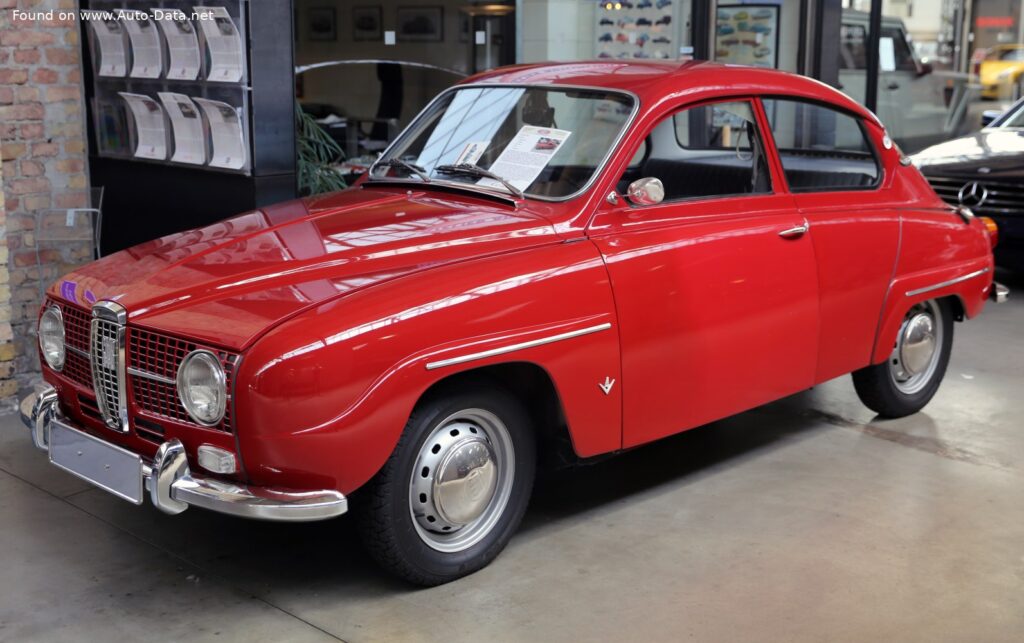
The Saab 96, produced between 1960 and 1967, represents a pivotal moment in the history of the Swedish automaker. This compact sedan, characterized by its distinctive silhouette and innovative engineering, wasn’t initially intended for widespread international success, but it carved a niche for itself, particularly in markets seeking a durable and practical vehicle. The 96 was a direct descendant of the earlier Saab 93, refining the design and addressing some of the shortcomings of its predecessor. The 0.8-liter variant, producing 38 horsepower, was the entry-level model, offering affordable transportation and establishing Saab’s reputation for quirky, yet reliable, automobiles.
The Saab 96 0.8: A Pioneering Compact
The Saab 96 was a significant departure from conventional automotive design of the early 1960s. While many cars prioritized size and luxury, the 96 focused on functionality and aerodynamic efficiency. Its streamlined body, designed with input from aircraft engineers (reflecting Saab’s origins as an aircraft manufacturer), minimized drag and contributed to surprisingly good fuel economy for the time. The 96 wasn’t a performance car in the modern sense, but its nimble handling and robust construction made it a popular choice for drivers in challenging climates and demanding conditions. It was a car built for practicality and endurance, embodying the Swedish ethos of understated quality.
Engine & Performance
The heart of the Saab 96 0.8 was a unique 841cc (51.32 cubic inches) three-cylinder, two-stroke engine. This engine configuration was relatively uncommon in passenger cars, and Saab’s implementation was particularly noteworthy. Two-stroke engines, while offering a high power-to-weight ratio, typically suffered from emissions issues and required oil to be mixed with the fuel. Saab addressed these concerns with innovative solutions, including a sophisticated oil injection system that precisely metered lubricant into the cylinders, reducing smoke and improving engine life. The engine produced 38 horsepower at 4250 rpm and 81 Nm (59.74 lb-ft) of torque at 3000 rpm. While these figures may seem modest by today’s standards, they were sufficient to propel the lightweight 96 to a top speed of 127 km/h (78.91 mph). The engine’s power-to-weight ratio of 21.1 kg/Hp and power per liter of 45.2 Hp/l were respectable for the era. The engine was mounted longitudinally in the front of the vehicle, driving the front wheels through a four-speed manual transmission.
Design & Features
The Saab 96 was a two-door sedan with seating for five passengers. Its body was characterized by a rounded roofline, a relatively narrow stance, and a distinctive front grille. The car’s interior was functional and spartan, reflecting its focus on practicality. Early models featured a simple dashboard with basic instrumentation. Safety features, while not as comprehensive as those found in modern vehicles, were ahead of their time. The 96 incorporated a robust crumple zone design and a laminated windshield, offering a degree of protection in the event of a collision. The car’s relatively light weight and front-wheel-drive layout contributed to its stable handling characteristics, particularly on slippery surfaces. The fuel tank capacity was 38.6 liters (10.2 US gallons), providing a reasonable driving range. The 96’s design, while unconventional, proved to be enduring, with the basic shape remaining largely unchanged throughout its production run.
Technical Specifications
| Brand | Saab |
| Model | 96 |
| Generation | 96 |
| Type (Engine) | 0.8 (38 Hp) |
| Start of production | 1960 |
| End of production | 1967 |
| Powertrain Architecture | Internal Combustion engine |
| Body type | Sedan |
| Seats | 5 |
| Doors | 2 |
| Fuel Type | Mixture of two stroke engine |
| Maximum speed | 127 km/h (78.91 mph) |
| Weight-to-power ratio | 21.1 kg/Hp |
| Weight-to-torque ratio | 9.9 kg/Nm |
| Power | 38 Hp @ 4250 rpm |
| Power per litre | 45.2 Hp/l |
| Torque | 81 Nm @ 3000 rpm (59.74 lb.-ft. @ 3000 rpm) |
| Engine layout | Front, Longitudinal |
| Engine displacement | 841 cm3 (51.32 cu. in.) |
| Number of cylinders | 3 |
| Engine configuration | Inline |
| Cylinder Bore | 70 mm (2.76 in.) |
| Piston Stroke | 73 mm (2.87 in.) |
| Compression ratio | 8.5:1 |
| Fuel injection system | Carburettor |
| Engine aspiration | Naturally aspirated engine |
| Valvetrain | OHC |
| Coolant | 7.5 l (7.93 US qt | 6.6 UK qt) |
| Kerb Weight | 803 kg (1770.31 lbs.) |
| Fuel tank capacity | 38.6 l (10.2 US gal | 8.49 UK gal) |
| Length | 4170 mm (164.17 in.) |
| Width | 1575 mm (62.01 in.) |
| Height | 1461 mm (57.52 in.) |
| Wheelbase | 2498 mm (98.35 in.) |
| Front track | 1219 mm (47.99 in.) |
| Rear (Back) track | 1219 mm (47.99 in.) |
| Drivetrain Architecture | The Internal combustion engine (ICE) drives the front wheels of the vehicle. |
| Drive wheel | Front wheel drive |
| Number of gears and type of gearbox | 4 gears, manual transmission |
| Front brakes | Disc |
| Rear brakes | Drum |
| Steering type | Steering rack and pinion |
The Saab 96, particularly the 0.8-liter version, represents a fascinating chapter in automotive history. It wasn’t a car designed to impress with raw power or luxurious appointments, but rather to provide reliable, practical, and safe transportation. Its innovative engineering, aerodynamic design, and robust construction earned it a loyal following and cemented Saab’s reputation as a manufacturer of distinctive and unconventional automobiles. While production ceased in 1967, the Saab 96 remains a beloved classic, appreciated by enthusiasts for its unique character and enduring appeal.
