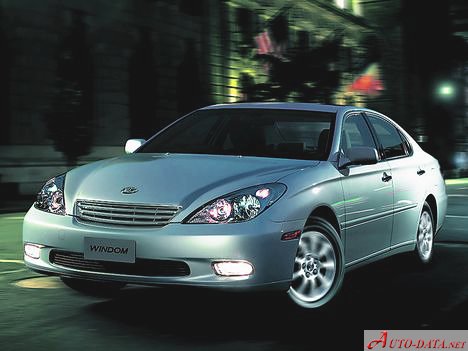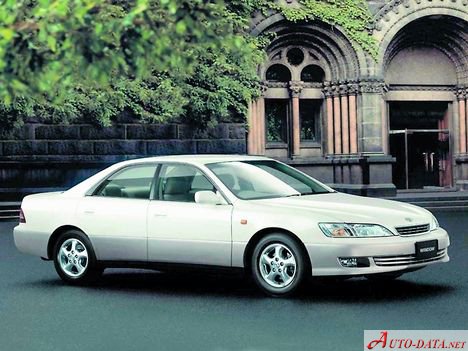
The Toyota Windom (V20), produced between 1996 and 1999, represents a significant offering in the Japanese domestic market (JDM) as a comfortable and well-equipped large sedan. While not officially sold in the United States, the Windom occupied a crucial position in Toyota’s lineup, positioned above the Camry and below the flagship Crown. It was designed to appeal to buyers seeking a more luxurious and refined experience than the Camry offered, with a focus on interior space, quietness, and a smooth ride. The V20 generation, specifically the 2.5 i 24V variant, showcased Toyota’s engineering prowess in delivering a balance of performance and efficiency within a sophisticated package. This model competed with other Japanese luxury sedans like the Nissan Cefiro and Honda Inspire.
Toyota Windom (V20) 2.5 i 24V: An Overview
The Windom, known as the Allion in some export markets, was conceived as a more upscale alternative to the globally successful Camry. The V20 generation marked a substantial evolution in design and technology, incorporating a more aerodynamic body and a refined interior. The 2.5 i 24V model, powered by a 2.5-liter V6 engine, was a popular choice for its smooth power delivery and relatively fuel-efficient operation. It catered to a segment of the Japanese market that valued comfort, reliability, and a prestigious image. The Windom’s design language reflected a move towards more contemporary styling, differentiating it from the more conservative aesthetics of the Crown.
Engine & Performance
At the heart of the Toyota Windom 2.5 i 24V lies a naturally aspirated 2.5-liter (2496 cm3 or 152.32 cu. in.) V6 engine. This engine, designated as a 24V due to its four valves per cylinder, produces 200 horsepower at 6000 rpm and 245 Nm (180.7 lb.-ft.) of torque at 4600 rpm. The engine’s power output translates to a power-to-weight ratio of 7.4 kg/Hp and a power per liter figure of 80.1 Hp/l, indicating a respectable level of performance for its class and era. The engine features multi-port fuel injection and a double overhead camshaft (DOHC) valvetrain, contributing to its smooth operation and efficient combustion. Power is delivered to the front wheels via a four-speed automatic transmission. The front-engine, longitudinal layout contributes to balanced handling characteristics. The Windom’s weight-to-torque ratio of 6 kg/Nm further emphasizes its usable power delivery in everyday driving situations.
Design & Features
The Toyota Windom V20 is a four-door sedan with a spacious interior designed to comfortably accommodate five passengers. Its exterior styling is characterized by clean lines, a relatively low-slung profile, and a focus on aerodynamic efficiency. The vehicle measures 4845 mm (190.75 in.) in length, 1790 mm (70.47 in.) in width, and 1395 mm (54.92 in.) in height, with a wheelbase of 2670 mm (105.12 in.). These dimensions provide ample legroom and headroom for both front and rear occupants. The Windom prioritized a quiet and comfortable cabin experience, featuring sound insulation and well-appointed materials. Safety features for the time included an Anti-lock Braking System (ABS). The suspension system, utilizing wishbone setups both front and rear, was tuned for a smooth and compliant ride. The vehicle rides on 205/65 R15 H tires. The overall design philosophy centered around providing a refined and luxurious experience for the discerning Japanese consumer.
Technical Specifications
| Brand | Toyota |
| Model | Windom |
| Generation | Windom (V20) |
| Type (Engine) | 2.5 i 24V (200 Hp) |
| Start of production | 1996 |
| End of production | 1999 |
| Powertrain Architecture | Internal Combustion engine |
| Body type | Sedan |
| Seats | 5 |
| Doors | 4 |
| Fuel consumption (urban) | 10 l/100 km (23.5 US mpg, 28.2 UK mpg, 10 km/l) |
| Fuel consumption (extra urban) | 5.71 l/100 km (41.2 US mpg, 49.5 UK mpg, 17.5 km/l) |
| Fuel Type | Petrol (Gasoline) |
| Weight-to-power ratio | 7.4 kg/Hp |
| Weight-to-torque ratio | 6 kg/Nm |
| Power | 200 Hp @ 6000 rpm |
| Torque | 245 Nm @ 4600 rpm (180.7 lb.-ft. @ 4600 rpm) |
| Engine layout | Front, Longitudinal |
| Engine displacement | 2496 cm3 (152.32 cu. in.) |
| Number of cylinders | 6 |
| Engine configuration | V-engine |
| Cylinder Bore | 87.5 mm (3.44 in.) |
| Piston Stroke | 69.2 mm (2.72 in.) |
| Compression ratio | 10.8:1 |
| Number of valves per cylinder | 4 |
| Fuel injection system | Multi-port manifold injection |
| Engine aspiration | Naturally aspirated engine |
| Valvetrain | DOHC |
| Kerb Weight | 1480 kg (3262.84 lbs.) |
| Max. weight | 1755 kg (3869.11 lbs.) |
| Max load | 275 kg (606.27 lbs.) |
| Fuel tank capacity | 70 l (18.49 US gal, 15.4 UK gal) |
| Length | 4845 mm (190.75 in.) |
| Width | 1790 mm (70.47 in.) |
| Height | 1395 mm (54.92 in.) |
| Wheelbase | 2670 mm (105.12 in.) |
| Front track | 1545 mm (60.83 in.) |
| Rear track | 1520 mm (59.84 in.) |
| Drivetrain Architecture | Front wheel drive, ICE |
| Drive wheel | Front wheel drive |
| Number of gears | 4 |
| Gearbox type | Automatic transmission |
| Front suspension | Wishbone |
| Rear suspension | Wishbone |
| Front brakes | Ventilated discs |
| Rear brakes | Disc |
| Assisting systems | ABS (Anti-lock braking system) |
| Steering type | Steering rack and pinion |
| Power steering | Hydraulic Steering |
| Tires size | 205/65 R15 H |
The Toyota Windom V20 2.5 i 24V, while never officially available in the US market, remains a noteworthy example of Japanese automotive engineering from the late 1990s. Its blend of comfort, performance, and reliability made it a popular choice among Japanese buyers seeking a sophisticated and well-equipped sedan.