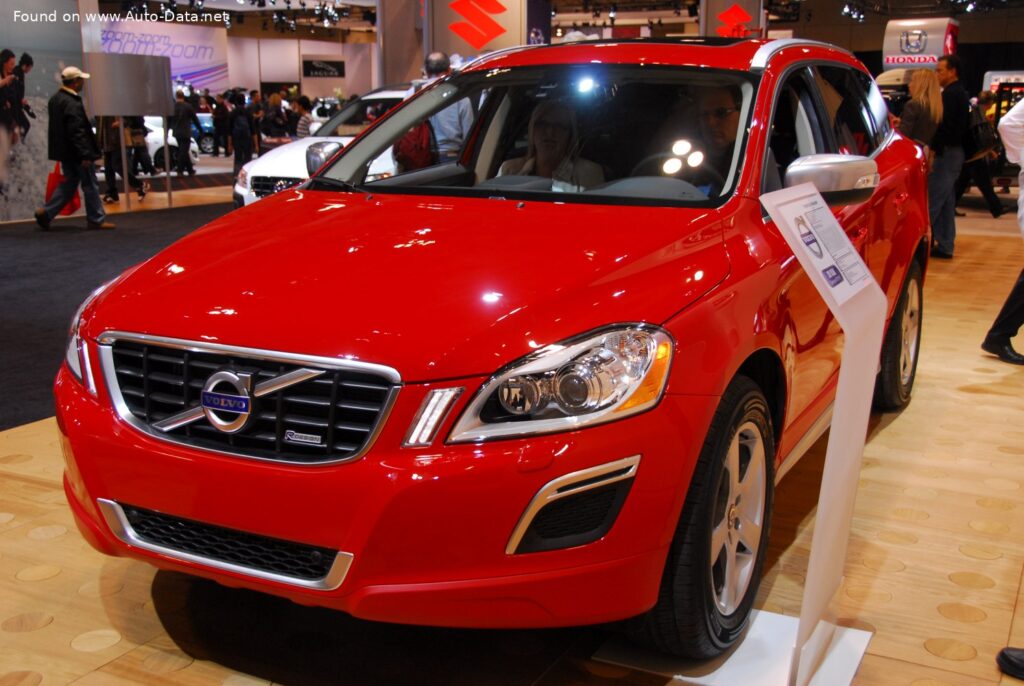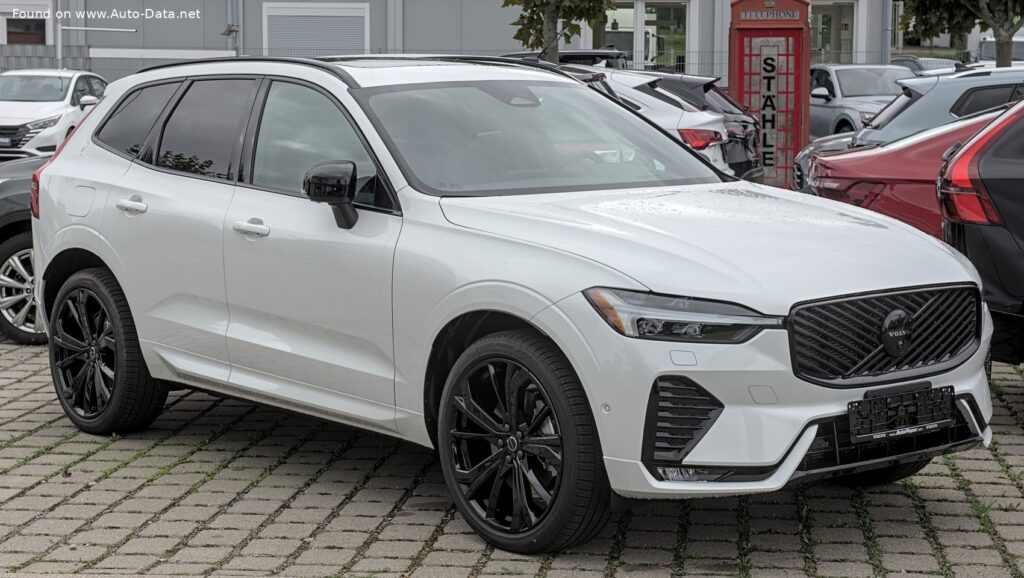
The Volvo XC60 II (facelift 2025) 2.0 T6 represents the latest iteration of Volvo’s popular compact luxury SUV, positioned within the highly competitive crossover segment. Introduced for the 2025 model year, this facelift builds upon the success of the second-generation XC60, launched in 2017, enhancing its technology, efficiency, and Scandinavian-inspired design. The 2.0 T6 variant specifically denotes a plug-in hybrid powertrain, combining a turbocharged and supercharged four-cylinder gasoline engine with an electric motor, offering a balance of performance and fuel economy. This model is a key component of Volvo’s strategy to become a fully electric car company, offering a transitional option for customers embracing electrification.
Volvo XC60 II (facelift 2025) Overview
The XC60 has consistently been a strong seller for Volvo, lauded for its safety, comfort, and sophisticated styling. The second generation, and particularly this 2025 facelift, emphasizes these qualities further. The vehicle is designed to appeal to buyers seeking a premium SUV experience with a focus on sustainability and advanced technology. The T6 designation indicates a specific power output and configuration within the XC60’s hybrid lineup, offering a compelling alternative to traditional gasoline-powered SUVs.
Engine & Performance
The 2025 Volvo XC60 II 2.0 T6 utilizes a 2.0-liter inline four-cylinder engine, coupled with both a turbocharger and a supercharger. This combination delivers 253 horsepower at 5500 rpm and 350 Nm (258.15 lb.-ft.) of torque between 2600 and 5000 rpm. The engine benefits from direct fuel injection and an intercooler, optimizing performance and efficiency. Crucially, this engine is paired with an electric motor producing 145 horsepower at 15900 rpm and 309 Nm (227.91 lb.-ft.) of torque available from 0 to 3280 rpm. The combined system output reaches 350 horsepower. Power is delivered to all four wheels via an eight-speed automatic transmission (Geartronic) and an all-wheel-drive system. The powertrain architecture is a plug-in hybrid (PHEV), allowing for electric-only driving and regenerative braking. Acceleration from 0 to 100 km/h (0-62 mph) takes 5.7 seconds, while the 0-60 mph sprint is achieved in approximately 5.4 seconds. The vehicle has a maximum speed of 180 km/h (111.85 mph).
Design & Features
The Volvo XC60 II (facelift 2025) maintains the sleek and modern design language established by the second generation. It’s a five-door SUV with seating for five passengers. The exterior features Volvo’s signature “Thor’s Hammer” LED headlights and a minimalist grille design. The facelift incorporates subtle refinements to the front and rear fascias, enhancing the vehicle’s visual appeal. Inside, the XC60 boasts a luxurious and Scandinavian-inspired cabin. The interior emphasizes high-quality materials, comfortable seating, and a clean, uncluttered layout. A prominent feature is the large, vertically oriented touchscreen infotainment system, controlling most vehicle functions. Safety remains a paramount concern for Volvo, and the XC60 is equipped with a comprehensive suite of advanced driver-assistance systems (ADAS), including ABS, lane-keeping assist, and automatic emergency braking. The vehicle offers 468 liters (16.53 cu. ft.) of trunk space with the rear seats up, expanding to 1528 liters (53.96 cu. ft.) when folded down.
Electric & Hybrid Specifications
The XC60 T6’s plug-in hybrid system features a 18.8 kWh gross battery capacity, with 14.7 kWh usable. The battery utilizes Lithium-ion technology and is located in the central tunnel, optimizing weight distribution. This allows for an all-electric range of 77-82 km (47.85 – 50.95 mi) according to WLTP standards. The battery operates at 400V. Average energy consumption is rated at 12.2-13.9 kWh/100 km (19.63 – 22.37 kWh/100 mi), equating to 172-151 MPGe and 8.2 – 7.2 km/kWh (5.1 – 4.5 mi/kWh). The vehicle can reach a maximum speed of 140 km/h (86.99 mph) in electric mode.
Technical Specifications
| Brand | Volvo |
| Model | XC60 |
| Generation | XC60 II (facelift 2025) |
| Type (Engine) | 2.0 T6 (350 Hp) Plug-in Hybrid AWD Geartronic |
| Start of production | July, 2025 |
| Powertrain Architecture | PHEV (Plug-in Hybrid Electric Vehicle) |
| Body type | SUV, Crossover |
| Seats | 5 |
| Doors | 5 |
| Combined fuel consumption (WLTP) | 2.8-3.8 l/100 km (84 – 61.9 US mpg, 100.9 – 74.3 UK mpg, 35.7 – 26.3 km/l) |
| CO2 emissions (WLTP) | 64-86 g/km |
| Fuel Type | Petrol / electricity |
| Acceleration 0 – 100 km/h | 5.7 sec |
| Acceleration 0 – 62 mph | 5.7 sec |
| Acceleration 0 – 60 mph | 5.4 sec |
| Maximum speed | 180 km/h (111.85 mph) |
| Emission standard | Euro 6e-bis |
| Weight-to-power ratio | 5.9 kg/Hp, 168.7 Hp/tonne |
| Weight-to-torque ratio | 5.9 kg/Nm, 168.7 Nm/tonne |
| Gross battery capacity | 18.8 kWh |
| Net (usable) battery capacity | 14.7 kWh |
| Battery voltage | 400 V |
| Battery technology | Lithium-ion (Li-Ion) |
| Battery location | In the central tunnel |
| All-electric range (WLTP) | 77-82 km (47.85 – 50.95 mi) |
| Average Energy consumption (WLTP) | 12.2-13.9 kWh/100 km (19.63 – 22.37 kWh/100 mi, 172 – 151 MPGe, 8.2 – 7.2 km/kWh, 5.1 – 4.5 mi/kWh) |
| Max speed (electric) | 140 km/h (86.99 mph) |
| Electric motor power | 145 Hp @ 15900 rpm (227.91 lb.-ft. @ 0-3280 rpm) |
| Electric motor Torque | 309 Nm @ 0-3280 rpm |
| Electric motor location | Rear axle, Transverse |
| Electric motor type | Synchronous |
| System power | 350 Hp |
| Power | 253 Hp @ 5500 rpm |
| Torque | 350 Nm @ 2600-5000 rpm (258.15 lb.-ft. @ 2600-5000 rpm) |
| Engine layout | Front, Transverse |
| Engine Model/Code | B4204T52 |
| Engine displacement | 1969 cm3 (120.16 cu. in.) |
| Number of cylinders | 4 |
| Engine configuration | Inline |
| Number of valves per cylinder | 4 |
| Fuel injection system | Direct injection |
| Engine aspiration | Turbocharging and Supercharger, Intercooler |
| Valvetrain | DOHC |
| Engine oil capacity | 5.6 l (5.92 US qt | 4.93 UK qt) |
| Kerb Weight | 2075 kg (4574.59 lbs.) |
| Max. weight | 2660 kg (5864.3 lbs.) |
| Max load | 585 kg (1289.7 lbs.) |
| Trunk (boot) space – minimum | 468 l (16.53 cu. ft.) |
| Trunk (boot) space – maximum | 1528 l (53.96 cu. ft.) |
| Fuel tank capacity | 71 l (18.76 US gal | 15.62 UK gal) |
| Max. roof load | 100 kg (220.46 lbs.) |
| Permitted trailer load with brakes (12%) | 2250 kg (4960.4 lbs.) |
| Permitted trailer load without brakes | 750 kg (1653.47 lbs.) |
| Permitted towbar download | 100 kg (220.46 lbs.) |
| Length | 4708 mm (185.35 in.) |
| Width | 1902 mm (74.88 in.) |
| Width including mirrors | 2117 mm (83.35 in.) |
| Height | 1651 mm (65 in.) |
| Wheelbase | 2865 mm (112.8 in.) |
| Front overhang | 878 mm (34.57 in.) |
| Rear overhang | 965 mm (37.99 in.) |
| Ride height (ground clearance) | 209 mm (8.23 in.) |
| Drivetrain Architecture | The Internal combustion engine (ICE) permanently drives the front wheels of the vehicle, the electric motor drives the rear wheels of the vehicle, capable of running in full electric mode, only by the Internal combustion engine (ICE) or in mixed mode. |
| Drive wheel | All wheel drive (4×4) |
| Number of gears and type of gearbox | 8 gears, automatic transmission Geartronic |
| Front suspension | Double wishbone, Transverse stabilizer |
| Rear suspension | Transverse stabilizer, Leaf spring |
| Front brakes | Ventilated discs |
| Rear brakes | Ventilated discs |
| Assisting systems | ABS (Anti-lock braking system) |
| Steering type | Steering rack and pinion |
| Power steering | Electric Steering |
| Tires size | 235/60 R18 |
| Wheel rims size | 18 |