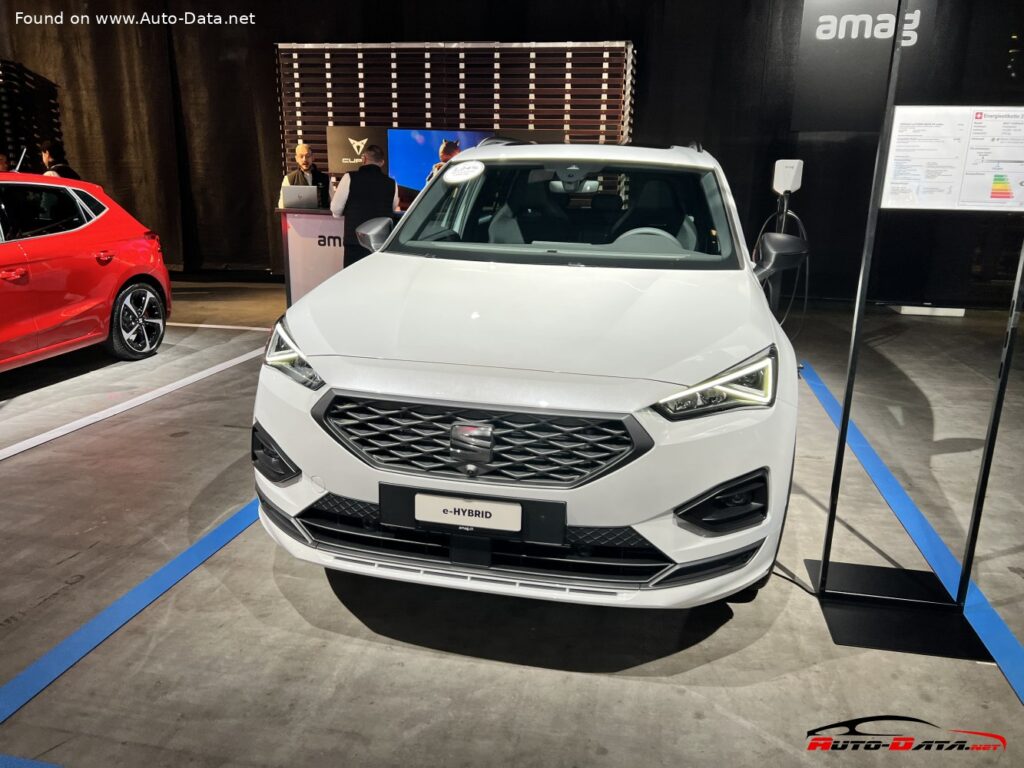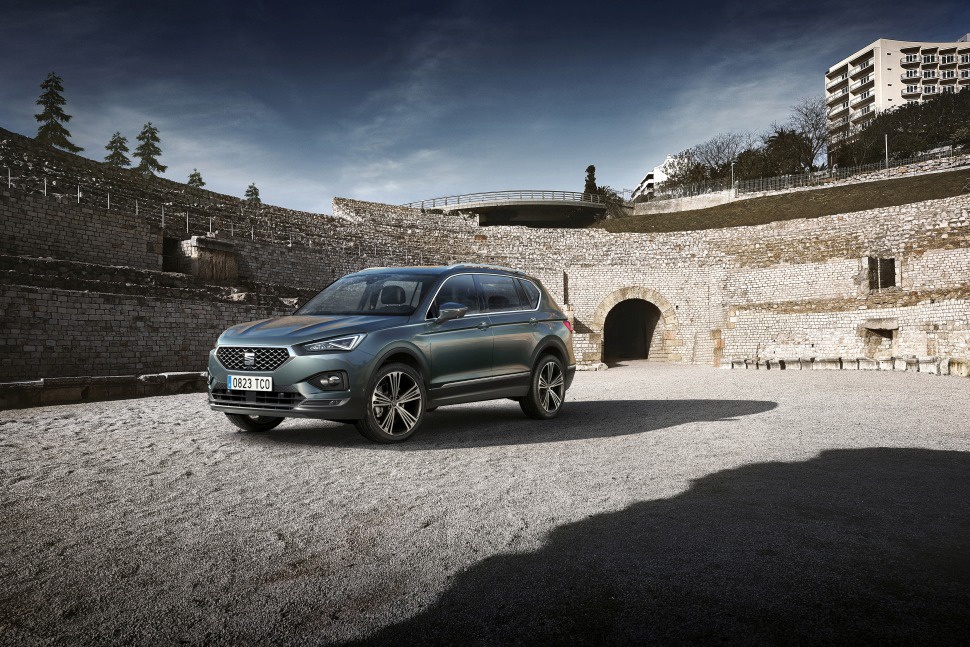
The SEAT Tarraco is a mid-size crossover SUV manufactured by the Spanish automobile manufacturer SEAT from 2018 to 2020. Positioned as the brand’s flagship SUV, the Tarraco was designed to compete in the highly popular family SUV segment, primarily within the European market. It shares its platform with the Skoda Kodiaq and Volkswagen Tiguan Allspace, benefiting from the Volkswagen Group’s modular transverse matrix (MQB) architecture. The 2.0 TDI variant, producing 150 horsepower, was a key offering, balancing fuel efficiency with adequate performance for everyday driving. While not officially sold in the United States, understanding the Tarraco provides insight into the evolving European SUV landscape and SEAT’s ambitions within it.
SEAT Tarraco 2.0 TDI (150 Hp): Overview
The Tarraco represented SEAT’s entry into the seven-seater SUV category, offering a practical and stylish alternative to established competitors. The 2.0 TDI model, equipped with a turbocharged diesel engine, aimed to deliver a compelling combination of fuel economy and torque. Its design emphasized a robust and modern aesthetic, aligning with SEAT’s broader design language. The Tarraco was intended to appeal to families and individuals seeking a versatile vehicle capable of handling both urban commutes and longer journeys. The relatively short production run (2018-2020) reflects SEAT’s ongoing model strategy and the introduction of newer vehicles within the Volkswagen Group portfolio.
Engine & Performance
The heart of the Tarraco 2.0 TDI (150 Hp) is a 1.968-liter inline-four cylinder diesel engine. This engine, designated DFGA, utilizes a turbocharger and intercooler to produce 150 horsepower at 3,500-4,000 rpm and a substantial 340 Nm (250.77 lb.-ft.) of torque between 1,750 and 3,000 rpm. The engine features a diesel commonrail fuel injection system and a compression ratio of 16.2:1, contributing to its efficiency and power output. Power is delivered to the front wheels via a six-speed manual transmission. Performance figures include a 0-100 km/h (0-62 mph) acceleration time of 9.8 seconds and a 0-60 mph time of approximately 9.3 seconds. The Tarraco 2.0 TDI achieves a maximum speed of 202 km/h (125.52 mph). Fuel consumption, measured using the WLTP cycle, ranges from 5.7 to 6.4 liters per 100 kilometers (41.3 to 36.8 US mpg), with CO2 emissions between 148 and 167 g/km.
Design & Features
The SEAT Tarraco is a five-door SUV with a spacious interior designed to accommodate up to five passengers. Its exterior styling is characterized by sharp lines, a prominent front grille, and full LED headlights. The vehicle’s dimensions – 4,735 mm (186.42 in) in length, 1,839 mm (72.4 in) in width, and 1,674 mm (65.91 in) in height – provide a commanding road presence. The Tarraco boasts a generous trunk capacity of 760 liters (26.84 cu. ft.) with the rear seats up, expanding to a substantial volume when folded down. Standard features included ABS (Anti-lock Braking System), electric power steering, and a Start & Stop system to enhance fuel efficiency. The Tarraco also incorporates a particulate filter to reduce emissions, meeting Euro 6 emission standards. The suspension system comprises an independent McPherson strut setup at the front and an independent multi-link setup at the rear, providing a comfortable ride and responsive handling. Ride height (ground clearance) is 192 mm (7.56 in).
Technical Specifications
| Brand | Seat |
| Model | Tarraco |
| Generation | Tarraco |
| Type (Engine) | 2.0 TDI (150 Hp) |
| Start of production | December, 2018 |
| End of production | November, 2020 |
| Powertrain Architecture | Internal Combustion engine |
| Body type | SUV |
| Seats | 5 |
| Doors | 5 |
| Combined fuel consumption (WLTP) | 5.7 – 6.4 l/100 km |
| CO2 emissions (WLTP) | 148 – 167 g/km |
| Fuel consumption (economy) – urban | 5.8 l/100 km |
| Fuel consumption (economy) – extra urban | 4.7 l/100 km |
| Fuel consumption (economy) – combined | 4.9 l/100 km |
| CO2 emissions | 129 g/km |
| Fuel Type | Diesel |
| Acceleration 0 – 100 km/h | 9.8 sec |
| Acceleration 0 – 62 mph | 9.8 sec |
| Acceleration 0 – 60 mph | 9.3 sec |
| Maximum speed | 202 km/h (125.52 mph) |
| Emission standard | Euro 6 |
| Weight-to-power ratio | 10.7 kg/Hp |
| Weight-to-torque ratio | 4.7 kg/Nm |
| Power | 150 Hp @ 3500-4000 rpm |
| Torque | 340 Nm @ 1750-3000 rpm (250.77 lb.-ft.) |
| Engine layout | Front, Transverse |
| Engine Model/Code | DFGA |
| Engine displacement | 1968 cm3 (120.09 cu. in.) |
| Number of cylinders | 4 |
| Engine configuration | Inline |
| Cylinder Bore | 81 mm (3.19 in.) |
| Piston Stroke | 95.5 mm (3.76 in.) |
| Compression ratio | 16.2:1 |
| Number of valves per cylinder | 4 |
| Fuel injection system | Diesel Commonrail |
| Engine oil capacity | 4.7 l (4.97 US qt | 4.14 UK qt) |
| Coolant | 8 l (8.45 US qt | 7.04 UK qt) |
| Kerb Weight | 1612 kg (3553.85 lbs.) |
| Max. weight | 2290 kg (5048.59 lbs.) |
| Max load | 678 kg (1494.73 lbs.) |
| Trunk (boot) space – maximum | 760 l (26.84 cu. ft.) |
| Fuel tank capacity | 58 l (15.32 US gal | 12.76 UK gal) |
| Permitted trailer load with brakes (8%) | 2200 kg (4850.17 lbs.) |
| Permitted trailer load with brakes (12%) | 2000 kg (4409.25 lbs.) |
| Permitted trailer load without brakes | 750 kg (1653.47 lbs.) |
| Length | 4735 mm (186.42 in.) |
| Width | 1839 mm (72.4 in.) |
| Height | 1674 mm (65.91 in.) |
| Wheelbase | 2790 mm (109.84 in.) |
| Front track | 1575 mm (62.01 in.) |
| Rear (Back) track | 1564 mm (61.57 in.) |
| Minimum turning circle (turning diameter) | 11.9 m (39.04 ft.) |
| Drive wheel | Front wheel drive |
| Number of gears and type of gearbox | 6 gears, manual transmission |
| Front suspension | Independent type McPherson |
| Rear suspension | Independent multi-link suspension |
| Front brakes | Ventilated discs |
| Rear brakes | Disc |
| Tires size | 215/65 R17; 235/55 R18; 235/50 R19; 235/45 R20 |
| Wheel rims size | 7J x 17; 7J x 18; 7J x 19; 8J x 20 |