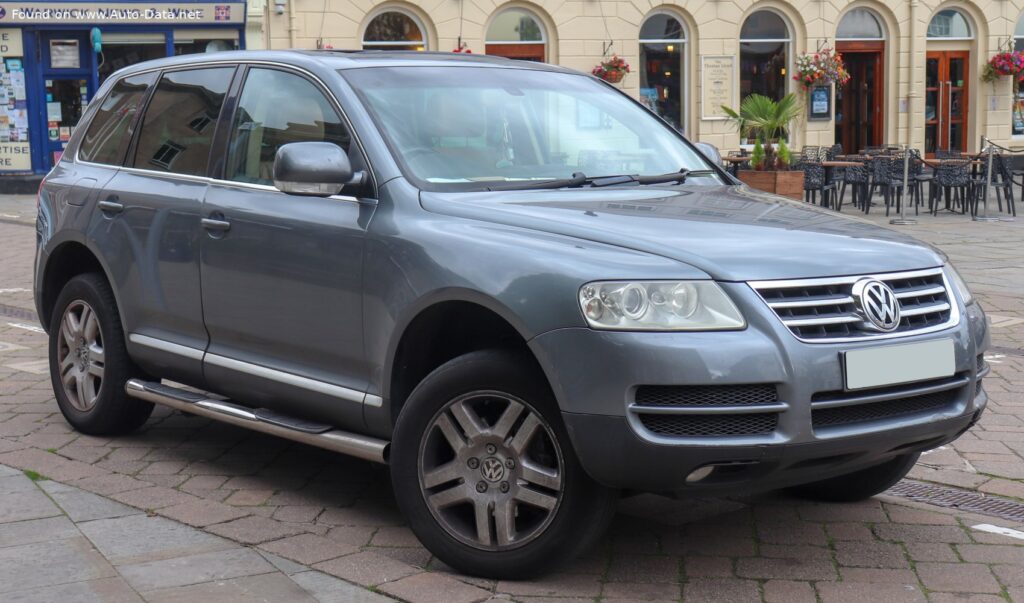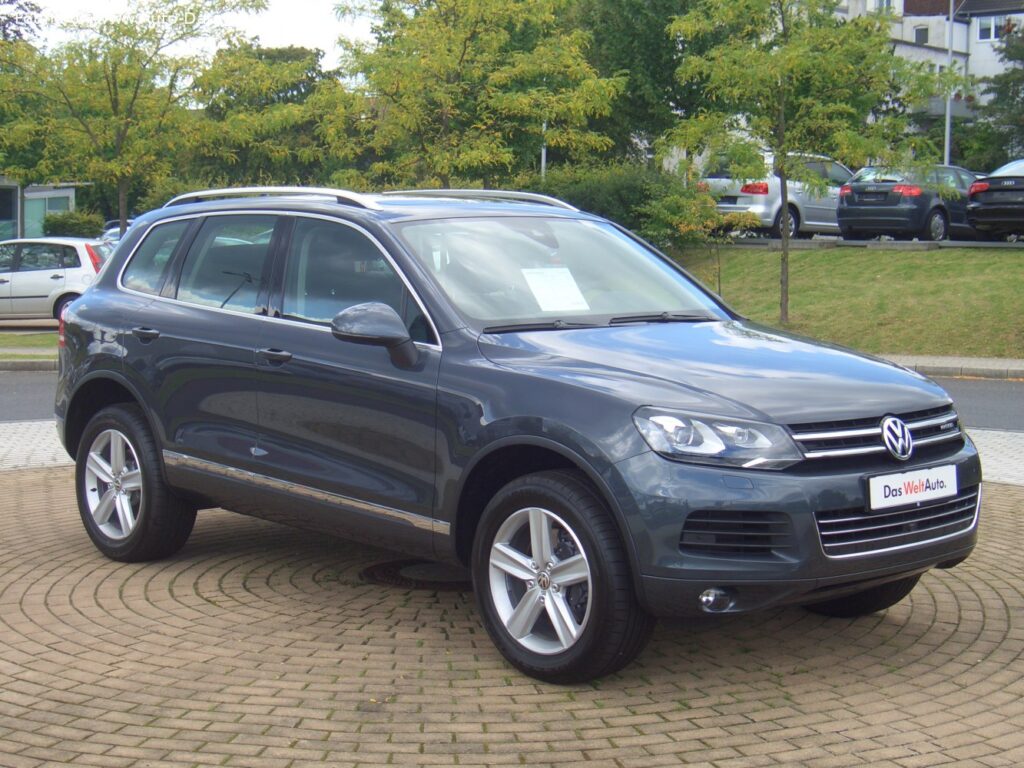
The Volkswagen Touareg II (7P), produced between 2010 and 2014, represents the second generation of Volkswagen’s mid-size luxury SUV. Positioned above the Tiguan in Volkswagen’s lineup, the Touareg aimed to compete with established European and Japanese rivals like the BMW X5, Porsche Cayenne (with which it shares a platform), and Land Rover Discovery. While not initially a high-volume seller in the United States compared to some competitors, the Touareg II offered a compelling blend of on-road comfort, off-road capability, and sophisticated technology, particularly in its diesel-powered variants like the 3.0 TDI V6 4MOTION Automatic model detailed here. This generation marked a significant step forward in refinement and capability for the Touareg nameplate.
Volkswagen Touareg II (7P): A Detailed Overview
The Touareg II represented a substantial evolution over its predecessor. While retaining the core concept of a capable and luxurious SUV, the second generation benefited from a new platform shared with the Porsche Cayenne and Audi Q7, resulting in improved handling, a more spacious interior, and enhanced build quality. The 3.0 TDI V6 4MOTION Automatic, specifically, was a popular choice in European markets due to its fuel efficiency and strong torque output. It offered a balance between performance and economy, making it suitable for both long-distance highway driving and occasional off-road excursions.
Engine & Performance
The heart of the Touareg II 3.0 TDI is a 2.967-liter V6 diesel engine, designated the CASA engine code. This engine produces 204 horsepower at 3750-4750 rpm and a substantial 400 Nm (295.02 lb.-ft.) of torque available from a low 1400-3500 rpm. This broad torque curve provides strong acceleration and effortless cruising. Power is delivered to all four wheels via Volkswagen’s 4MOTION all-wheel-drive system, ensuring excellent traction in various conditions. The engine is paired with an eight-speed automatic transmission, contributing to smooth gear changes and optimized fuel economy. Performance figures include a 0-100 km/h (0-62 mph) acceleration time of 9 seconds and a maximum speed of 206 km/h (128 mph). The 0-60 mph time is calculated at 8.6 seconds. The engine utilizes a diesel commonrail fuel injection system and is equipped with a turbocharger and intercooler to enhance performance. A particulate filter is included to meet Euro 5 emission standards.
Design & Features
The Touareg II boasts a sophisticated and understated design. Its body style is a classic five-door SUV, offering seating for five passengers. The exterior design emphasizes a robust and capable appearance, with clean lines and a relatively conservative aesthetic. Inside, the Touareg II offers a well-appointed cabin with high-quality materials and a focus on comfort. Key features include a spacious interior, comfortable seating, and a user-friendly infotainment system (depending on trim level and optional equipment). The 4MOTION system provides enhanced stability and control, particularly in adverse weather conditions. Trunk space is generous, ranging from 580 liters (20.48 cu. ft.) with the rear seats up to 1642 liters (57.99 cu. ft.) with the rear seats folded down. Safety features, typical for a vehicle of this class and era, include ABS (Anti-lock Braking System) and a robust chassis designed for occupant protection. The Touareg II prioritized a balance between luxury, practicality, and off-road capability.
Technical Specifications
| Brand | Volkswagen |
| Model | Touareg |
| Generation | Touareg II (7P) |
| Type (Engine) | 3.0 TDI V6 (204 Hp) 4MOTION Automatic |
| Start of production | 2010 |
| End of production | 2014 |
| Powertrain Architecture | Internal Combustion engine |
| Body type | SUV |
| Seats | 5 |
| Doors | 5 |
| Fuel consumption (urban) | 8.5 l/100 km (27.7 US mpg, 33.2 UK mpg, 11.8 km/l) |
| Fuel consumption (extra urban) | 6.7 l/100 km (35.1 US mpg, 42.2 UK mpg, 14.9 km/l) |
| Fuel consumption (combined) | 7.4 l/100 km (31.8 US mpg, 38.2 UK mpg, 13.5 km/l) |
| Fuel Type | Diesel |
| Acceleration 0 – 100 km/h | 9 sec |
| Acceleration 0 – 62 mph | 9 sec |
| Acceleration 0 – 60 mph | 8.6 sec |
| Maximum speed | 206 km/h (128 mph) |
| Emission standard | Euro 5 |
| Weight-to-power ratio | 10.7 kg/Hp |
| Weight-to-torque ratio | 5.4 kg/Nm |
| Power | 204 Hp @ 3750-4750 rpm |
| Torque | 400 Nm @ 1400-3500 rpm (295.02 lb.-ft. @ 1400-3500 rpm) |
| Engine layout | Front, Longitudinal |
| Engine Model/Code | CASA |
| Engine displacement | 2967 cm3 (181.06 cu. in.) |
| Number of cylinders | 6 |
| Engine configuration | V-engine |
| Fuel injection system | Diesel Commonrail |
| Engine aspiration | Turbocharger, Intercooler |
| Engine oil capacity | 7.7 l (8.14 US qt | 6.78 UK qt) |
| Kerb Weight | 2179 kg (4803.87 lbs.) |
| Max. weight | 2860 kg (6305.22 lbs.) |
| Max load | 681 kg (1501.35 lbs.) |
| Trunk (boot) space – minimum | 580 l (20.48 cu. ft.) |
| Trunk (boot) space – maximum | 1642 l (57.99 cu. ft.) |
| Fuel tank capacity | 85 l (22.45 US gal | 18.7 UK gal) |
| Length | 4795 mm (188.78 in.) |
| Width | 1940 mm (76.38 in.) |
| Height | 1709 mm (67.28 in.) |
| Wheelbase | 2893 mm (113.9 in.) |
| Front track | 1656 mm (65.2 in.) |
| Rear (Back) track | 1676 mm (65.98 in.) |
| Minimum turning circle | 11.9 m (39.04 ft.) |
| Drive wheel | All wheel drive (4×4) |
| Number of gears | 8 |
| Gearbox type | Automatic transmission |
| Front brakes | Ventilated discs |
| Rear brakes | Disc |
| Steering type | Steering rack and pinion |
| Power steering | Electric Steering |