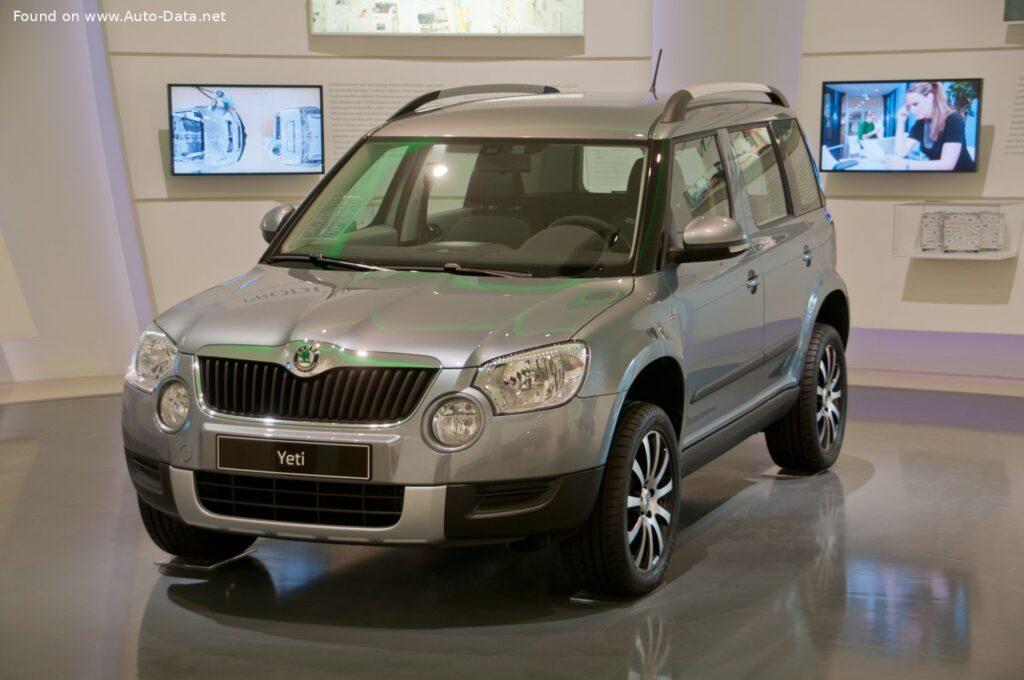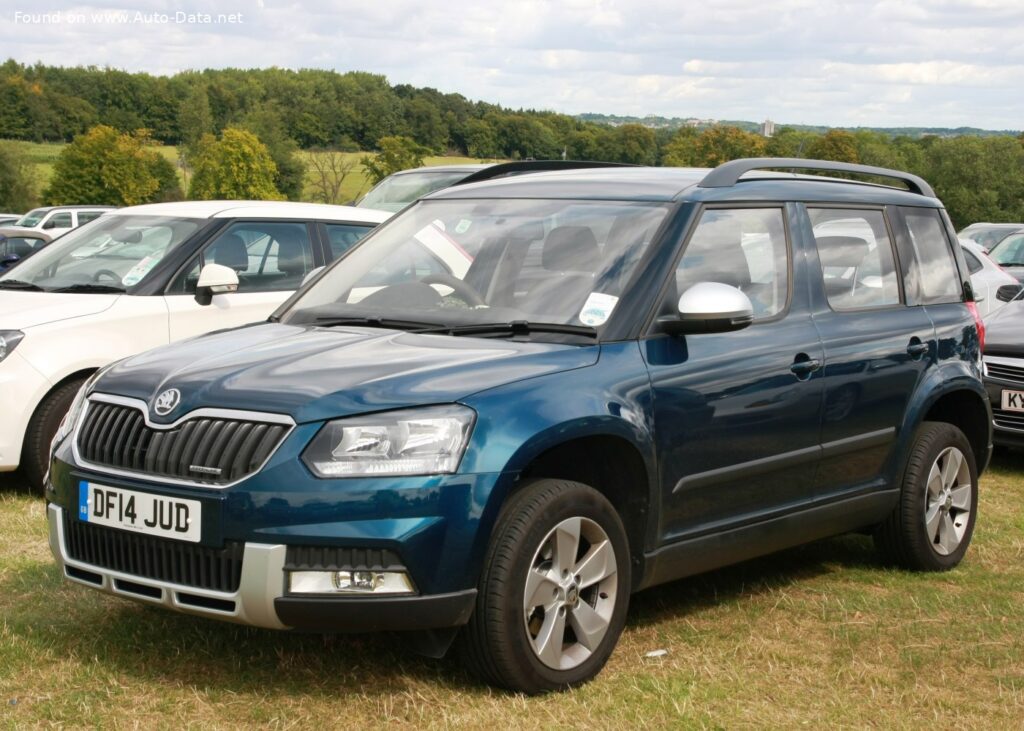
The Skoda Yeti, particularly the facelifted version introduced in 2013, represents a significant offering in the compact SUV segment, though its direct presence in the United States market was limited. Primarily sold in Europe, the Yeti distinguished itself with a blend of practicality, robust build quality, and a surprisingly engaging driving experience. The 2.0 TDI (140 Hp) 4×4 variant, produced from 2013 to 2015, was a popular choice for those seeking a versatile vehicle capable of handling diverse terrains and driving conditions. This model combined a fuel-efficient diesel engine with all-wheel drive, making it well-suited for both urban commutes and adventurous weekend trips.
Skoda Yeti (Facelift 2013) 2.0 TDI 4×4: An Overview
The Yeti, named after the mythical Himalayan creature, was designed to be a rugged and capable vehicle, reflected in its boxy yet functional design. The 2013 facelift brought styling updates, improved interior materials, and enhanced technology, solidifying its position as a competitive option against rivals like the Nissan Qashqai and Kia Sportage in the European market. While not officially sold in the US, the Yeti’s design philosophy and features offer a compelling case study in compact SUV engineering. It filled a niche for buyers wanting a vehicle that was smaller and more manageable than traditional SUVs, yet still offered a high degree of practicality and all-weather capability.
Engine & Performance
The heart of the 2013 Skoda Yeti 2.0 TDI 4×4 is a 1968 cc (120.09 cu. in.) inline-four cylinder diesel engine. This engine, identified by the EA189 / CFHC code, produces 140 horsepower at 4200 rpm and a substantial 320 Nm (236.02 lb.-ft.) of torque between 1750 and 2500 rpm. The turbocharger and intercooler contribute to both power output and efficiency. Power per liter is rated at 71.1 Hp/l. This powertrain delivers a balanced performance profile, offering sufficient power for everyday driving and confident acceleration. The 0-100 km/h (0-62 mph) sprint takes 9.9 seconds, while the 0-60 mph time is calculated at 9.4 seconds. The vehicle achieves a maximum speed of 190 km/h (118.06 mph). Fuel economy is a strong point, with combined cycle consumption rated at 5.8 l/100 km (40.6 US mpg, 48.7 UK mpg, 17.2 km/l). The engine meets Euro 5 J emission standards and incorporates a particulate filter to reduce harmful emissions.
Design & Features
The Skoda Yeti 2.0 TDI 4×4 is a five-door SUV with a seating capacity for five passengers. Its boxy shape maximizes interior space and provides excellent visibility. The 2013 facelift brought subtle but effective styling changes, including revised headlights, a new front grille, and updated bumpers. The interior is characterized by its practicality and build quality, with durable materials and a functional layout. Key features include a spacious trunk with a minimum capacity of 415 liters (14.66 cu. ft.) expanding to 1665 liters (58.8 cu. ft.) with the rear seats folded down. The all-wheel-drive system provides enhanced traction and stability in various driving conditions. Safety features, typical for a vehicle of this era, include ABS (Anti-lock braking system). The Yeti’s design prioritizes functionality and versatility, making it a practical choice for families and individuals alike. Ride height (ground clearance) is 180 mm (7.09 in).
Technical Specifications
| Brand | Skoda |
| Model | Yeti |
| Generation | Yeti (facelift 2013) |
| Type (Engine) | 2.0 TDI (140 Hp) 4×4 |
| Start of production | 2013 |
| End of production | 2015 |
| Powertrain Architecture | Internal Combustion engine |
| Body type | SUV |
| Seats | 5 |
| Doors | 5 |
| Fuel consumption (urban) | 6.9 l/100 km (34.1 US mpg, 40.9 UK mpg, 14.5 km/l) |
| Fuel consumption (extra urban) | 5.2 l/100 km (45.2 US mpg, 54.3 UK mpg, 19.2 km/l) |
| Fuel consumption (combined) | 5.8 l/100 km (40.6 US mpg, 48.7 UK mpg, 17.2 km/l) |
| CO2 emissions | 152 g/km |
| Fuel Type | Diesel |
| Acceleration 0 – 100 km/h | 9.9 sec |
| Acceleration 0 – 62 mph | 9.9 sec |
| Acceleration 0 – 60 mph | 9.4 sec |
| Maximum speed | 190 km/h (118.06 mph) |
| Emission standard | Euro 5 J |
| Weight-to-power ratio | 11 kg/Hp, 91.2 Hp/tonne |
| Weight-to-torque ratio | 4.8 kg/Nm, 208.5 Nm/tonne |
| Power | 140 Hp @ 4200 rpm |
| Torque | 320 Nm @ 1750-2500 rpm (236.02 lb.-ft. @ 1750-2500 rpm) |
| Engine layout | Front, Transverse |
| Engine Model/Code | EA189 / CFHC |
| Engine displacement | 1968 cm3 (120.09 cu. in.) |
| Number of cylinders | 4 |
| Engine configuration | Inline |
| Cylinder Bore | 81 mm (3.19 in.) |
| Piston Stroke | 95.5 mm (3.76 in.) |
| Compression ratio | 16:1 |
| Number of valves per cylinder | 4 |
| Fuel injection system | Diesel Commonrail |
| Engine aspiration | Turbocharger, Intercooler |
| Valvetrain | DOHC |
| Engine oil capacity | 4.3 l (4.54 US qt | 3.78 UK qt) |
| Coolant | 8.4 l (8.88 US qt | 7.39 UK qt) |
| Kerb Weight | 1535 kg (3384.1 lbs.) |
| Max. weight | 2105 kg (4640.73 lbs.) |
| Max load | 570 kg (1256.63 lbs.) |
| Trunk (boot) space – minimum | 415 l (14.66 cu. ft.) |
| Trunk (boot) space – maximum | 1665 l (58.8 cu. ft.) |
| Fuel tank capacity | 60 l (15.85 US gal | 13.2 UK gal) |
| Length | 4222 mm (166.22 in.) |
| Width | 1793 mm (70.59 in.) |
| Width including mirrors | 1956 mm (77.01 in.) |
| Height | 1691 mm (66.57 in.) |
| Wheelbase | 2578 mm (101.5 in.) |
| Front track | 1541 mm (60.67 in.) |
| Rear (Back) track | 1537 mm (60.51 in.) |
| Front overhang | 877 mm (34.53 in.) |
| Rear overhang | 767 mm (30.2 in.) |
| Ride height (ground clearance) | 180 mm (7.09 in.) |
| Minimum turning circle (turning diameter) | 10.32 m (33.86 ft.) |
| Drive wheel | All wheel drive (4×4) |
| Number of gears and type of gearbox | 6 gears, manual transmission |
| Front suspension | Independent, type McPherson with coil spring and anti-roll bar |
| Rear suspension | Independent multi-link spring suspension with stabilizer |
| Front brakes | Ventilated discs |
| Rear brakes | Disc |
| Steering type | Steering rack and pinion |
| Tires size | 215/60 R16; 225/50 R17 |
| Wheel rims size | 7J x 16; 7J x 17 |