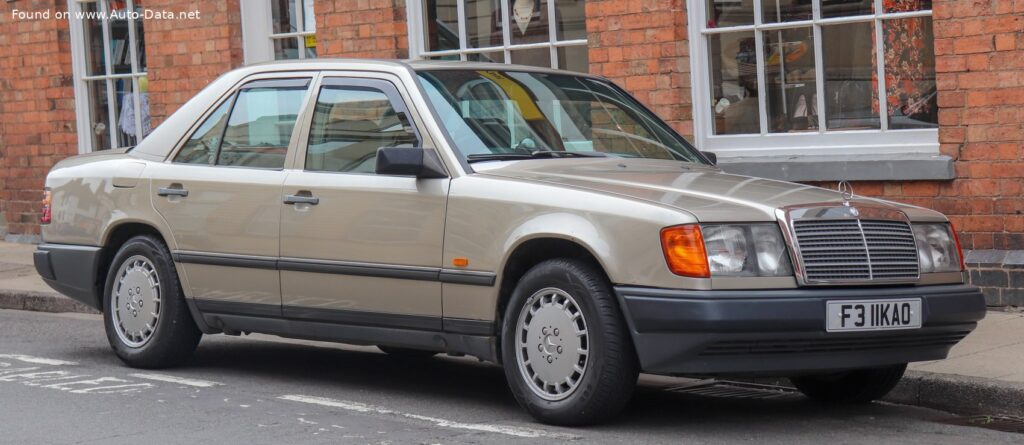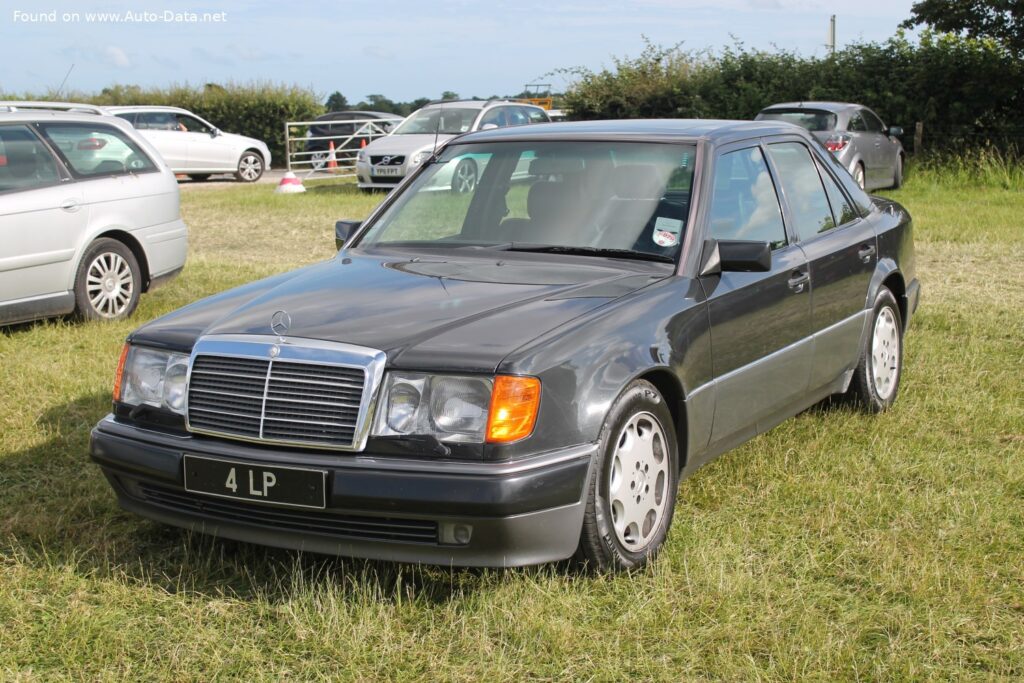
The Mercedes-Benz W124, produced from 1985 to 1996, represented a significant leap forward in mid-size executive car design and engineering. The facelifted version introduced in 1989, and specifically the 200 E model, refined the W124’s already robust platform. Positioned as a successor to the W201 (190E), the W124 aimed to bridge the gap between the compact 190E and the flagship S-Class (W126), offering a blend of luxury, performance, and durability. The 200 E, with its 2.0-liter engine, was a popular choice in European markets, offering a balance between fuel efficiency and respectable power. While not initially a major seller in the United States, the W124 established Mercedes-Benz as a benchmark for quality and engineering excellence.
Mercedes-Benz W124 (Facelift 1989) 200 E: A Detailed Overview
The 1989 facelift brought subtle but important changes to the W124, including revised styling cues, improved safety features, and updated engine options. The 200 E, powered by the M102 engine, was designed to appeal to buyers seeking a comfortable and reliable sedan. It was a common sight on European roads, prized for its build quality and relatively economical operation compared to larger, more powerful Mercedes-Benz models. The W124’s reputation for longevity has made it a popular choice among classic car enthusiasts today.
Engine & Performance
The heart of the 200 E is the M102 E 20 inline-four cylinder engine, displacing 1,996 cubic centimeters (121.8 cubic inches). This naturally aspirated engine produces 118 horsepower at 5,200 rpm and 172 Nm (126.86 lb.-ft.) of torque at 3,500 rpm. The engine features multi-port fuel injection and a single overhead camshaft (SOHC) valvetrain. While not a performance powerhouse, the M102 is known for its smoothness and reliability. Power is delivered to the rear wheels via a four-speed automatic transmission. Acceleration from 0 to 100 km/h (0-62 mph) takes 12.3 seconds, and the car reaches a top speed of 188 km/h (116.82 mph). The weight-to-power ratio of 11.4 kg/Hp and weight-to-torque ratio of 7.8 kg/Nm reflect the car’s balanced, though not overtly sporty, character. The engine requires 5 liters (5.28 US qt) of engine oil and 8.5 liters (8.98 US qt) of coolant.
Design & Features
The W124 200 E is a four-door sedan with a classic, understated Mercedes-Benz design. The body is characterized by its clean lines, robust construction, and relatively spacious interior. The 1989 facelift brought minor cosmetic updates, including a revised front grille and updated taillights. The interior is well-appointed, offering comfortable seating for five passengers. Key features include hydraulic power steering, disc brakes on all four wheels, and an Anti-lock Braking System (ABS) for enhanced safety. The W124’s design prioritized safety and durability, with a strong emphasis on crash protection. The car’s dimensions are: length 4,740 mm (186.61 in), width 1,740 mm (68.5 in), and height 1,428 mm (56.22 in). The wheelbase measures 2,800 mm (110.24 in). The car rides on 195/65 R15 tires mounted on 6.5J x 15 inch wheels.
Technical Specifications
| Brand | Mercedes-Benz |
| Model | W124 |
| Generation | W124 (facelift 1989) |
| Type | 200 E (118 Hp) Automatic |
| Start of production | September, 1989 |
| End of production | October, 1992 |
| Powertrain Architecture | Internal Combustion engine |
| Body type | Sedan |
| Seats | 5 |
| Doors | 4 |
| Fuel consumption (urban) | 11.3 l/100 km (20.8 US mpg / 25 UK mpg) |
| Fuel consumption (extra urban) | 7.5 l/100 km (31.4 US mpg / 37.7 UK mpg) |
| Fuel Type | Petrol (Gasoline) |
| Acceleration 0 – 100 km/h | 12.3 sec |
| Acceleration 0 – 62 mph | 12.3 sec |
| Acceleration 0 – 60 mph | 11.7 sec |
| Maximum speed | 188 km/h (116.82 mph) |
| Weight-to-power ratio | 11.4 kg/Hp |
| Weight-to-torque ratio | 7.8 kg/Nm |
| Power | 118 Hp @ 5200 rpm |
| Torque | 172 Nm @ 3500 rpm (126.86 lb.-ft. @ 3500 rpm) |
| Engine layout | Front, Longitudinal |
| Engine Model/Code | M 102 E 20 / 102.963 |
| Engine displacement | 1996 cm3 (121.8 cu. in.) |
| Number of cylinders | 4 |
| Engine configuration | Inline |
| Cylinder Bore | 89 mm (3.5 in.) |
| Piston Stroke | 80.2 mm (3.16 in.) |
| Compression ratio | 9.1:1 |
| Number of valves per cylinder | 2 |
| Fuel injection system | Multi-port manifold injection |
| Engine aspiration | Naturally aspirated engine |
| Valvetrain | SOHC |
| Engine oil capacity | 5 l (5.28 US qt | 4.4 UK qt) |
| Coolant | 8.5 l (8.98 US qt | 7.48 UK qt) |
| Kerb Weight | 1340 kg (2954.19 lbs.) |
| Max. weight | 1910 kg (4210.83 lbs.) |
| Max load | 570 kg (1256.63 lbs.) |
| Fuel tank capacity | 70 l (18.49 US gal | 15.4 UK gal) |
| Length | 4740 mm (186.61 in.) |
| Width | 1740 mm (68.5 in.) |
| Height | 1428 mm (56.22 in.) |
| Wheelbase | 2800 mm (110.24 in.) |
| Front track | 1501 mm (59.09 in.) |
| Rear track | 1491 mm (58.7 in.) |
| Drivetrain Architecture | Rear wheel drive |
| Number of gears | 4 |
| Gearbox type | automatic transmission |
| Front suspension | Wishbone |
| Rear suspension | Independent multi-link suspension |
| Front brakes | Disc |
| Rear brakes | Disc |
| Assisting systems | ABS (Anti-lock braking system) |
| Steering type | Cone worm with recirculation balls |
| Power steering | Hydraulic Steering |
| Tires size | 195/65 R15 |
| Wheel rims size | 6.5J x 15 |
The Mercedes-Benz W124 200 E, particularly the facelifted models, remains a highly regarded vehicle. Its combination of engineering quality, comfortable ride, and understated elegance continues to appeal to enthusiasts and collectors alike. The W124’s enduring legacy is a testament to Mercedes-Benz’s commitment to building durable and reliable automobiles.