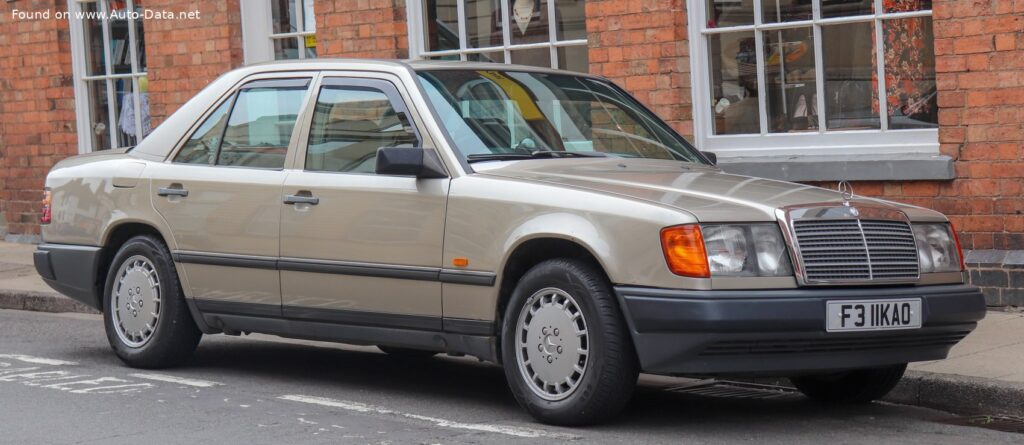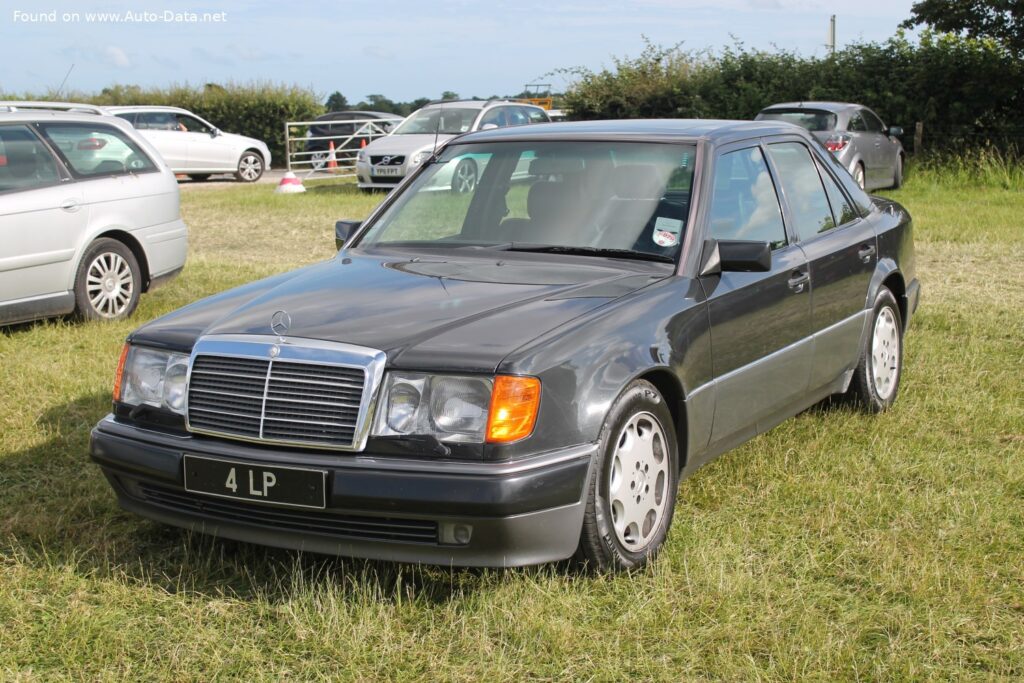
The Mercedes-Benz W124, produced from 1985 to 1996, represented a significant leap forward in mid-size executive car design and engineering for the German automaker. The facelifted version introduced in 1989 brought subtle but important refinements, enhancing both the aesthetics and mechanical reliability of the series. Among the various models within the W124 range, the 200 E, powered by a 2.0-liter inline-four engine producing 136 horsepower, occupied an important position as an entry-level offering, particularly in European markets. While not initially a major seller in the United States, the W124 established Mercedes-Benz as a benchmark for build quality, safety, and understated luxury.
The Mercedes-Benz W124 200 E: A Refined Sedan
The W124 200 E, manufactured between 1992 and 1993, was a four-door sedan designed to appeal to buyers seeking a comfortable, reliable, and well-engineered vehicle. It served as a more accessible entry point into the Mercedes-Benz lineup compared to the larger and more powerful 230 E, 260 E, and 300 E models. The 200 E was particularly popular in Europe, where smaller displacement engines were favored due to tax regulations and fuel costs. The W124 series, as a whole, was lauded for its robust construction, advanced (for its time) safety features, and a focus on passenger comfort. The 1989 facelift brought improvements to the interior, exterior styling, and engine management systems, further solidifying the W124’s reputation.
Engine & Performance
The heart of the 200 E is the M111 E 20 engine, a 1,998 cc (121.93 cu. in.) inline-four cylinder powerplant. This engine, equipped with multi-port fuel injection and a double overhead camshaft (DOHC) valvetrain, delivers 136 horsepower at 5,500 rpm and 190 Nm (140.14 lb.-ft.) of torque at 4,000 rpm. The engine’s design prioritized smooth operation and fuel efficiency, rather than outright performance. Power is delivered to the rear wheels via a five-speed manual transmission. Acceleration from 0 to 100 km/h (0-62 mph) takes 11.5 seconds, while 0 to 60 mph is achieved in 10.9 seconds. The 200 E boasts a top speed of 200 km/h (124.27 mph). The engine’s power-to-weight ratio is 10 kg/Hp, and 100 Hp/tonne, indicating a balanced, if not particularly sporty, driving experience. The naturally aspirated engine benefits from a compression ratio of 9.6:1.
Design & Features
The W124 200 E’s design is characterized by its clean lines, understated elegance, and focus on aerodynamic efficiency. The sedan body style provides ample space for five passengers and a reasonably sized trunk. The 1989 facelift brought subtle changes to the front and rear fascias, including a revised grille and taillight design. Inside, the 200 E offered a comfortable and well-appointed cabin, typical of Mercedes-Benz standards. Safety was a key consideration in the W124’s design, and the 200 E was equipped with an Anti-lock Braking System (ABS) as standard, a relatively advanced feature for the early 1990s. The hydraulic power steering provided ease of maneuverability, while the independent multi-link rear suspension contributed to a comfortable ride. The vehicle rides on 195/65 R15 tires mounted on 6.5J x 15 inch wheel rims.
Technical Specifications
| Brand | Mercedes-Benz |
| Model | W124 |
| Generation | W124 (facelift 1989) |
| Type (Engine) | 200 E (136 Hp) |
| Start of production | July, 1992 |
| End of production | July, 1993 |
| Powertrain Architecture | Internal Combustion engine |
| Body type | Sedan |
| Seats | 5 |
| Doors | 4 |
| Fuel consumption (urban) | 11.3 l/100 km (20.8 US mpg / 25 UK mpg / 8.8 km/l) |
| Fuel consumption (extra urban) | 6.6 l/100 km (35.6 US mpg / 42.8 UK mpg / 15.2 km/l) |
| Fuel Type | Petrol (Gasoline) |
| Acceleration 0 – 100 km/h | 11.5 sec |
| Acceleration 0 – 62 mph | 11.5 sec |
| Acceleration 0 – 60 mph | 10.9 sec |
| Maximum speed | 200 km/h (124.27 mph) |
| Weight-to-power ratio | 10 kg/Hp |
| Weight-to-torque ratio | 7.2 kg/Nm |
| Power | 136 Hp @ 5500 rpm |
| Torque | 190 Nm @ 4000 rpm (140.14 lb.-ft. @ 4000 rpm) |
| Engine layout | Front, Longitudinal |
| Engine Model/Code | M 111 E 20 / 111.940 |
| Engine displacement | 1998 cm3 (121.93 cu. in.) |
| Number of cylinders | 4 |
| Engine configuration | Inline |
| Cylinder Bore | 89.9 mm (3.54 in.) |
| Piston Stroke | 78.7 mm (3.1 in.) |
| Compression ratio | 9.6:1 |
| Number of valves per cylinder | 4 |
| Fuel injection system | Multi-port manifold injection |
| Engine aspiration | Naturally aspirated engine |
| Valvetrain | DOHC |
| Engine oil capacity | 5.5 l (5.81 US qt | 4.84 UK qt) |
| Coolant | 8.5 l (8.98 US qt | 7.48 UK qt) |
| Kerb Weight | 1360 kg (2998.29 lbs.) |
| Max. weight | 1930 kg (4254.92 lbs.) |
| Max load | 570 kg (1256.63 lbs.) |
| Fuel tank capacity | 70 l (18.49 US gal | 15.4 UK gal) |
| Length | 4740 mm (186.61 in.) |
| Width | 1740 mm (68.5 in.) |
| Height | 1428 mm (56.22 in.) |
| Wheelbase | 2800 mm (110.24 in.) |
| Front track | 1501 mm (59.09 in.) |
| Rear track | 1491 mm (58.7 in.) |
| Drivetrain Architecture | Rear wheel drive |
| Number of gears | 5 gears, manual transmission |
| Front suspension | Wishbone |
| Rear suspension | Independent multi-link suspension |
| Front brakes | Ventilated discs |
| Rear brakes | Disc |
| Assisting systems | ABS (Anti-lock braking system) |
| Steering type | Cone worm with recirculation balls |
| Power steering | Hydraulic Steering |
| Tires size | 195/65 R15 |
| Wheel rims size | 6.5J x 15 |
The Mercedes-Benz W124 200 E, while not the most powerful variant of the W124 series, remains a highly regarded vehicle. Its blend of comfort, reliability, and understated elegance has ensured its continued popularity among enthusiasts and collectors. The W124 series, and the 200 E in particular, represents a high point in Mercedes-Benz engineering and a testament to the brand’s commitment to quality and durability.