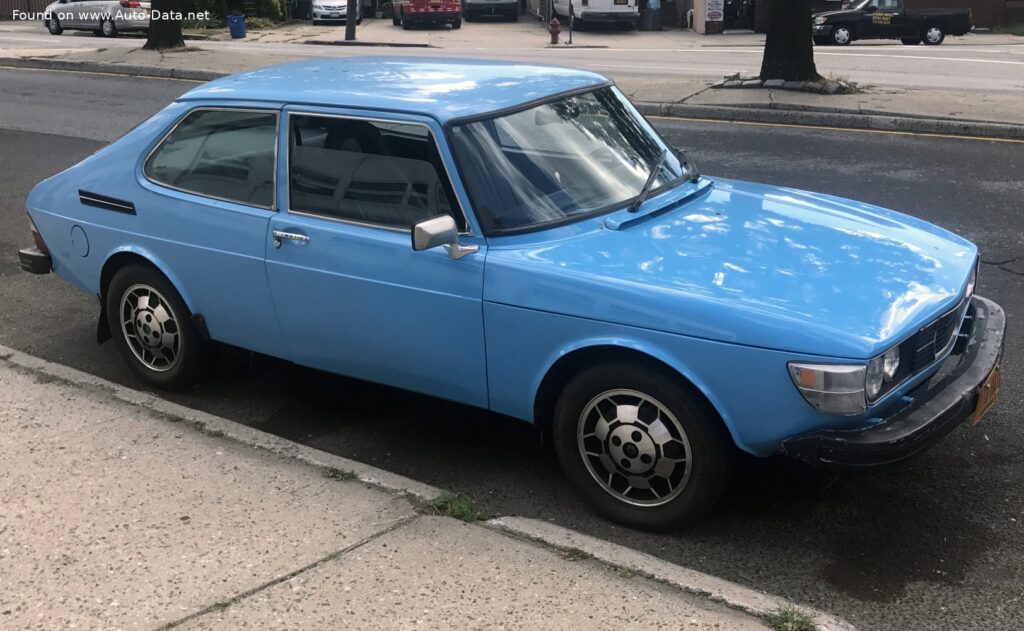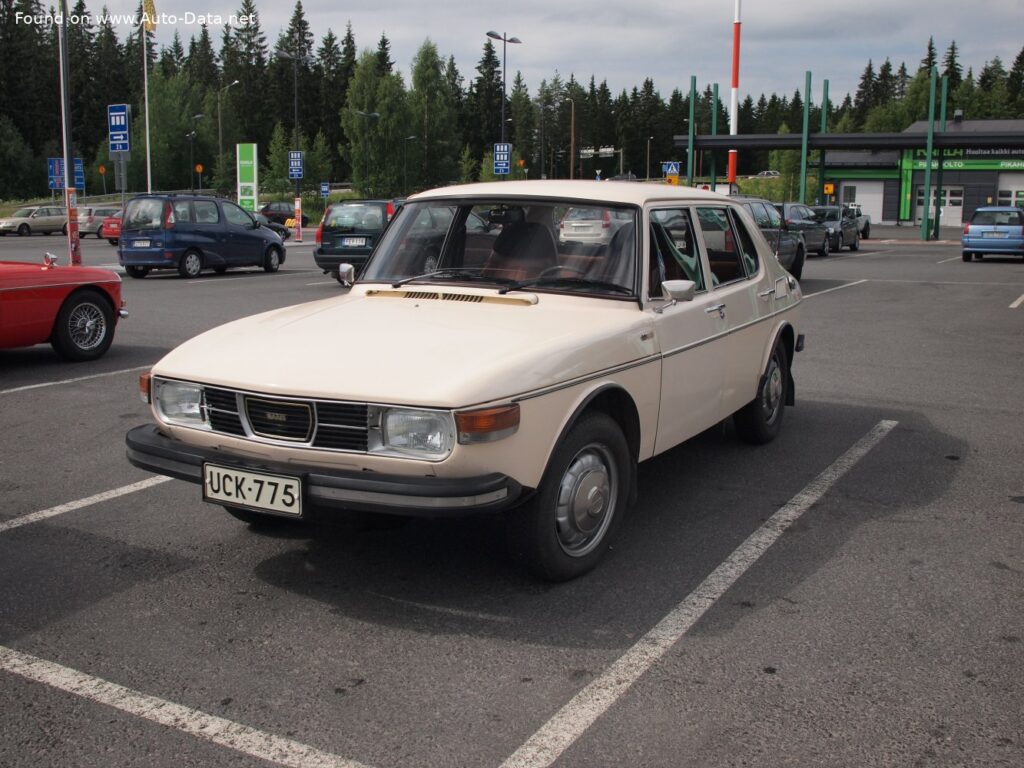
The Saab 99, specifically the 2.0 GL variant producing 100 horsepower, represents a pivotal moment in the Swedish automaker’s history. Introduced in 1969 and continuing in production through 1984, the 99 was Saab’s first monocoque (unibody) design and a significant departure from their earlier aircraft-inspired vehicles. While not initially a major player in the American market, the Saab 99 gained a dedicated following among those seeking a uniquely engineered and safety-focused automobile. The 2.0 GL, introduced in 1974, offered increased displacement and power compared to earlier models, solidifying the 99’s position as a capable and comfortable family sedan, particularly within the European market.
The Saab 99 2.0 GL: A Legacy of Innovation
The Saab 99 wasn’t designed to compete on sheer volume with mainstream manufacturers. Instead, it carved out a niche for itself by prioritizing driver safety, innovative engineering, and a distinctive Scandinavian aesthetic. The 99 was a product of its time, reflecting the growing awareness of automotive safety and the desire for vehicles that offered more than just basic transportation. The 2.0 GL model, with its larger engine, aimed to provide a more refined driving experience without sacrificing the core Saab values.
Engine & Performance
The heart of the Saab 99 2.0 GL is its 1985 cc (121.13 cu. in.) inline-four cylinder engine, designated the B20. This engine produces 100 horsepower at 5200 rpm and 161 Nm (118.75 lb.-ft.) of torque at 3500 rpm. While these figures might seem modest by modern standards, they were competitive for a vehicle of this size and class in the 1970s and early 1980s. The engine features a naturally aspirated configuration, a two-valve per cylinder valvetrain operated by a DOHC system, and utilizes a carburetor for fuel delivery. The power-to-weight ratio of 11.6 kg/Hp (86.1 Hp/tonne) and torque-to-weight ratio of 7.2 kg/Nm (138.7 Nm/tonne) contribute to a reasonably spirited driving experience. The engine’s transverse mounting, a relatively uncommon layout at the time, helped optimize space utilization within the front-wheel-drive configuration. The Saab 99 2.0 GL achieves a maximum speed of 164 km/h (101.9 mph).
Design & Features
The Saab 99 is a four-door sedan with a distinctive, aerodynamic profile. Its design, while not overtly flashy, is characterized by clean lines and a focus on functionality. The interior prioritizes driver ergonomics and visibility. A key feature of the 99 was its emphasis on safety. Saab pioneered several safety innovations during this period, and the 99 incorporated many of them, including a reinforced safety cage, energy-absorbing crumple zones, and a column-mounted ignition switch (intended to reduce knee injuries in a collision). The 2.0 GL trim level typically included upgraded interior appointments and features compared to the base models. The vehicle’s relatively compact dimensions – 4420 mm (174.02 in.) in length and 1690 mm (66.54 in.) in width – made it relatively easy to maneuver in urban environments. The 55-liter (14.53 US gal) fuel tank provided a reasonable driving range.
Technical Specifications
| Brand | Saab |
| Model | 99 |
| Generation | 99 |
| Type (Engine) | 2.0 GL (100 Hp) |
| Start of production | 1974 |
| End of production | 1984 |
| Powertrain Architecture | Internal Combustion engine |
| Body type | Sedan |
| Seats | 5 |
| Doors | 4 |
| Fuel Type | Petrol (Gasoline) |
| Maximum speed | 164 km/h (101.9 mph) |
| Weight-to-power ratio | 11.6 kg/Hp, 86.1 Hp/tonne |
| Weight-to-torque ratio | 7.2 kg/Nm, 138.7 Nm/tonne |
| Power | 100 Hp @ 5200 rpm |
| Power per litre | 50.4 Hp/l |
| Torque | 161 Nm @ 3500 rpm (118.75 lb.-ft. @ 3500 rpm) |
| Engine layout | Front, Transverse |
| Engine Model/Code | B20 |
| Engine displacement | 1985 cm3 (121.13 cu. in.) |
| Number of cylinders | 4 |
| Engine configuration | Inline |
| Cylinder Bore | 90 mm (3.54 in.) |
| Piston Stroke | 78 mm (3.07 in.) |
| Compression ratio | 9.2:1 |
| Number of valves per cylinder | 2 |
| Fuel injection system | Carburettor |
| Engine aspiration | Naturally aspirated engine |
| Valvetrain | DOHC |
| Engine oil capacity | 3.5 l (3.7 US qt | 3.08 UK qt) |
| Coolant | 8 l (8.45 US qt | 7.04 UK qt) |
| Kerb Weight | 1161 kg (2559.57 lbs.) |
| Fuel tank capacity | 55 l (14.53 US gal | 12.1 UK gal) |
| Length | 4420 mm (174.02 in.) |
| Width | 1690 mm (66.54 in.) |
| Height | 1435 mm (56.5 in.) |
| Wheelbase | 2477 mm (97.52 in.) |
| Front track | 1403 mm (55.24 in.) |
| Rear (Back) track | 1430 mm (56.3 in.) |
| Drivetrain Architecture | The Internal combustion engine (ICE) drives the front wheels of the vehicle. |
| Drive wheel | Front wheel drive |
| Number of gears and type of gearbox | 4 gears, manual transmission |
| Front brakes | Disc |
| Rear brakes | Disc |
| Steering type | Steering rack and pinion |
The Saab 99 2.0 GL, while not a high-volume seller in the United States, remains a significant vehicle in automotive history. Its innovative safety features, distinctive design, and focus on driver experience established Saab as a unique and respected brand. The 99 paved the way for future Saab models and cemented the company’s reputation for engineering excellence and a commitment to safety.