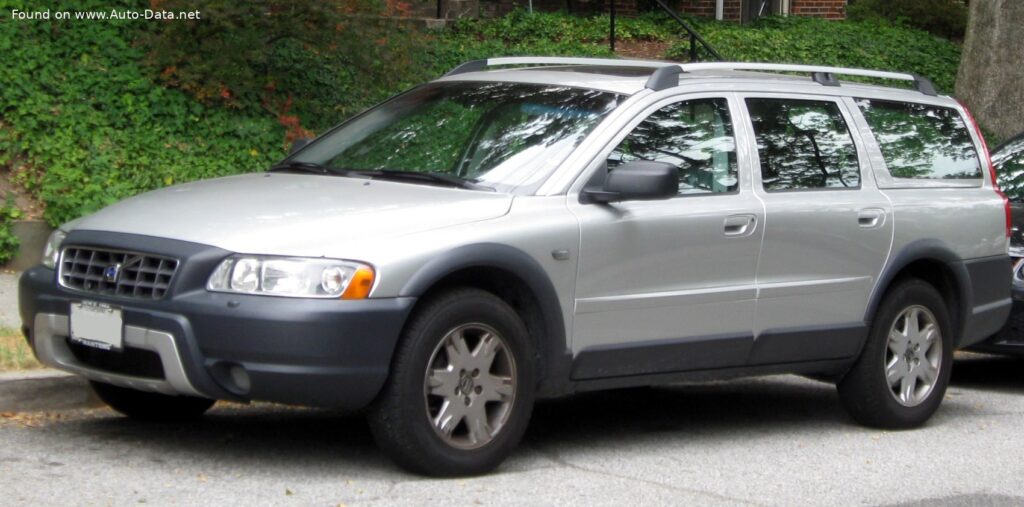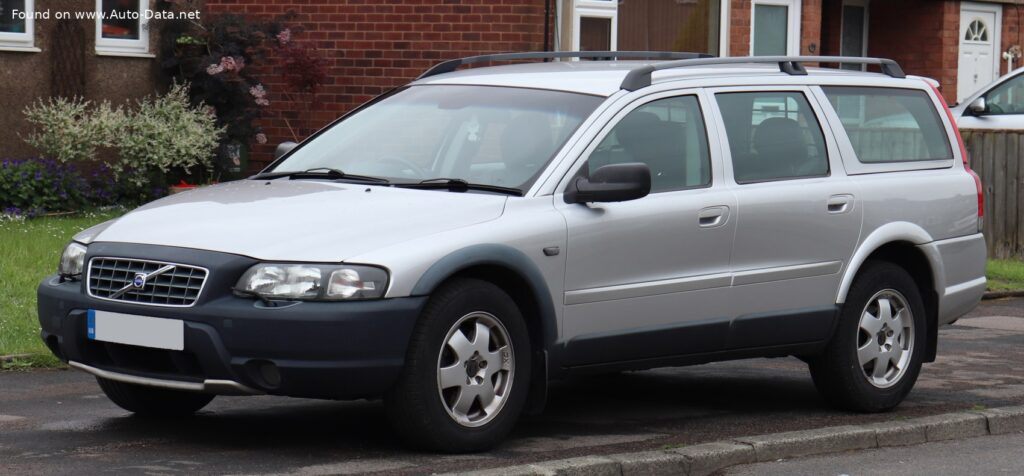
The Volvo XC70 I 2.4 T, produced from 2000 to 2003, represents Volvo’s initial foray into the burgeoning luxury crossover market. Based on the V70 station wagon, the XC70 I offered increased ground clearance and standard all-wheel drive, blending the practicality of a wagon with the capability of a mild off-roader. This model was never officially sold in the United States; however, it was a popular choice in Europe as a premium alternative to more traditional SUVs, appealing to buyers seeking a sophisticated and versatile vehicle. The “I” designation denotes the first generation of the XC70, setting the stage for subsequent iterations that would further refine the formula.
Volvo XC70 I 2.4 T: A Detailed Overview
The XC70 I was designed to appeal to a demographic desiring a vehicle capable of handling diverse conditions, from city streets to unpaved roads. It distinguished itself from the standard V70 through its rugged styling cues, including protective body cladding and a raised suspension. While not a dedicated off-road vehicle, the XC70 I provided a sense of security and capability that resonated with European drivers frequently encountering varied weather and road surfaces. It served as a precursor to the now-ubiquitous crossover segment, demonstrating Volvo’s commitment to innovation and practicality.
Engine & Performance
Powering the Volvo XC70 I 2.4 T is a 2.4-liter inline five-cylinder turbocharged gasoline engine. This engine, designated B5234T7, produces 200 horsepower at 6000 rpm and 285 Nm (210.21 lb.-ft.) of torque at 1800 rpm. The turbocharger significantly enhances low-end torque, providing responsive acceleration. The engine’s output translates to a 0-60 mph (0-97 km/h) time of approximately 8.2 seconds and a top speed of 210 km/h (130.49 mph). The engine features multi-port fuel injection and a double overhead camshaft (DOHC) valvetrain. The engine’s 9:1 compression ratio strikes a balance between performance and fuel efficiency. Power is delivered to all four wheels via a five-speed automatic transmission, ensuring optimal traction in various conditions. The weight-to-power ratio of 8.2 kg/Hp and weight-to-torque ratio of 5.7 kg/Nm contribute to a reasonably spirited driving experience.
Design & Features
The XC70 I’s body style is best described as a station wagon (estate) or crossover, offering a spacious and practical interior. It features five doors and seating for five passengers. The exterior design incorporates robust styling elements, including black plastic cladding around the lower body and wheel arches, giving it a more adventurous appearance than its V70 counterpart. Inside, the XC70 I offers a comfortable and well-appointed cabin, typical of Volvo’s focus on Scandinavian design. Standard features included power windows, power locks, and air conditioning. Safety was, and remains, a core Volvo value, and the XC70 I was equipped with an Anti-lock Braking System (ABS) as standard. The vehicle’s trunk space is generous, ranging from 485 liters (17.13 cu. ft.) with the rear seats up to 1641 liters (57.95 cu. ft.) with the rear seats folded down, providing ample room for cargo. The vehicle’s dimensions are 4733 mm (186.34 in.) in length, 1860 mm (73.23 in.) in width, and 1562 mm (61.5 in.) in height.
Technical Specifications
| Brand | Volvo |
| Model | XC70 |
| Generation | XC70 I |
| Type (Engine) | 2.4 T (200 Hp) AWD Automatic |
| Start of production | March, 2000 |
| End of production | 2003 |
| Powertrain Architecture | Internal Combustion engine |
| Body type | Station wagon (estate), Crossover |
| Seats | 5 |
| Doors | 5 |
| Fuel consumption (urban) | 13.7 l/100 km (17.2 US mpg, 20.6 UK mpg, 7.3 km/l) |
| Fuel consumption (extra urban) | 8.6 l/100 km (27.4 US mpg, 32.8 UK mpg, 11.6 km/l) |
| Fuel Type | Petrol (Gasoline) |
| Acceleration 0 – 100 km/h | 8.6 sec |
| Acceleration 0 – 62 mph | 8.6 sec |
| Acceleration 0 – 60 mph | 8.2 sec |
| Maximum speed | 210 km/h (130.49 mph) |
| Weight-to-power ratio | 8.2 kg/Hp |
| Weight-to-torque ratio | 5.7 kg/Nm |
| Power | 200 Hp @ 6000 rpm |
| Torque | 285 Nm @ 1800 rpm (210.21 lb.-ft. @ 1800 rpm) |
| Engine layout | Front, Transverse |
| Engine Model/Code | B5234T7 |
| Engine displacement | 2435 cm3 (148.59 cu. in.) |
| Number of cylinders | 5 |
| Engine configuration | Inline |
| Cylinder Bore | 83 mm (3.27 in.) |
| Piston Stroke | 90 mm (3.54 in.) |
| Compression ratio | 9:1 |
| Number of valves per cylinder | 4 |
| Fuel injection system | Multi-port manifold injection |
| Engine aspiration | Turbocharger |
| Valvetrain | DOHC |
| Engine oil capacity | 5.5 l (5.81 US qt | 4.84 UK qt) |
| Coolant | 9 l (9.51 US qt | 7.92 UK qt) |
| Kerb Weight | 1630 kg (3593.53 lbs.) |
| Max. weight | 2220 kg (4894.26 lbs.) |
| Max load | 590 kg (1300.73 lbs.) |
| Trunk (boot) space – minimum | 485 l (17.13 cu. ft.) |
| Trunk (boot) space – maximum | 1641 l (57.95 cu. ft.) |
| Fuel tank capacity | 68 l (17.96 US gal | 14.96 UK gal) |
| Length | 4733 mm (186.34 in.) |
| Width | 1860 mm (73.23 in.) |
| Height | 1562 mm (61.5 in.) |
| Wheelbase | 2763 mm (108.78 in.) |
| Front track | 1611 mm (63.43 in.) |
| Rear (Back) track | 1548 mm (60.94 in.) |
| Drive wheel | All wheel drive (4×4) |
| Number of gears and type of gearbox | 5 gears, automatic transmission |
| Front suspension | Spring Strut |
| Rear suspension | Coil spring |
| Front brakes | Ventilated discs |
| Rear brakes | Disc |
| Assisting systems | ABS (Anti-lock braking system) |
| Steering type | Steering rack and pinion |
| Tires size | 215/65 R16 |
| Wheel rims size | 16 |