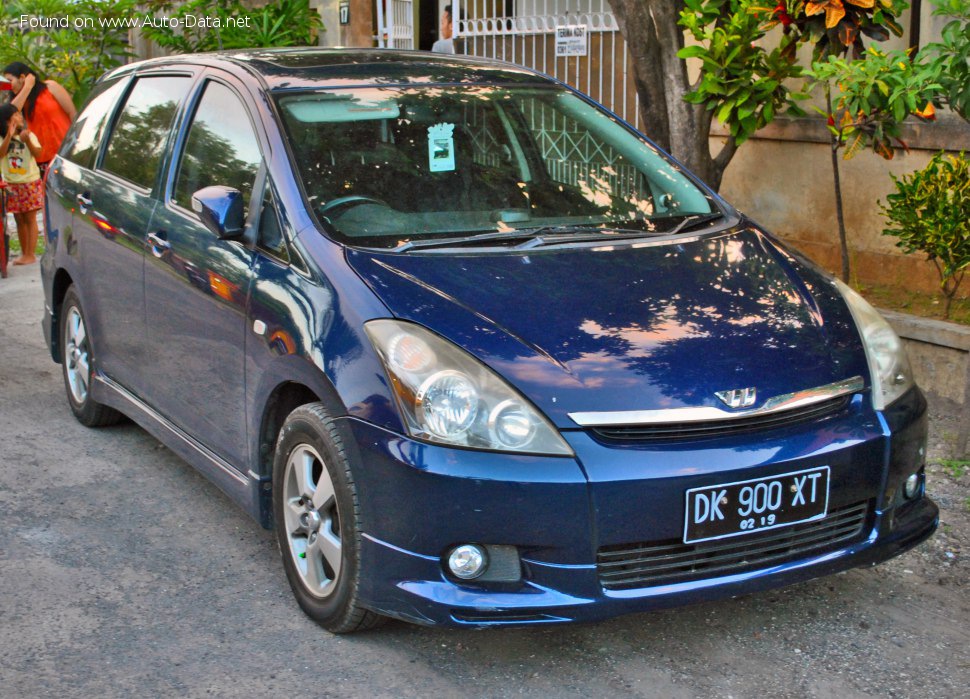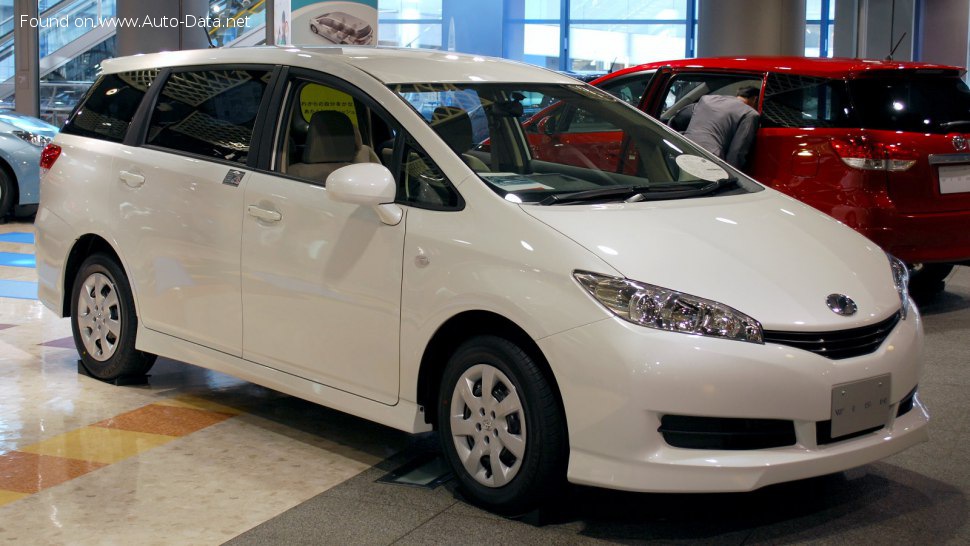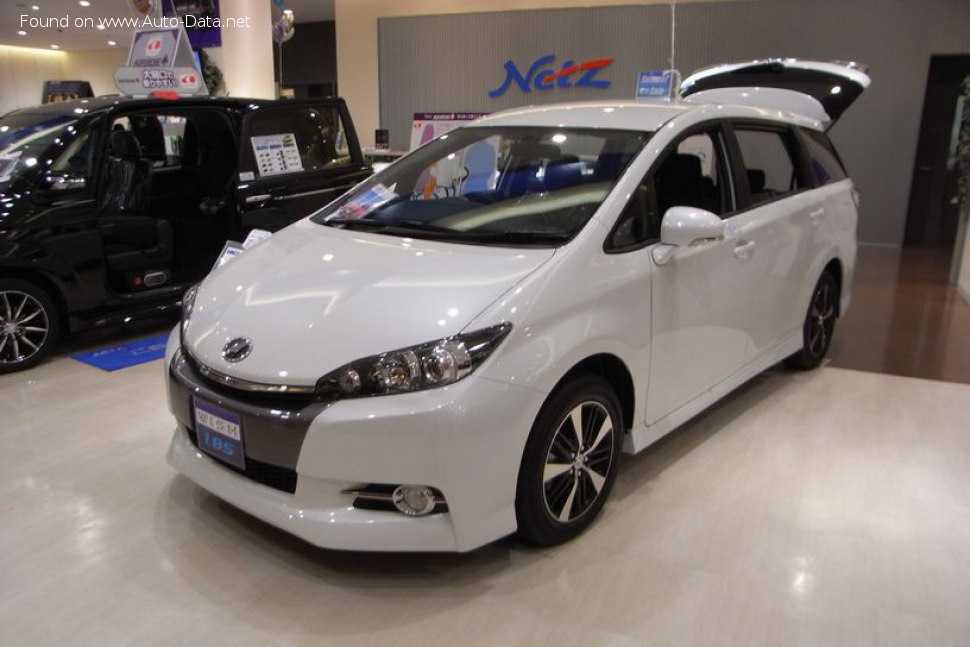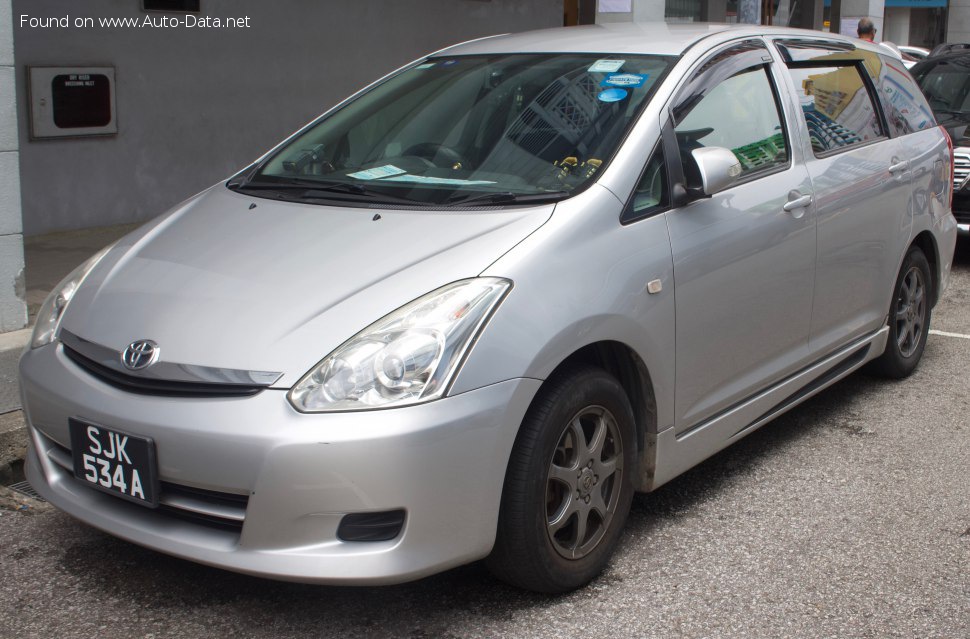
The Toyota Wish is a compact minivan that was originally marketed primarily in Japan and other Asian markets. The first generation, known as the Wish I, was introduced in 2003, with a significant facelift arriving in 2005. This facelift brought styling updates and refinements to the vehicle. The Toyota Wish I (facelift 2005) 2.0, powered by a 155 horsepower engine and featuring a Continuously Variable Transmission with intelligence (CVT-i), represented a popular choice for families seeking a versatile and spacious vehicle. While never officially sold in the United States, the Wish offered a unique blend of practicality and style that resonated with consumers in its target markets.
Engine & Performance
The 2005 facelift of the Toyota Wish I 2.0 was equipped with the 1AZ-FSE engine, a 1.998-liter (121.93 cubic inches) inline-four cylinder gasoline engine. This naturally aspirated engine produced a maximum power output of 155 horsepower at 6000 rpm and 192 Nm (141.61 lb.-ft.) of torque at 4000 rpm. The engine featured direct fuel injection and a double overhead camshaft (DOHC) valvetrain with four valves per cylinder, contributing to its efficiency and responsiveness. Power delivery was managed through a CVT-i (Continuously Variable Transmission with intelligence) automatic transmission, designed to provide smooth and efficient acceleration. The Wish’s weight-to-power ratio was 8.8 kg/Hp (114 Hp/tonne), and its weight-to-torque ratio was 7.1 kg/Nm (141.2 Nm/tonne). Fuel consumption was rated between 6.9 and 7.6 liters per 100 kilometers (34.1 to 30.9 US mpg, or 40.9 to 37.2 UK mpg), depending on driving conditions.
Design & Features
The Toyota Wish I (facelift 2005) is a five-door minivan designed to accommodate between six and seven passengers, depending on the configuration. Its body style prioritized interior space and practicality, making it well-suited for family transportation. The 2005 facelift brought subtle but noticeable changes to the exterior, including revised front and rear fascias, updated headlights and taillights, and a more refined overall appearance. Inside, the Wish offered a comfortable and functional cabin with a focus on maximizing passenger space. The flexible seating arrangement allowed for various configurations to accommodate different cargo and passenger needs. Safety features, while typical for the era, included ventilated front disc brakes and rear discs, providing adequate stopping power. The vehicle’s dimensions – 4560 mm (179.53 in) in length, 1695-1745 mm (66.73 – 68.7 in) in width, and 1590-1600 mm (62.6 – 62.99 in) in height – contributed to its maneuverability in urban environments. A 60-liter (15.85 US gal) fuel tank provided a reasonable driving range.
Market Positioning
The Toyota Wish occupied a niche market segment, bridging the gap between compact MPVs (Multi-Purpose Vehicles) and larger, more expensive minivans. In markets like Japan, it competed with vehicles like the Honda Freed and Nissan Serena. Its appeal lay in its relatively compact size, making it easier to park and maneuver than larger minivans, while still offering a generous amount of interior space and seating capacity. The Wish was often chosen by families who needed a versatile vehicle for daily commutes, school runs, and weekend trips.
Technical Specifications
| Brand | Toyota |
| Model | Wish |
| Generation | Wish I (facelift 2005) |
| Type (Engine) | 2.0 (155 Hp) CVT-i |
| Start of production | September, 2005 |
| End of production | March, 2009 |
| Powertrain Architecture | Internal Combustion engine |
| Body type | Minivan |
| Seats | 6-7 |
| Doors | 5 |
| Fuel consumption (combined) | 6.9-7.6 l/100 km |
| Fuel consumption (US mpg) | 34.1 – 30.9 |
| Fuel consumption (UK mpg) | 40.9 – 37.2 |
| Fuel Type | Petrol (Gasoline) |
| Weight-to-power ratio | 8.8 kg/Hp |
| Power | 155 Hp @ 6000 rpm |
| Torque | 192 Nm @ 4000 rpm (141.61 lb.-ft. @ 4000 rpm) |
| Engine layout | Front, Transverse |
| Engine Model/Code | 1AZ-FSE |
| Engine displacement | 1998 cm3 (121.93 cu. in.) |
| Number of cylinders | 4 |
| Engine configuration | Inline |
| Cylinder Bore | 86 mm (3.39 in.) |
| Piston Stroke | 86 mm (3.39 in.) |
| Compression ratio | 10.5:1 |
| Number of valves per cylinder | 4 |
| Fuel injection system | Direct injection |
| Engine aspiration | Naturally aspirated engine |
| Valvetrain | DOHC |
| Engine oil capacity | 4.2 l (4.44 US qt | 3.7 UK qt) |
| Coolant | 6.7 l (7.08 US qt | 5.9 UK qt) |
| Kerb Weight | 1360-1400 kg (2998.29 – 3086.47 lbs.) |
| Max. weight | 1745 kg (3847.07 lbs.) |
| Max load | 345-385 kg (760.59 – 848.78 lbs.) |
| Fuel tank capacity | 60 l (15.85 US gal | 13.2 UK gal) |
| Length | 4560 mm (179.53 in.) |
| Width | 1695-1745 mm (66.73 – 68.7 in.) |
| Height | 1590-1600 mm (62.6 – 62.99 in.) |
| Wheelbase | 2750 mm (108.27 in.) |
| Front track | 1480-1500 mm (58.27 – 59.06 in.) |
| Rear track | 1460-1490 mm (57.48 – 58.66 in.) |
| Ride height (ground clearance) | 155-170 mm (6.1 – 6.69 in.) |
| Minimum turning circle | 10.6-10.8 m (34.78 – 35.43 ft.) |
| Drivetrain Architecture | Front wheel drive |
| Number of gears and type of gearbox | automatic transmission CVT-i |
| Front brakes | Ventilated discs |
| Rear brakes | Disc |
| Tires size | 195/65 R15 |
| Wheel rims size | 15 |