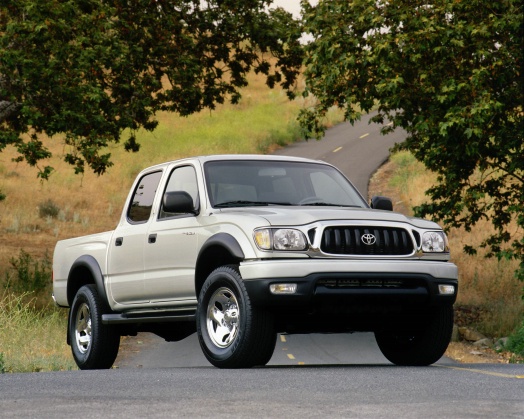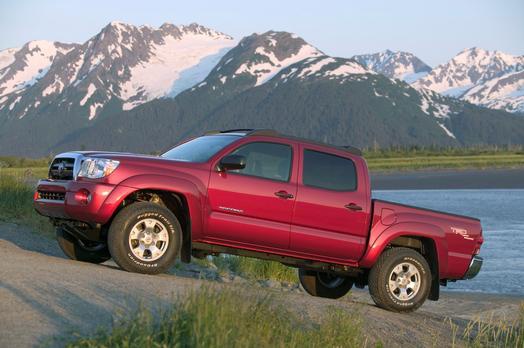
The Toyota Tacoma II Double Cab 2.7 (160 Hp) 4WD, produced between 2004 and 2012, represents a significant iteration in Toyota’s popular compact pickup truck lineage. This generation Tacoma, sold primarily in North America, built upon the success of its predecessor, offering increased size, improved refinement, and a wider range of configurations. The Double Cab designation indicates a four-door body style, providing enhanced passenger space compared to the standard cab models. Positioned within the mid-size pickup segment, the Tacoma II competed with vehicles like the Ford Ranger, Nissan Frontier, and Chevrolet Colorado, appealing to buyers seeking a versatile vehicle capable of both work and recreational duties.
Toyota Tacoma II Double Cab 2.7: A Detailed Overview
The Tacoma II Double Cab aimed to balance rugged capability with everyday usability. While maintaining Toyota’s reputation for reliability and durability, this generation introduced a more comfortable interior and a more modern aesthetic. The 2.7-liter engine option, while not the most powerful in the Tacoma lineup, provided a cost-effective entry point and sufficient power for many applications. The availability of a four-wheel-drive system further enhanced its appeal to those needing off-road capability or traction in inclement weather. This model played a crucial role in solidifying the Tacoma’s position as a leading mid-size truck in the US market.
Engine & Performance
The heart of the Toyota Tacoma II Double Cab 2.7 4WD is the 2TR-FE 2.7-liter inline-four cylinder gasoline engine. This naturally aspirated powerplant produces 160 horsepower at 5200 rpm and 246 Newton-meters (181.44 lb.-ft.) of torque at 3800 rpm. While not a high-output engine, it delivers adequate performance for typical pickup truck tasks. The engine features a double overhead camshaft (DOHC) valvetrain with variable valve timing (D-VVT-i) to optimize efficiency and responsiveness. Power is delivered to all four wheels through a five-speed manual transmission. The longitudinal engine layout contributes to a balanced weight distribution. The 2TR-FE is known for its durability and relatively simple design, contributing to the Tacoma’s overall reliability. Fuel injection is managed by a multi-port manifold system. The engine’s 9.5:1 compression ratio strikes a balance between power and fuel economy.
Design & Features
The Tacoma II Double Cab is characterized by its pickup truck body style, featuring four doors and seating for five passengers. The design incorporates a relatively boxy silhouette, typical of trucks from this era, with a focus on functionality and durability. The Double Cab configuration significantly increases rear passenger space compared to the standard cab, making it a more practical option for families or those frequently carrying passengers. The interior, while not luxurious, offers a comfortable and functional environment. Standard features typically included air conditioning, power windows and locks, and an AM/FM stereo. Safety features, while evolving during the production run, included anti-lock brakes (ABS) as a standard offering. The truck’s robust frame and suspension contribute to its load-carrying capacity and off-road capability. The 2004-2012 Tacoma II Double Cab prioritized practicality and durability over outright luxury, appealing to buyers who needed a reliable and versatile vehicle.
Technical Specifications
| General Information | |
| Brand | Toyota |
| Model | Tacoma |
| Generation | Tacoma II Double Cab |
| Type (Engine) | 2.7 (160 Hp) 4WD |
| Start of production | August, 2004 |
| End of production | 2012 |
| Powertrain Architecture | Internal Combustion engine |
| Body type | Pick-up |
| Seats | 5 |
| Doors | 4 |
| Performance Specs | |
| Fuel Type | Petrol (Gasoline) |
| Power | 160 Hp @ 5200 rpm |
| Power per litre | 59.4 Hp/l |
| Torque | 246 Nm @ 3800 rpm / 181.44 lb.-ft. @ 3800 rpm |
| Engine Specs | |
| Engine layout | Front, Longitudinal |
| Engine Model/Code | 2TR-FE |
| Engine displacement | 2694 cm3 / 164.4 cu. in. |
| Number of cylinders | 4 |
| Engine configuration | Inline |
| Cylinder Bore | 95 mm / 3.74 in. |
| Piston Stroke | 95 mm / 3.74 in. |
| Compression ratio | 9.5:1 |
| Number of valves per cylinder | 4 |
| Fuel injection system | Multi-port manifold injection |
| Engine aspiration | Naturally aspirated engine |
| Valvetrain | DOHC, D-VVT-i |
| Engine oil capacity | 5.8 l / 6.13 US qt | 5.1 UK qt |
| Coolant | 8.7 l / 9.19 US qt | 7.65 UK qt |
| Space, Volume and Weights | |
| Fuel tank capacity | 80 l / 21.13 US gal | 17.6 UK gal |
| Dimensions | |
| Length | 5286 mm / 208.11 in. |
| Width | 1895 mm / 74.61 in. |
| Height | 1781 mm / 70.12 in. |
| Wheelbase | 3246 mm / 127.8 in. |
| Front track | 1600 mm / 62.99 in. |
| Rear (Back) track | 1610 mm / 63.39 in. |
| Ride height (ground clearance) | 215 mm / 8.46 in. |
| Drivetrain, Brakes and Suspension | |
| Drive wheel | All wheel drive (4×4) |
| Number of gears and type of gearbox | 5 gears, manual transmission |
| Front suspension | Independent, type McPherson with coil spring and anti-roll bar |
| Rear suspension | Independent coil spring |
| Front brakes | Ventilated discs |
| Rear brakes | Drum |
| Assisting systems | ABS (Anti-lock braking system) |
| Steering type | Steering rack and pinion |
| Tires size | 245/75 R16 |
| Wheel rims size | 16 |