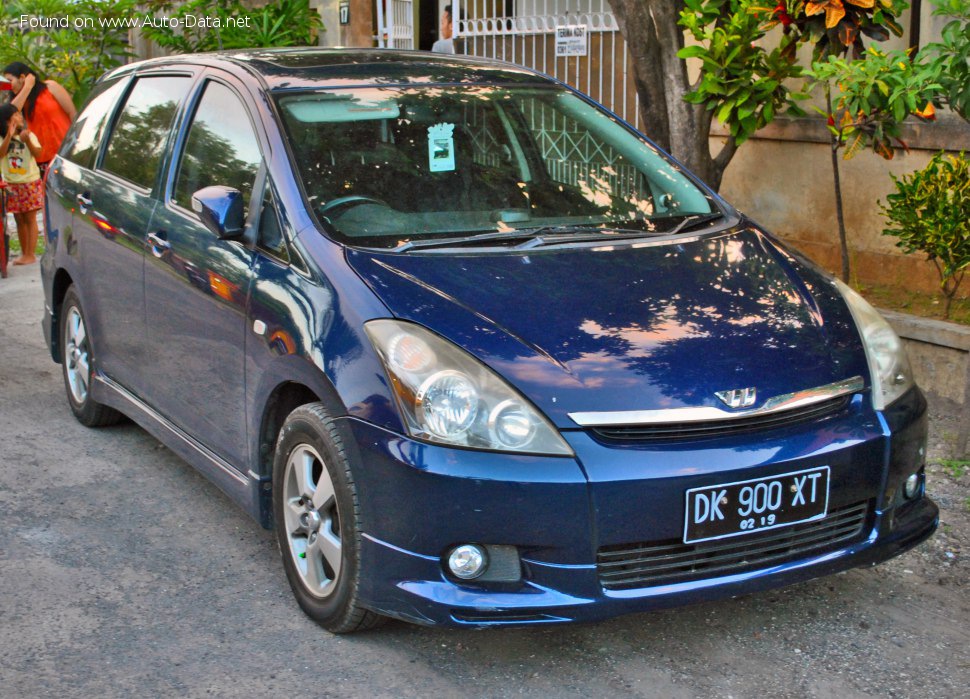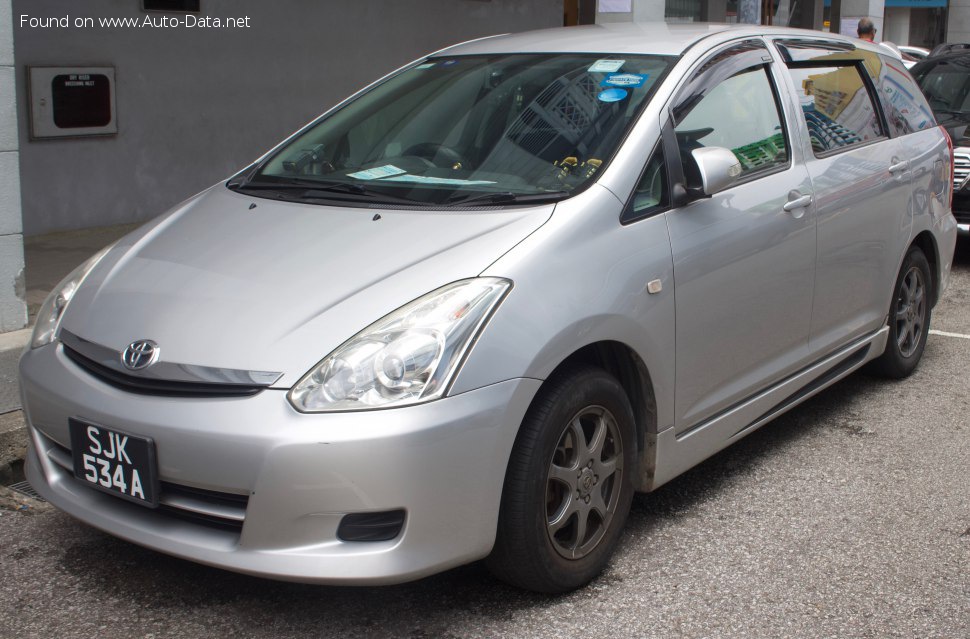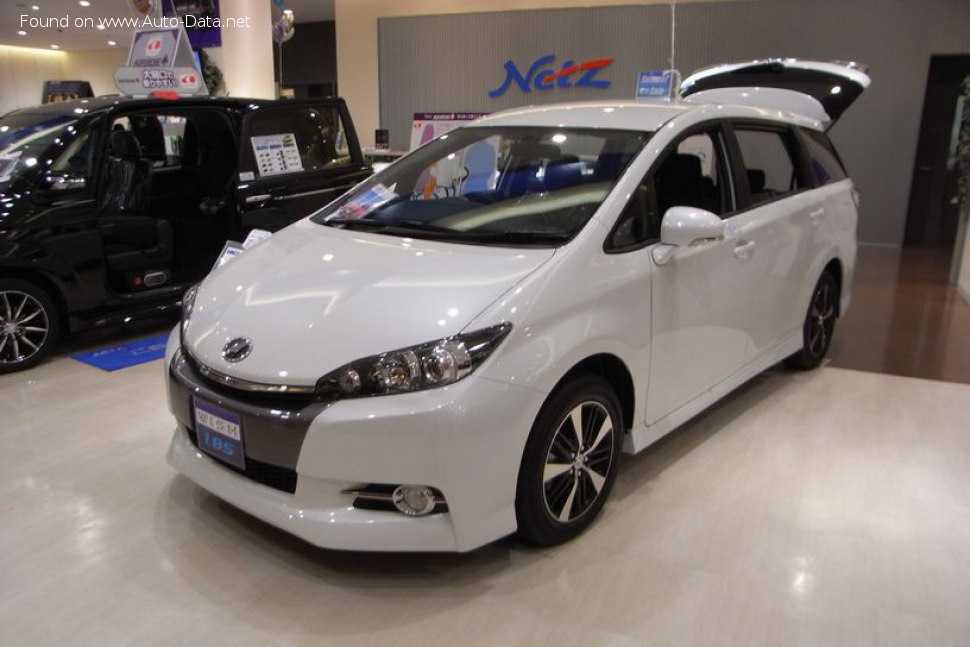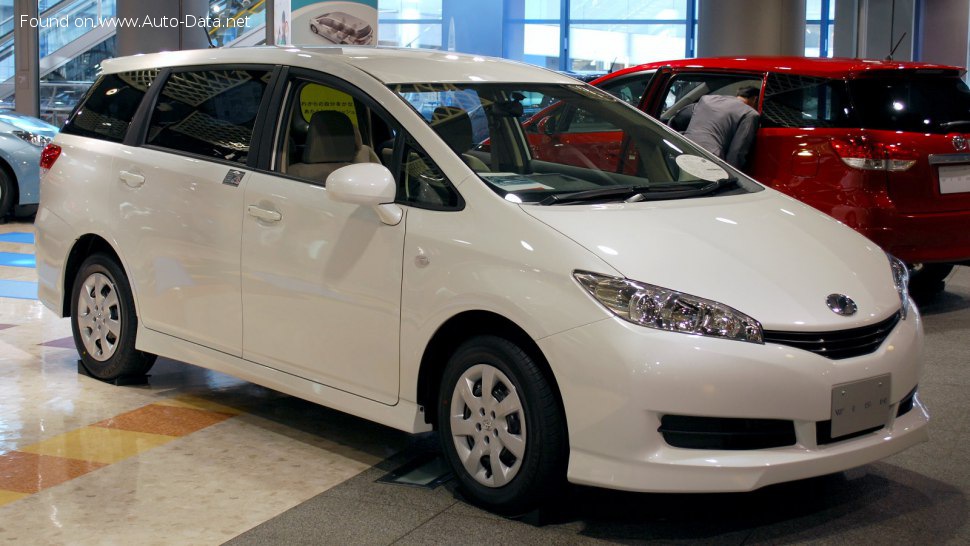
The Toyota Wish II 1.8i (133 Hp) 4WD CVT-i, produced between 2009 and 2012, is a compact minivan primarily designed for the Japanese domestic market (JDM) and other Asian countries. It represents the second generation of the Wish, a vehicle conceived to bridge the gap between a traditional multi-purpose vehicle (MPV) and a more stylish, car-like offering. While not officially sold in the United States, the Wish II gained a following among enthusiasts for its unique blend of practicality, space efficiency, and available all-wheel drive. It catered to families seeking a versatile vehicle for urban commuting and weekend trips, offering seating for up to seven passengers in a relatively compact footprint.
Toyota Wish II: A Detailed Overview
The Wish II aimed to provide a more youthful and dynamic alternative to boxier MPVs prevalent in the early 2000s. Toyota achieved this through a sleeker exterior design and a focus on driving enjoyment. The 1.8i variant, equipped with a 1.8-liter inline-four engine and a continuously variable transmission (CVT), was a popular choice, balancing fuel efficiency with adequate performance for everyday driving. The availability of all-wheel drive further enhanced its appeal in regions with inclement weather or varied road conditions.
Engine & Performance
The heart of the Toyota Wish II 1.8i is the 2ZR-FAE 1.8-liter inline-four cylinder engine. This naturally aspirated powerplant produces 133 horsepower at 6,400 rpm and 164 Nm (120.96 lb.-ft.) of torque at 4,400 rpm. While not a performance-oriented engine, it delivers sufficient power for comfortable daily driving and highway cruising. The engine’s power-to-weight ratio is 92.4 Hp/tonne, and the torque-to-weight ratio is 113.9 Nm/tonne. The engine features multi-port fuel injection and a double overhead camshaft (DOHC) valvetrain, contributing to its efficiency and responsiveness. The CVT-i transmission, a Toyota innovation, provides seamless gear changes and optimizes fuel economy. Combined fuel consumption is rated at 6.6 liters per 100 kilometers (35.6 US mpg or 42.8 UK mpg), making it a relatively economical choice in its class. The engine has a displacement of 1797 cm3 (109.66 cu. in.) with a bore of 80.5 mm (3.17 in.) and a stroke of 88.3 mm (3.48 in.). It operates with a compression ratio of 10:1.
Design & Features
The Toyota Wish II is a five-door minivan with a seating capacity of seven. Its design prioritized interior space and versatility. The second-row seats typically feature a 60/40 split, allowing for flexible cargo configurations, while the third-row seats can be folded flat to maximize luggage capacity. The interior design, while functional, was generally considered to be modern for its time, with a focus on ergonomics and ease of use. Safety features included Anti-lock Braking System (ABS) as standard equipment. The vehicle’s dimensions are 4590 mm (180.71 in.) in length, 1695-1720 mm (66.73 – 67.72 in.) in width, and 1600 mm (62.99 in.) in height, with a wheelbase of 2750 mm (108.27 in.). Ground clearance is 150 mm (5.91 in.). The Wish II rides on 15-inch wheels with tire size 195/65 R15. The minimum turning circle is 11.0 meters (36.09 ft.).
Technical Specifications
| Brand | Toyota |
| Model | Wish |
| Generation | Wish II |
| Type | 1.8i (133 Hp) 4WD CVT-i |
| Start of production | 2009 |
| End of production | 2012 |
| Powertrain Architecture | Internal Combustion engine |
| Body type | Minivan |
| Seats | 7 |
| Doors | 5 |
| Fuel consumption (combined) | 6.6 l/100 km (35.6 US mpg, 42.8 UK mpg, 15.2 km/l) |
| Fuel Type | Petrol (Gasoline) |
| Weight-to-power ratio | 10.8 kg/Hp |
| Weight-to-torque ratio | 8.8 kg/Nm |
| Power | 133 Hp @ 6400 rpm |
| Power per litre | 74 Hp/l |
| Torque | 164 Nm @ 4400 rpm (120.96 lb.-ft. @ 4400 rpm) |
| Engine layout | Front, Transverse |
| Engine Model/Code | 2ZR-FAE |
| Engine displacement | 1797 cm3 (109.66 cu. in.) |
| Number of cylinders | 4 |
| Engine configuration | Inline |
| Cylinder Bore | 80.5 mm (3.17 in.) |
| Piston Stroke | 88.3 mm (3.48 in.) |
| Compression ratio | 10:1 |
| Number of valves per cylinder | 4 |
| Fuel injection system | Multi-port manifold injection |
| Engine aspiration | Naturally aspirated engine |
| Valvetrain | DOHC |
| Engine oil capacity | 4.2 l (4.44 US qt | 3.7 UK qt) |
| Coolant capacity | 5.5 l (5.81 US qt | 4.84 UK qt) |
| Kerb Weight | 1440 kg (3174.66 lbs.) |
| Max. weight | 1825 kg (4023.44 lbs.) |
| Max load | 385 kg (848.78 lbs.) |
| Fuel tank capacity | 60 l (15.85 US gal | 13.2 UK gal) |
| Length | 4590 mm (180.71 in.) |
| Width | 1695-1720 mm (66.73 – 67.72 in.) |
| Height | 1600 mm (62.99 in.) |
| Wheelbase | 2750 mm (108.27 in.) |
| Front track | 1480 mm (58.27 in.) |
| Rear track | 1460 mm (57.48 in.) |
| Ride height (ground clearance) | 150 mm (5.91 in.) |
| Minimum turning circle | 11.0 m (36.09 ft.) |
| Drive wheel | All wheel drive (4×4) |
| Number of gears and type of gearbox | automatic transmission CVT-i |
| Front brakes | Ventilated discs |
| Rear brakes | Drum |
| Assisting systems | ABS (Anti-lock braking system) |
| Tires size | 195/65 R15 |
| Wheel rims size | 15 |
The Toyota Wish II 1.8i 4WD CVT-i, while not a mainstream vehicle in the United States, represents a compelling example of Japanese automotive engineering focused on maximizing space and practicality within a relatively compact package. Its blend of fuel efficiency, all-wheel-drive capability, and seven-passenger seating made it a popular choice for families in its target markets.