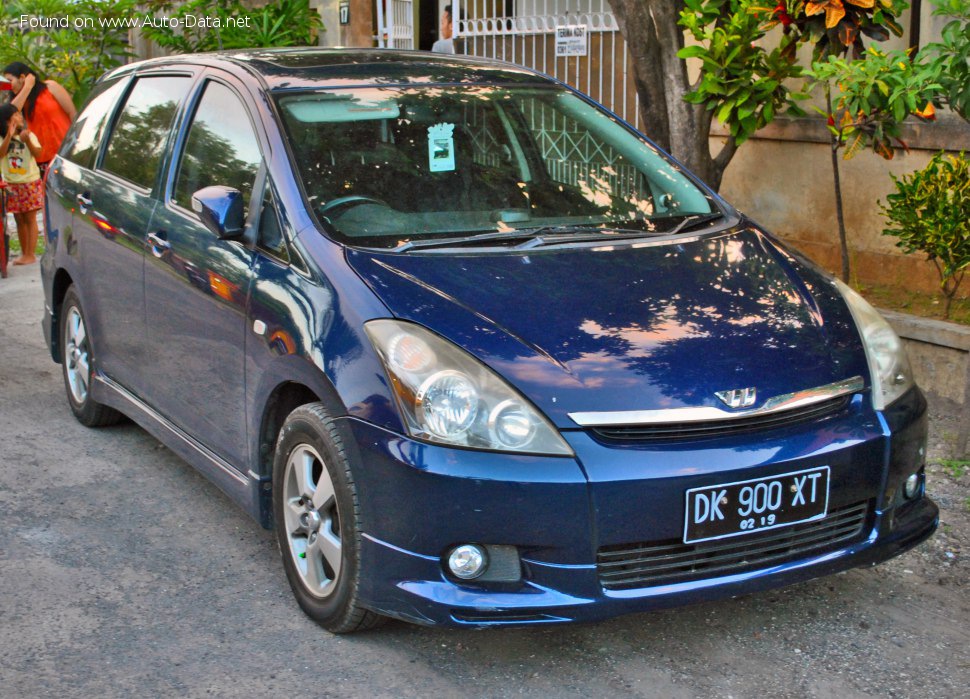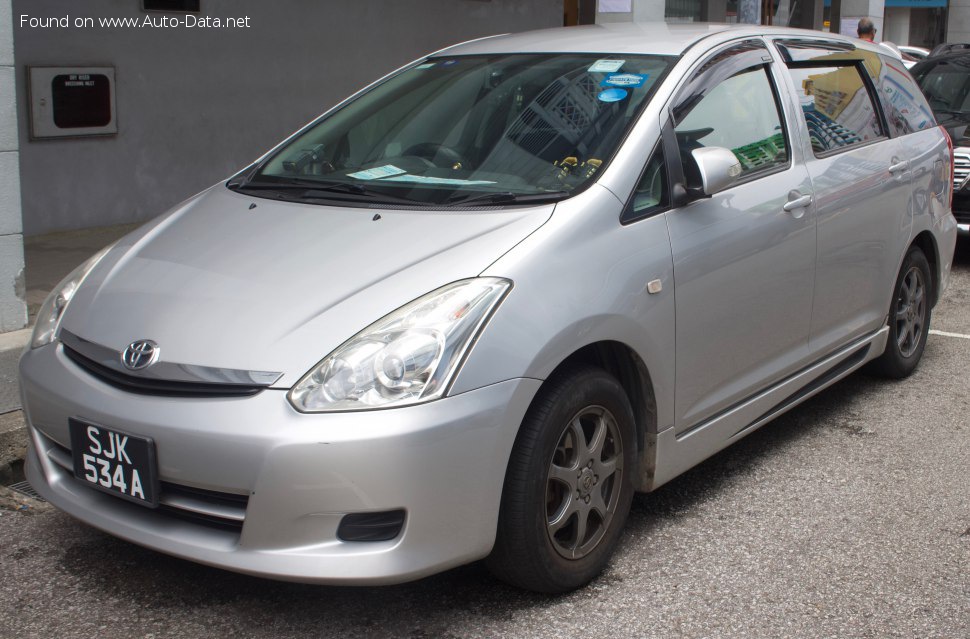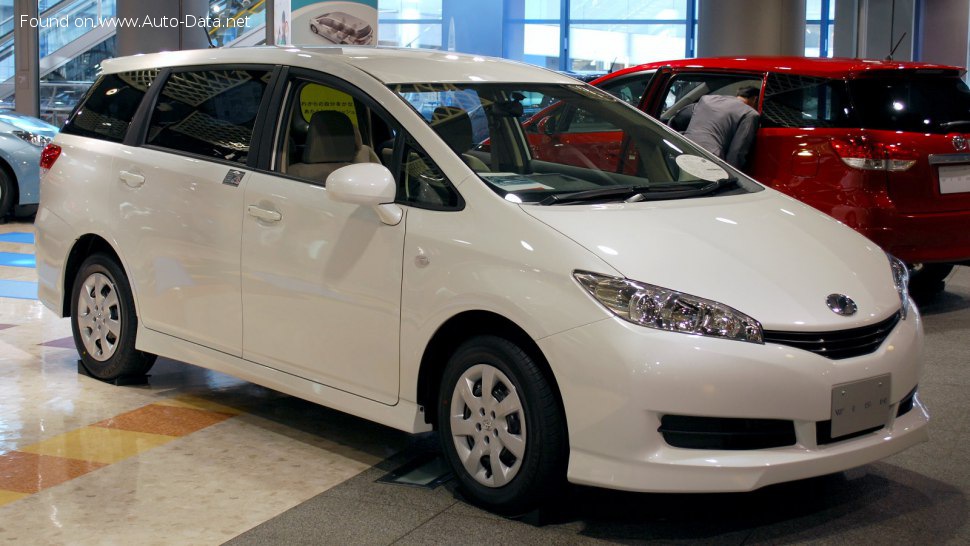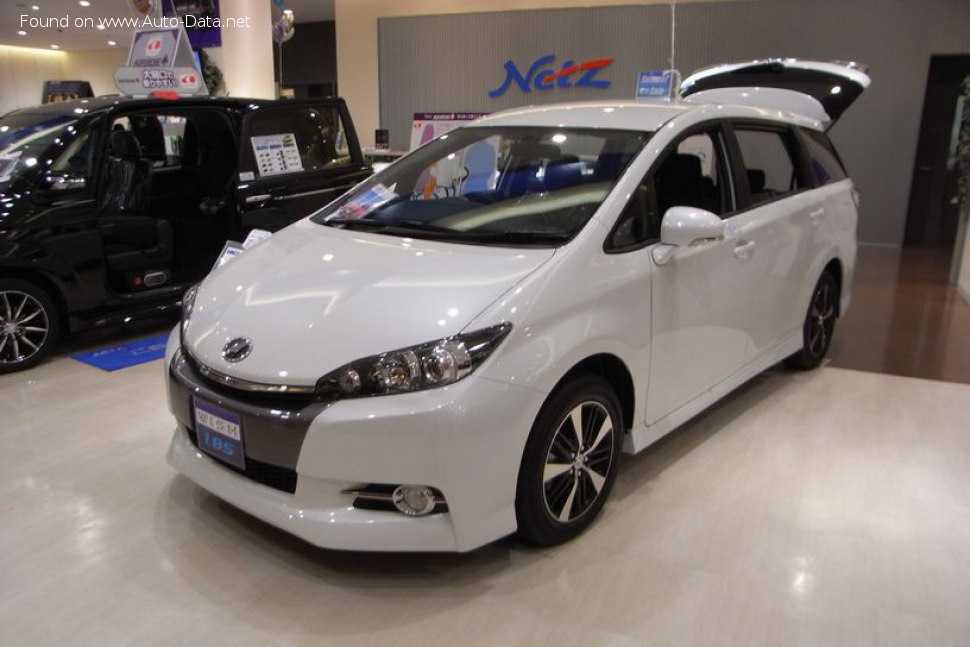
The Toyota Wish II, specifically the facelifted version introduced in 2012, is a compact minivan primarily designed for the Asian market, particularly Japan and Southeast Asia. It served as a versatile seven-seater, bridging the gap between a traditional family car and a larger multi-purpose vehicle (MPV). While not officially sold in the United States, the Wish II represents Toyota’s commitment to providing practical and space-efficient vehicles for families. The 1.8i variant, equipped with a 131 horsepower engine and a continuously variable transmission (CVT-i) coupled with all-wheel drive (4WD), was a popular configuration, offering a balance of fuel efficiency and all-weather capability.
Toyota Wish II (Facelift 2012) 1.8i: An Overview
The Wish II, launched in 2003 and receiving a significant facelift in 2012, aimed to provide a more stylish and functional alternative to conventional minivans. The facelift brought updated exterior styling, interior refinements, and improvements to the vehicle’s overall efficiency. The 1.8i model, powered by the 2ZR-FAE engine, was positioned as an entry-level option, appealing to buyers seeking a reliable and economical family vehicle. Its seven-seat configuration and relatively compact dimensions made it well-suited for navigating crowded urban environments, a common characteristic of many Asian cities.
Engine & Performance
The heart of the Toyota Wish II 1.8i is the 2ZR-FAE 1.8-liter inline-four cylinder gasoline engine. This naturally aspirated engine produces 131 horsepower at 6,200 rpm and 161 Nm (118.75 lb.-ft.) of torque at 4,000 rpm. The engine features a double overhead camshaft (DOHC) valvetrain with four valves per cylinder, contributing to its relatively efficient operation. Power is delivered to all four wheels via a CVT-i (Continuously Variable Transmission with intelligence) automatic transmission. This transmission type prioritizes fuel efficiency and smooth acceleration, although it doesn’t offer the stepped gear changes of a traditional automatic. The Wish II 1.8i achieves a combined fuel consumption of 6.9 liters per 100 kilometers (34.1 US mpg), making it a reasonably economical choice for its class and size. The weight-to-power ratio of 11.1 kg/Hp and weight-to-torque ratio of 9 kg/Nm indicate a balanced, if not particularly sporty, driving experience.
Design & Features
The Toyota Wish II is a five-door minivan with a distinctive, slightly wedge-shaped profile. The 2012 facelift brought a more aggressive front fascia, with a redesigned grille and headlights. The interior is designed with practicality in mind, offering a flexible seating arrangement with three rows of seats to accommodate up to seven passengers. While not boasting luxurious appointments, the interior provides comfortable seating and adequate space for passengers and luggage. Key features include a standard anti-lock braking system (ABS) for enhanced safety, and a focus on maximizing interior space through clever packaging. The vehicle’s dimensions – 4600 mm in length, 1695-1720 mm in width, and 1600 mm in height – position it as a relatively compact minivan, making it easier to maneuver and park in urban settings. The 15-inch wheels, fitted with 195/65 R15 tires, contribute to a comfortable ride quality.
Technical Specifications
| Brand | Toyota |
| Model | Wish |
| Generation | Wish II (facelift 2012) |
| Type (Engine) | 1.8i (131 Hp) 4WD CVT-i |
| Start of production | 2012 |
| End of production | 2017 |
| Powertrain Architecture | Internal Combustion engine |
| Body type | Minivan |
| Seats | 7 |
| Doors | 5 |
| Fuel consumption (combined) | 6.9 l/100 km (34.1 US mpg, 40.9 UK mpg, 14.5 km/l) |
| Fuel Type | Petrol (Gasoline) |
| Weight-to-power ratio | 11.1 kg/Hp |
| Weight-to-torque ratio | 9 kg/Nm |
| Power | 131 Hp @ 6200 rpm |
| Power per litre | 72.9 Hp/l |
| Torque | 161 Nm @ 4000 rpm (118.75 lb.-ft. @ 4000 rpm) |
| Engine layout | Front, Transverse |
| Engine Model/Code | 2ZR-FAE |
| Engine displacement | 1797 cm3 (109.66 cu. in.) |
| Number of cylinders | 4 |
| Engine configuration | Inline |
| Cylinder Bore | 80.5 mm (3.17 in.) |
| Piston Stroke | 88.3 mm (3.48 in.) |
| Compression ratio | 10.6:1 |
| Number of valves per cylinder | 4 |
| Fuel injection system | Multi-port manifold injection |
| Engine aspiration | Naturally aspirated engine |
| Valvetrain | DOHC |
| Engine oil capacity | 4.2 l (4.44 US qt | 3.7 UK qt) |
| Coolant | 5.5 l (5.81 US qt | 4.84 UK qt) |
| Kerb Weight | 1450 kg (3196.7 lbs.) |
| Max. weight | 1835 kg (4045.48 lbs.) |
| Max load | 385 kg (848.78 lbs.) |
| Fuel tank capacity | 60 l (15.85 US gal | 13.2 UK gal) |
| Length | 4600 mm (181.1 in.) |
| Width | 1695-1720 mm (66.73 – 67.72 in.) |
| Height | 1600 mm (62.99 in.) |
| Wheelbase | 2750 mm (108.27 in.) |
| Front track | 1480 mm (58.27 in.) |
| Rear track | 1460 mm (57.48 in.) |
| Ride height (ground clearance) | 150 mm (5.91 in.) |
| Minimum turning circle | 11.0 m (36.09 ft.) |
| Drive wheel | All wheel drive (4×4) |
| Number of gears and type of gearbox | automatic transmission CVT-i |
| Front brakes | Ventilated discs |
| Rear brakes | Disc |
| Assisting systems | ABS (Anti-lock braking system) |
| Tires size | 195/65 R15 |
| Wheel rims size | 15 |
In conclusion, the Toyota Wish II 1.8i 4WD CVT-i, while not a vehicle commonly found in the United States, represents a practical and well-engineered solution for families in Asian markets. Its combination of seven-seat capacity, reasonable fuel efficiency, and all-wheel drive capability made it a popular choice for those seeking a versatile and reliable minivan.