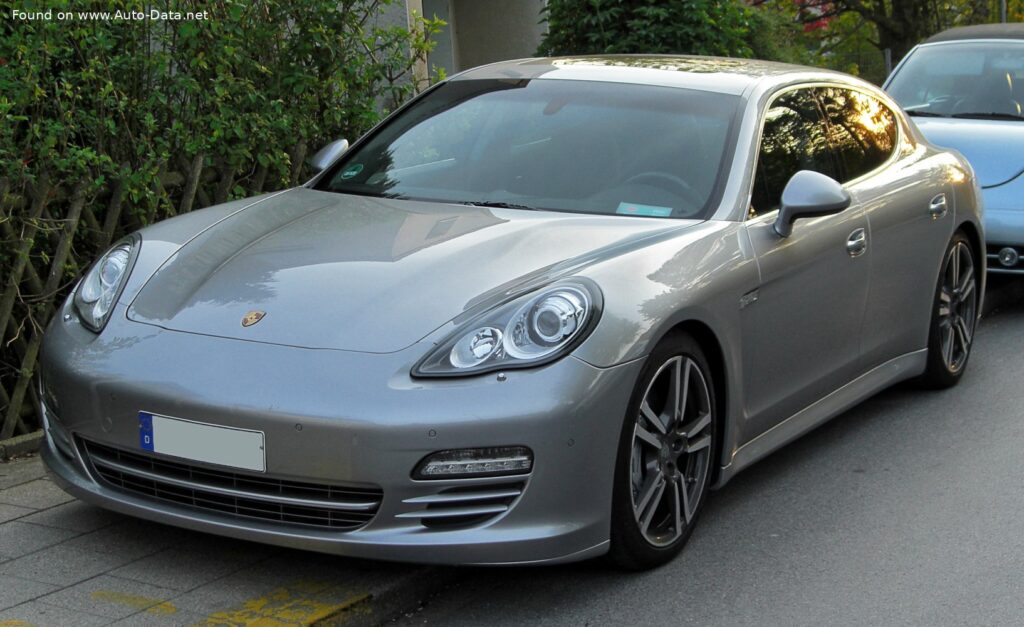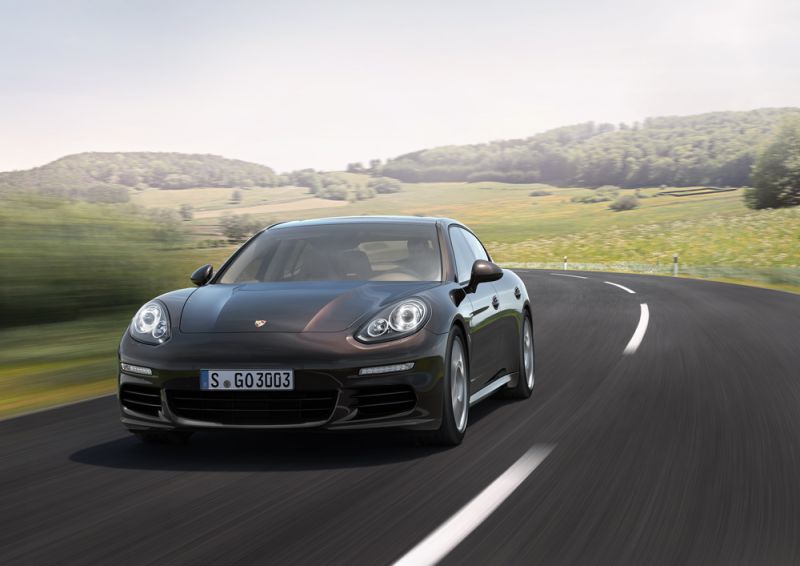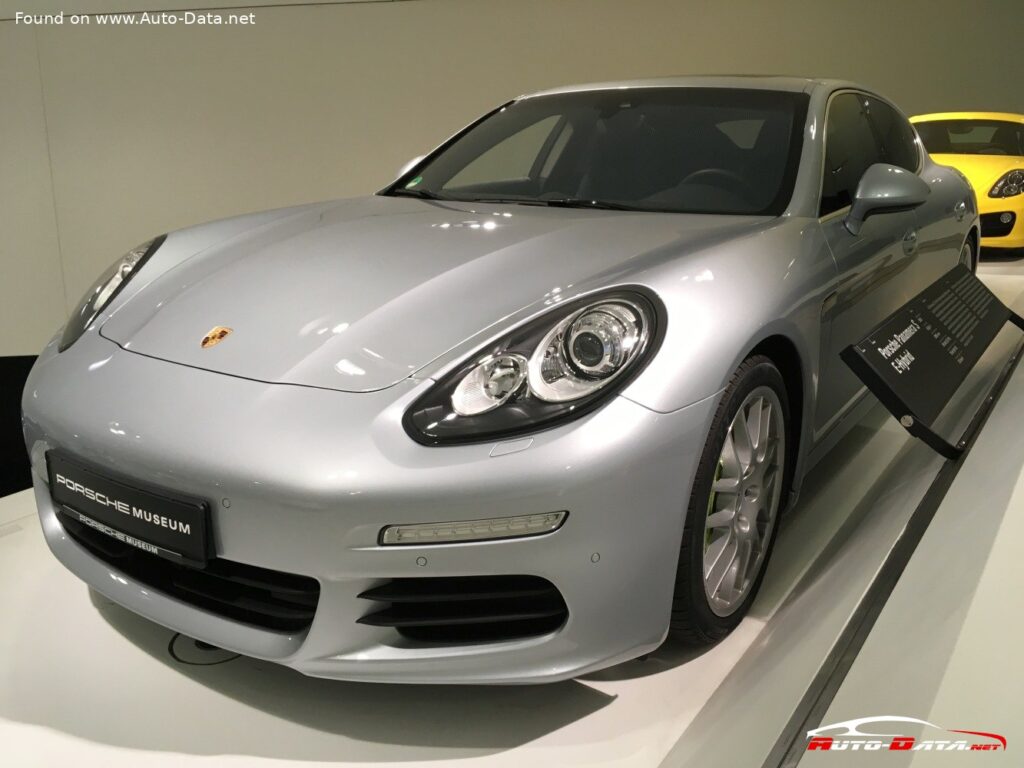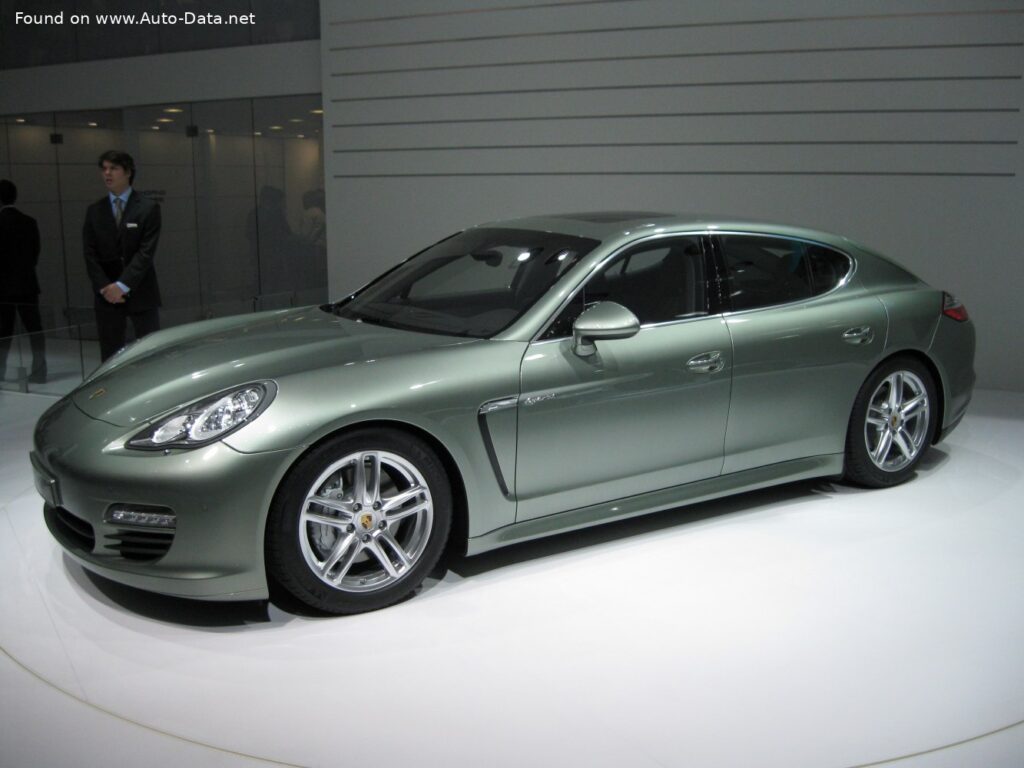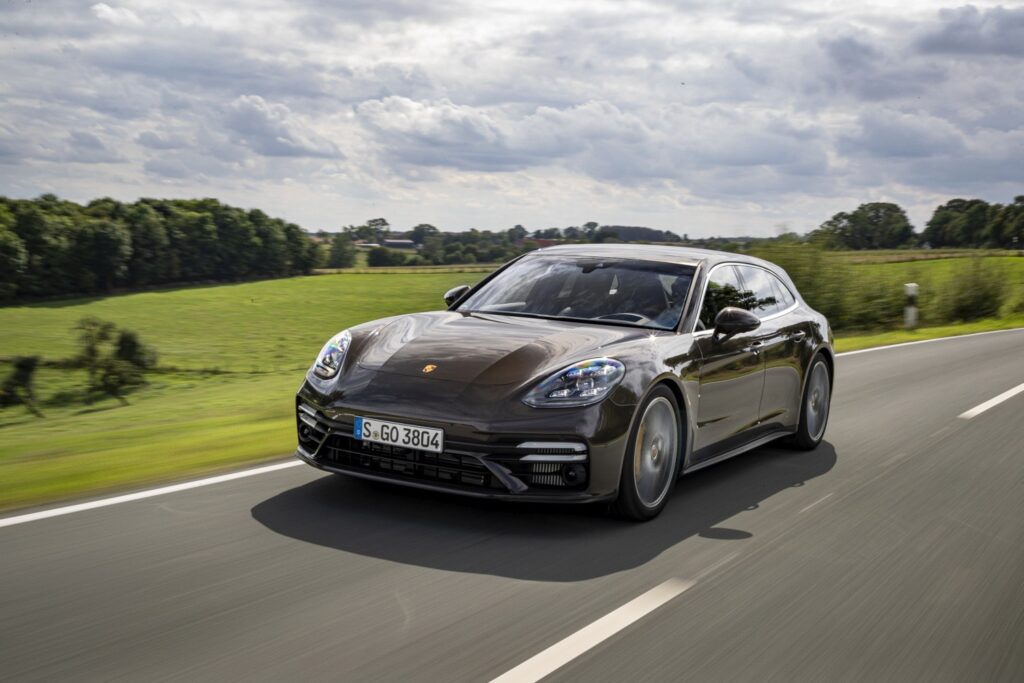
The Porsche Panamera (G2 II) Sport Turismo 4 2.9 V6, produced from 2020 to 2023, represents Porsche’s foray into the luxury performance wagon segment. As a derivative of the second-generation Panamera (G2), the Sport Turismo distinguishes itself with a practical, estate-style body, offering increased cargo capacity without sacrificing the dynamic driving experience synonymous with the Porsche brand. While the Panamera itself was initially conceived to compete with established luxury sedans like the BMW 7 Series and Mercedes-Benz S-Class, the Sport Turismo broadened its appeal to buyers seeking a more versatile vehicle. This model was primarily sold in European and Asian markets, where wagons maintain significant popularity, though limited examples were available in North America.
Porsche Panamera Sport Turismo: An Overview
The G2 II generation Panamera, launched in 2016 and receiving a facelift in 2020, brought significant advancements in technology, efficiency, and driving dynamics compared to its predecessor. The Sport Turismo variant, introduced alongside the facelift, further enhanced the Panamera’s practicality. It features a sloping roofline that maintains a sleek profile while maximizing interior space. The “4” designation indicates Porsche’s all-wheel-drive system, and the 2.9-liter V6 engine delivers a balance of performance and fuel economy. The Sport Turismo 4 2.9 V6 caters to drivers who desire a high-performance vehicle capable of comfortably accommodating passengers and cargo.
Engine & Performance
At the heart of the Panamera Sport Turismo 4 2.9 V6 lies a 2.9-liter twin-turbocharged V6 engine, designated the EA839 / CSZB. This powerplant generates 330 horsepower at 5,400-6,400 rpm and 450 Newton-meters (331.9 lb.-ft.) of torque between 1,800 and 5,000 rpm. The engine’s direct injection system and bi-turbocharging contribute to its responsive performance and efficiency. Power is delivered to all four wheels via Porsche’s sophisticated Porsche Doppelkupplung (PDK) 8-speed dual-clutch transmission. This combination allows for rapid gear changes and seamless acceleration. Performance figures include a 0-60 mph time of 5.0 seconds, a 0-62 mph time of 5.3 seconds, and a 0-100 km/h time of 5.3 seconds. The vehicle achieves a maximum speed of 263 km/h (163.42 mph). The engine’s power-to-weight ratio is 5.8 kg/Hp, and its torque-to-weight ratio is 4.3 kg/Nm.
Design & Features
The Panamera Sport Turismo boasts a distinctive station wagon (estate) body style, offering a more practical alternative to the traditional Panamera sedan. The vehicle accommodates five passengers and features five doors for easy access. Key design elements include Porsche’s signature sculpted lines, a low-slung silhouette, and a prominent rear spoiler. The Sport Turismo’s rear end is optimized for aerodynamic efficiency and features a larger tailgate for improved cargo access. Inside, the cabin is characterized by a luxurious and technologically advanced environment. Standard features include a high-resolution touchscreen infotainment system, premium leather upholstery, and a range of driver-assistance systems. Safety features are comprehensive, including ABS, and a suite of active safety technologies designed to enhance driver awareness and prevent accidents. The Sport Turismo offers 515 liters (18.19 cu. ft.) of trunk space with the rear seats up, expanding to 1384 liters (48.88 cu. ft.) with the seats folded down.
Technical Specifications
| Brand | Porsche |
| Model | Panamera |
| Generation | Panamera (G2 II) Sport Turismo |
| Type (Engine) | 4 2.9 V6 (330 Hp) PDK |
| Start of production | 2020 |
| End of production | 2023 |
| Powertrain Architecture | Internal Combustion engine |
| Body type | Station wagon (estate) |
| Seats | 5 |
| Doors | 5 |
| Fuel consumption (urban) | 11.2-11.4 l/100 km (21 – 20.6 US mpg) |
| Fuel consumption (extra urban) | 7.5-7.8 l/100 km (31.4 – 30.2 US mpg) |
| Fuel consumption (combined) | 8.9-9.0 l/100 km (26.4 – 26.1 US mpg) |
| CO2 emissions | 202-205 g/km |
| Fuel Type | Petrol (Gasoline) |
| Acceleration 0 – 100 km/h | 5.3 sec |
| Acceleration 0 – 62 mph | 5.3 sec |
| Acceleration 0 – 60 mph | 5.0 sec |
| Acceleration 0 – 200 km/h | 22.9 sec |
| Maximum speed | 263 km/h (163.42 mph) |
| Emission standard | Euro 6d-ISC-FCM |
| Weight-to-power ratio | 5.8 kg/Hp |
| Weight-to-torque ratio | 4.3 kg/Nm |
| Power | 330 Hp @ 5400-6400 rpm |
| Torque | 450 Nm @ 1800-5000 rpm (331.9 lb.-ft. @ 1800-5000 rpm) |
| Maximum engine speed | 6800 rpm |
| Engine layout | Front, Longitudinal |
| Engine Model/Code | EA839 / CSZB |
| Engine displacement | 2894 cm3 (176.6 cu. in.) |
| Number of cylinders | 6 |
| Engine configuration | V-engine |
| Cylinder Bore | 84.5 mm (3.33 in.) |
| Piston Stroke | 86 mm (3.39 in.) |
| Compression ratio | 10.5:1 |
| Number of valves per cylinder | 4 |
| Fuel injection system | Direct injection |
| Engine aspiration | BiTurbo, Intercooler |
| Engine oil capacity | 7.2 l (7.61 US qt | 6.34 UK qt) |
| Kerb Weight | 1930 kg (4254.92 lbs.) |
| Max. weight | 2585 kg (5698.95 lbs.) |
| Max load | 655 kg (1444.03 lbs.) |
| Trunk (boot) space – minimum | 515 l (18.19 cu. ft.) |
| Trunk (boot) space – maximum | 1384 l (48.88 cu. ft.) |
| Fuel tank capacity | 75 l (19.81 US gal | 16.5 UK gal) |
| Length | 5049 mm (198.78 in.) |
| Width | 1937 mm (76.26 in.) |
| Width including mirrors | 2165 mm (85.24 in.) |
| Height | 1428 mm (56.22 in.) |
| Wheelbase | 2950 mm (116.14 in.) |
| Front track | 1671 mm (65.79 in.) |
| Rear track | 1651 mm (65 in.) |
| Drag coefficient (Cd) | 0.31 |
| Minimum turning circle | 11.9 m (39.04 ft.) |
| Drivetrain | All wheel drive (4×4) |
| Gearbox | 8 gears, automatic transmission PDK |
| Front suspension | Double wishbone |
| Rear suspension | Independent multi-link suspension |
| Front brakes | Ventilated discs, 390×38 mm |
| Rear brakes | Ventilated discs, 365×28 mm |
| Front tires | 265/45 ZR19 |
| Rear tires | 295/40 ZR19 |