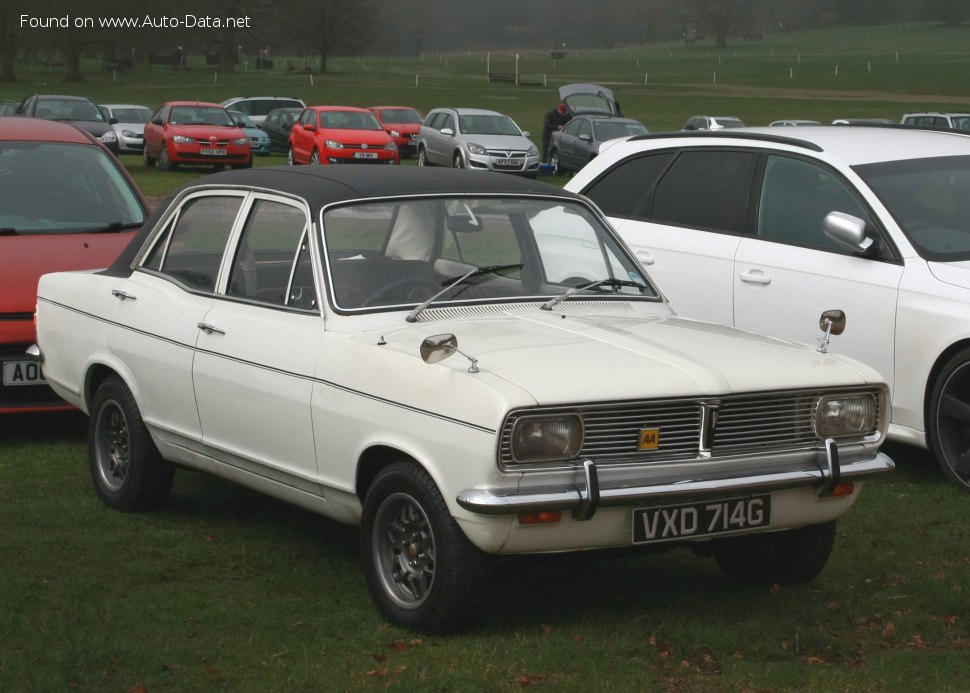
The Vauxhall Viva HB, produced between 1968 and 1969, represented a significant update to the original Viva, launched in 1963. Positioned as a small family car in the United Kingdom, the Viva HB aimed to provide affordable transportation with improved practicality and styling. While not officially sold in the United States, understanding the Viva HB provides insight into the British automotive landscape of the late 1960s and the evolution of compact cars during that era. The HB designation signified a major overhaul, addressing many of the criticisms leveled at the initial Viva model. It competed with other British offerings like the Ford Anglia and Hillman Imp, offering a blend of economy, reliability, and a relatively modern design for its price point.
Vauxhall Viva HB 1.2: A Detailed Overview
The Viva HB was more than just a facelift; it incorporated substantial mechanical and structural changes. The most notable improvement was the introduction of a larger engine and a more robust chassis. This resulted in better performance and handling compared to its predecessor. The car was available in both two-door and four-door saloon (sedan) body styles, catering to a wider range of customer needs. The HB’s design reflected the styling trends of the time, with a boxy silhouette and a focus on maximizing interior space within a compact footprint. It was a popular choice for families and first-time car buyers in the UK.
Engine & Performance
The heart of the Viva HB 1.2 was a 1.2-liter (1159 cm3 or 70.73 cu. in.) inline four-cylinder petrol engine. This engine produced 57 horsepower (Hp) at 5400 rpm and 90 Newton-meters (66.38 lb.-ft.) of torque at 3000 rpm. While not a powerhouse, this powertrain provided adequate performance for everyday driving. The power-to-weight ratio stood at 15.6 kg/Hp (64.3 Hp/tonne), and the torque-to-weight ratio was 9.9 kg/Nm (101.5 Nm/tonne). The engine utilized a carburetor fuel injection system and was naturally aspirated. Power per liter was a respectable 49.2 Hp/l for the period. The engine’s oil capacity was 2.8 liters (2.96 US qt | 2.46 UK qt), and the cooling system required 6.5 liters (6.87 US qt | 5.72 UK qt) of coolant. The Viva HB featured a rear-wheel-drive drivetrain coupled with a four-speed manual transmission, a common configuration for cars of this era and class.
Design & Features
The Vauxhall Viva HB was a compact sedan, available with either two or four doors, offering seating for four passengers. Its body style was typical of the late 1960s, characterized by a relatively boxy shape designed to maximize interior space. The exterior styling was understated but functional, with a focus on practicality rather than flamboyant aesthetics. Interior features were basic but included comfortable seating and a functional dashboard layout. Safety features were limited by the standards of the time, consisting primarily of seatbelts. The car’s dimensions were 4094 mm (161.18 in.) in length, 1600 mm (62.99 in.) in width, and 1338 mm (52.68 in.) in height. The wheelbase measured 2433 mm (95.79 in.), and the front and rear track were both 1295 mm (50.98 in.). The minimum turning circle was 9.7 meters (31.82 ft.).
Technical Specifications
| Brand | Vauxhall |
| Model | Viva |
| Generation | Viva HB |
| Type (Engine) | 1.2 (57 Hp) |
| Start of production | 1968 |
| End of production | 1969 |
| Powertrain Architecture | Internal Combustion engine |
| Body type | Sedan |
| Seats | 4 |
| Doors | 2-4 |
| Fuel Type | Petrol (Gasoline) |
| Weight-to-power ratio | 15.6 kg/Hp |
| Weight-to-torque ratio | 9.9 kg/Nm |
| Power | 57 Hp @ 5400 rpm |
| Power per litre | 49.2 Hp/l |
| Torque | 90 Nm @ 3000 rpm / 66.38 lb.-ft. @ 3000 rpm |
| Engine displacement | 1159 cm3 / 70.73 cu. in. |
| Number of cylinders | 4 |
| Engine configuration | Inline |
| Cylinder Bore | 77.7 mm / 3.06 in. |
| Piston Stroke | 61 mm / 2.4 in. |
| Compression ratio | 8.5:1 |
| Fuel injection system | Carburettor |
| Engine aspiration | Naturally aspirated engine |
| Engine oil capacity | 2.8 l / 2.96 US qt | 2.46 UK qt |
| Coolant | 6.5 l / 6.87 US qt | 5.72 UK qt |
| Kerb Weight | 887-949 kg / 1955.5 – 2092.19 lbs. |
| Max. weight | 1148 kg / 2530.91 lbs. |
| Max load | 199-261 kg / 438.72 – 575.41 lbs. |
| Fuel tank capacity | 36 l / 9.51 US gal | 7.92 UK gal |
| Length | 4094 mm / 161.18 in. |
| Width | 1600 mm / 62.99 in. |
| Height | 1338 mm / 52.68 in. |
| Wheelbase | 2433 mm / 95.79 in. |
| Front track | 1295 mm / 50.98 in. |
| Rear (Back) track | 1295 mm / 50.98 in. |
| Minimum turning circle (turning diameter) | 9.7 m / 31.82 ft. |
| Drivetrain Architecture | Rear wheel drive |
| Number of gears and type of gearbox | 4 gears, manual transmission |
| Wheel rims size | 4J x 12 |
The Vauxhall Viva HB, while a relatively simple car by modern standards, played an important role in providing affordable and reliable transportation to a wide segment of the British population. Its improvements over the original Viva cemented its position as a popular choice in the competitive small car market of the late 1960s. Although never sold in the US, it represents a significant piece of automotive history and a reflection of the engineering and design priorities of the era.