
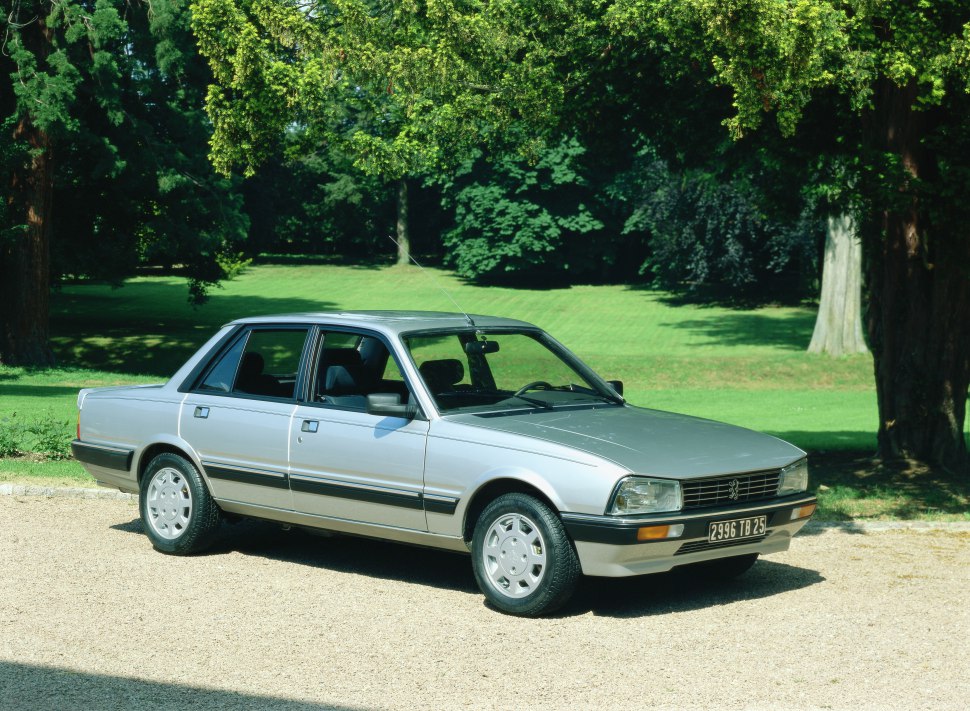
The Peugeot 505 (551A), specifically the 2.2 Turbo Injection model producing 150 horsepower, represents a significant evolution in Peugeot’s large family car lineage. Introduced in 1982 and continuing production through 1988, the 505 was designed as a replacement for the popular Peugeot 504. While never officially sold in the United States, the 505 gained a reputation for its robust engineering, comfortable ride, and sophisticated (for its time) fuel injection and turbocharging technology, primarily finding success in European and other international markets. It aimed to blend luxury, performance, and practicality, appealing to buyers seeking a refined and capable sedan.
Peugeot 505: A Legacy of French Engineering
The 505 was a crucial model for Peugeot, embodying a shift towards more modern automotive design and technology. It was positioned as a competitor to vehicles like the Mercedes-Benz W123, BMW E28 5 Series, and Volvo 240, offering a distinctly French alternative with a focus on comfort and driving experience. The 505’s design, penned by Pininfarina, was a departure from the more angular styling of the 504, adopting a sleeker, more aerodynamic profile. The 2.2 Turbo Injection variant, with its forced induction, represented the performance-oriented end of the 505 spectrum, offering a compelling blend of power and efficiency.
Engine & Performance
The heart of the Peugeot 505 2.2 Turbo Injection is the N9T engine, a 2.2-liter inline-four cylinder gasoline engine. This engine is notable for its use of a turbocharger and Bosch fuel injection system, technologies that were relatively advanced for mass-market vehicles in the early 1980s. The turbocharger significantly boosts power output, allowing the engine to produce 150 horsepower. This power output, while modest by modern standards, provided the 505 with respectable acceleration and cruising ability for its era. The engine’s design prioritized drivability and refinement, delivering a relatively smooth and quiet operation.
The 505’s powertrain was typically paired with a five-speed manual transmission, although an automatic transmission was also available. The manual transmission allowed drivers to fully exploit the engine’s power and torque, while the automatic offered greater convenience. The rear-wheel-drive layout contributed to the car’s balanced handling characteristics. While not a sports car, the 505 2.2 Turbo Injection offered a confident and engaging driving experience, particularly on winding roads. Fuel economy, while not exceptional, was reasonable for a turbocharged vehicle of this size and era.
Design & Features
The Peugeot 505 is a four-door sedan characterized by its elegant and understated design. Pininfarina’s influence is evident in the car’s clean lines, balanced proportions, and overall aesthetic appeal. The body structure was designed with a focus on safety, incorporating crumple zones and a reinforced passenger compartment. The interior of the 505 was designed to provide a comfortable and refined experience for both driver and passengers. The seats were typically upholstered in cloth or leather, and the dashboard featured a comprehensive array of gauges and controls.
Features included power steering, power brakes, and, on higher-spec models, air conditioning and electric windows. The 505 also boasted a relatively spacious trunk, making it a practical choice for families and long-distance travelers. The car’s suspension system was designed to provide a comfortable ride, absorbing bumps and imperfections in the road surface effectively. The 505’s build quality was generally considered to be high, contributing to its durability and longevity. The car’s design reflected a commitment to both style and functionality, making it a well-rounded and appealing vehicle.
Technical Specifications
| Brand | Peugeot |
| Model | 505 |
| Generation | 505 (551A) |
| Type (Engine) | 2.2 Turbo Injection (150 Hp) |
| Start of production | 1982 |
| End of production | 1988 |
| Powertrain Architecture | Internal Combustion engine |
| Body type | Sedan |
| Fuel Type | Petrol (Gasoline) |
| Power | 150 Hp |
| Engine Model/Code | N9T |
| Engine aspiration | Turbocharger |
| Engine oil capacity | 5 l (5.28 US qt | 4.4 UK qt) |
| Coolant capacity | 9.5 l (10.04 US qt | 8.36 UK qt) |
The Peugeot 505, particularly the 2.2 Turbo Injection model, remains a respected vehicle among enthusiasts. Its combination of French design flair, robust engineering, and advanced technology for its time has ensured its place in automotive history. While it never achieved widespread popularity in the United States, the 505’s legacy as a refined and capable European sedan endures. Its influence can be seen in subsequent Peugeot models, and it continues to be appreciated by those who value classic automotive design and engineering.
The 505’s relative rarity in North America contributes to its collectibility. Well-maintained examples are increasingly sought after by enthusiasts who appreciate its unique character and driving experience. The car’s mechanical simplicity, compared to more modern vehicles, also makes it relatively easy to maintain and repair. The Peugeot 505 2.2 Turbo Injection stands as a testament to a period of innovation and refinement in the automotive industry, representing a high point in Peugeot’s engineering prowess.
