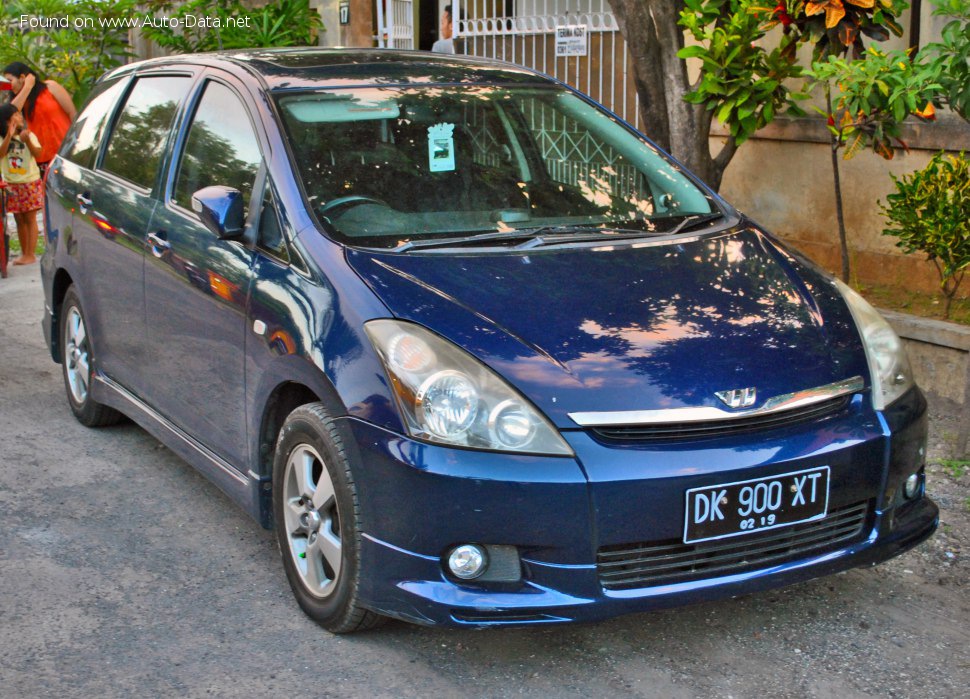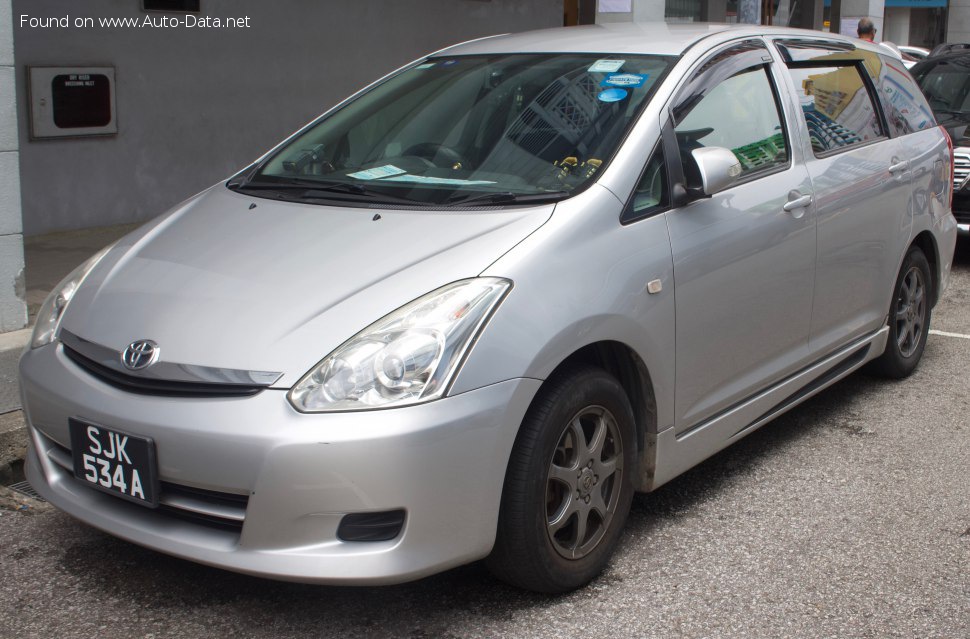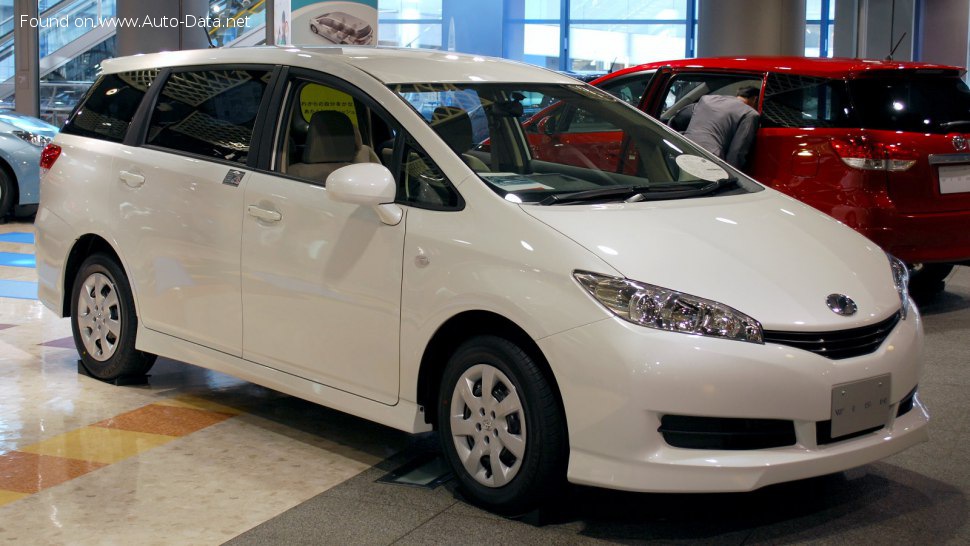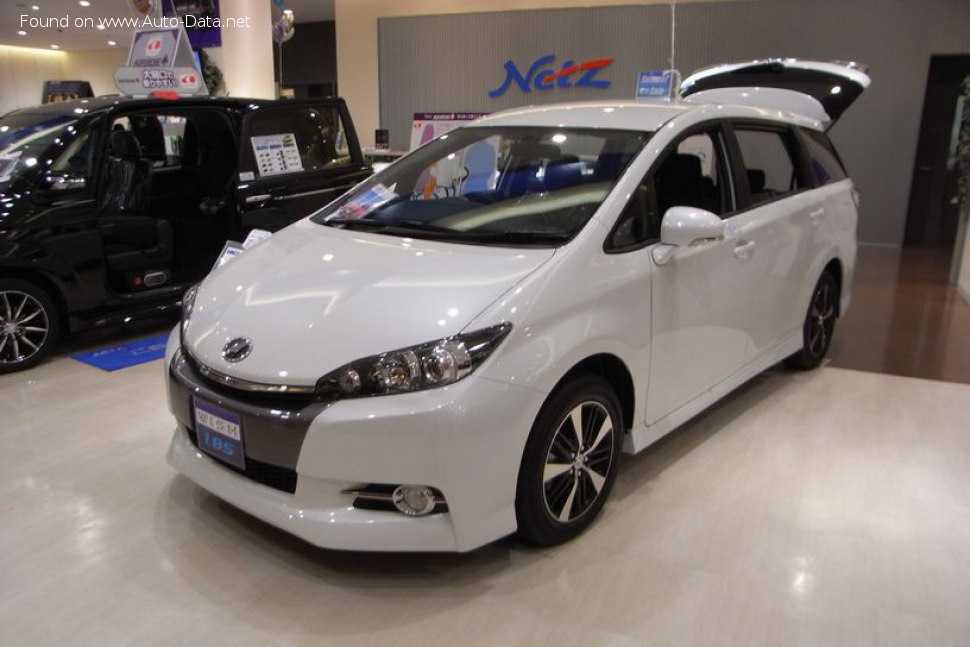
The Toyota Wish II, particularly the facelifted version introduced in 2012, is a compact minivan primarily designed for the Asian market, notably Japan and Southeast Asia. It never received a formal release in North America. Positioned as a versatile and family-oriented vehicle, the Wish II offered seating for seven passengers in a relatively compact footprint. The 1.8i variant, equipped with a 1.8-liter engine and a CVT-i transmission, represented a popular choice for buyers seeking a balance between fuel efficiency and practicality. This model competed with other compact MPVs like the Honda Freed and Nissan Serena in its target markets.
Toyota Wish II (2012-2017) 1.8i: An Overview
The Wish II, launched in 2003 and receiving a significant facelift in 2012, aimed to provide a more stylish and functional alternative to traditional larger minivans. The facelift brought revised front and rear styling, along with interior enhancements. The 1.8i model, powered by the 2ZR-FAE engine, was a key component of the Wish II lineup, offering a blend of affordability and reasonable performance. Its continuously variable transmission (CVT-i) prioritized smooth operation and fuel economy, catering to the demands of urban commuting and family transportation.
Engine & Performance
The heart of the Toyota Wish II 1.8i is the 2ZR-FAE 1.8-liter inline-four cylinder gasoline engine. This naturally aspirated engine produces 143 horsepower at 6,200 rpm and 173 Nm (127.6 lb.-ft.) of torque at 4,000 rpm. The engine features a double overhead camshaft (DOHC) valvetrain with four valves per cylinder, and multi-port fuel injection. The power-to-weight ratio of 9.4 kg/Hp (105.9 Hp/tonne) provides adequate acceleration for everyday driving. The engine’s 1.8-liter displacement and relatively high compression ratio of 10.6:1 contribute to its fuel efficiency. The CVT-i transmission, a hallmark of Toyota’s efficiency-focused engineering, delivers seamless gear changes and helps optimize fuel consumption. Combined fuel economy is rated at 6.3 liters per 100 kilometers (37.3 US mpg or 44.8 UK mpg).
Design & Features
The Toyota Wish II is a five-door minivan designed to accommodate up to seven passengers across three rows of seating. The 2012 facelift brought a more contemporary aesthetic, with a revised front grille, headlights, and bumper. The interior was designed with practicality in mind, offering flexible seating configurations to maximize cargo space. While not specifically marketed for its luxury, the Wish II provided a comfortable and functional cabin. Key features included power windows and locks, air conditioning, and an audio system. Safety features, standard for the period, included Anti-lock Braking System (ABS). The vehicle’s dimensions – 4600 mm (181.1 in) in length, 1695-1720 mm (66.73 – 67.72 in) in width, and 1590 mm (62.6 in) in height – positioned it as a relatively compact minivan, making it easier to maneuver in urban environments. The Wish II’s design prioritized maximizing interior space within a manageable exterior footprint.
Technical Specifications
| Specification | Value |
| Brand | Toyota |
| Model | Wish |
| Generation | Wish II (facelift 2012) |
| Type (Engine) | 1.8i (143 Hp) CVT-i |
| Start of production | 2012 |
| End of production | 2017 |
| Powertrain Architecture | Internal Combustion engine |
| Body type | Minivan |
| Seats | 7 |
| Doors | 5 |
| Fuel consumption (combined) | 6.3 l/100 km (37.3 US mpg, 44.8 UK mpg, 15.9 km/l) |
| Fuel Type | Petrol (Gasoline) |
| Weight-to-power ratio | 9.4 kg/Hp |
| Weight-to-torque ratio | 7.8 kg/Nm |
| Power | 143 Hp @ 6200 rpm |
| Power per litre | 79.6 Hp/l |
| Torque | 173 Nm @ 4000 rpm (127.6 lb.-ft. @ 4000 rpm) |
| Engine layout | Front, Transverse |
| Engine Model/Code | 2ZR-FAE |
| Engine displacement | 1797 cm3 (109.66 cu. in.) |
| Number of cylinders | 4 |
| Engine configuration | Inline |
| Cylinder Bore | 80.5 mm (3.17 in.) |
| Piston Stroke | 88.3 mm (3.48 in.) |
| Compression ratio | 10.6:1 |
| Number of valves per cylinder | 4 |
| Fuel injection system | Multi-port manifold injection |
| Engine aspiration | Naturally aspirated |
| Valvetrain | DOHC |
| Engine oil capacity | 4.2 l (4.44 US qt | 3.7 UK qt) |
| Coolant capacity | 5.5 l (5.81 US qt | 4.84 UK qt) |
| Kerb Weight | 1350-1370 kg (2976.24 – 3020.33 lbs.) |
| Max. weight | 1755 kg (3869.11 lbs.) |
| Max load | 385-405 kg (848.78 – 892.87 lbs.) |
| Fuel tank capacity | 60 l (15.85 US gal | 13.2 UK gal) |
| Length | 4600 mm (181.1 in.) |
| Width | 1695-1720 mm (66.73 – 67.72 in.) |
| Height | 1590 mm (62.6 in.) |
| Wheelbase | 2750 mm (108.27 in.) |
| Front track | 1480-1505 mm (58.27 – 59.25 in.) |
| Rear track | 1470 mm (57.87 in.) |
| Ride height (ground clearance) | 150 mm (5.91 in.) |
| Drivetrain Architecture | Front wheel drive |
| Number of gears and type of gearbox | automatic transmission CVT-i |
| Front brakes | Ventilated discs |
| Rear brakes | Disc |
| Tires size | 195/65 R15 |
| Wheel rims size | 15 |
The Toyota Wish II 1.8i, while not sold in the United States, represented a significant offering in the compact minivan segment in its target markets. Its blend of practicality, fuel efficiency, and relatively affordable price point made it a popular choice for families seeking a versatile vehicle for daily use.