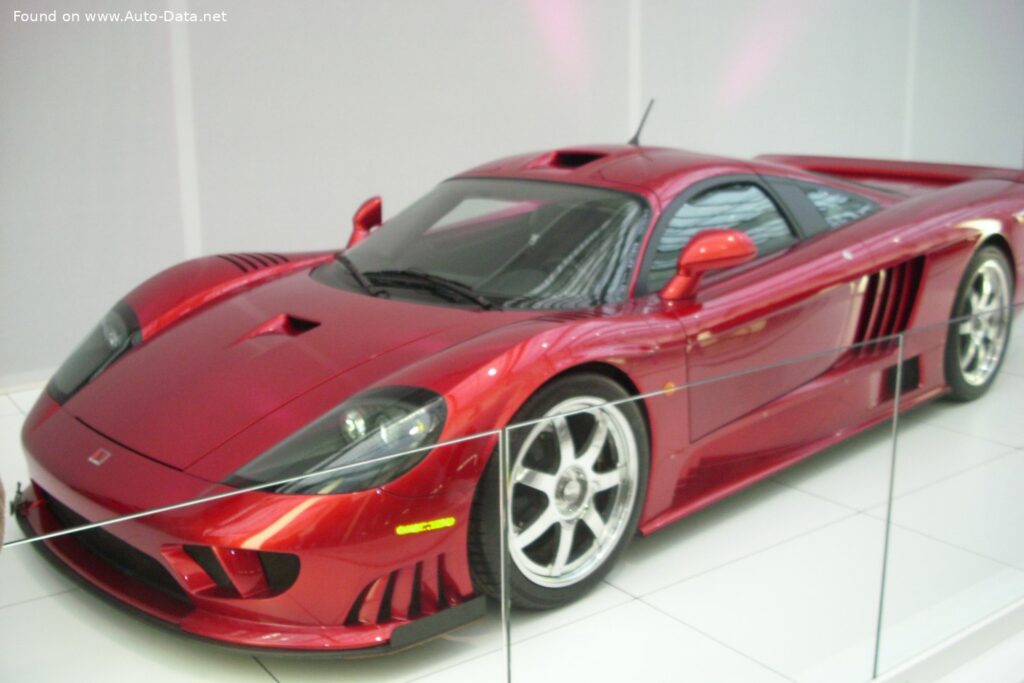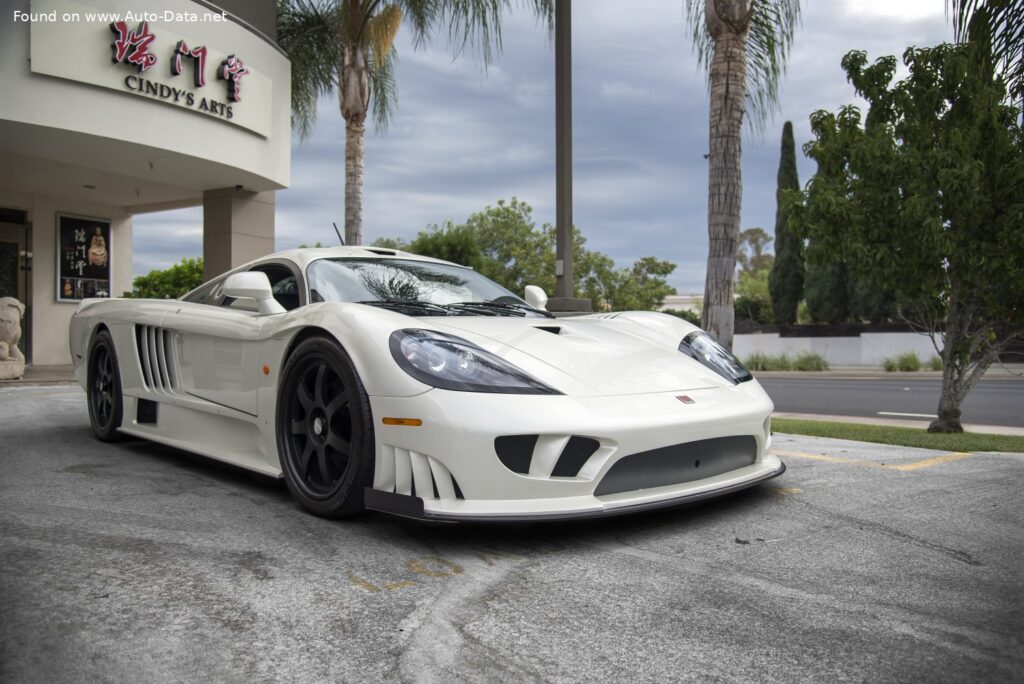
The Saleen S7 Twin Turbo, produced from 2005 to 2006, represents the pinnacle of Saleen Automotive’s engineering prowess. This American-built, high-performance coupe was designed to compete with established European supercars, offering a unique blend of American muscle and sophisticated technology. The S7 Twin Turbo wasn’t intended for mass production; instead, it was a limited-run, hand-built vehicle aimed at enthusiasts seeking extreme performance and exclusivity. It stands as a significant achievement for Saleen, demonstrating the company’s ability to create a world-class supercar from the ground up.
Saleen S7 Twin Turbo: A Performance Icon
The S7 Twin Turbo occupies a unique space in automotive history. While many American performance cars of the era focused on straight-line speed, the S7 aimed for a more balanced approach, combining blistering acceleration with respectable handling. It was a direct response to the growing demand for American-made supercars capable of challenging the likes of Ferrari, Lamborghini, and Porsche. The car’s relatively short production run adds to its collectibility and desirability among automotive enthusiasts.
Engine & Performance
At the heart of the Saleen S7 Twin Turbo lies a formidable 7.0-liter (426.62 cubic inch) V8 engine. This powerplant, designated as the 7.0i, is not a derivative of a traditional American pushrod V8; it was designed and built in-house by Saleen. The engine features a cast-iron block and aluminum cylinder heads, and crucially, is equipped with twin turbochargers and an intercooler. This forced induction system boosts power output to an impressive 750 horsepower at 6,300 rpm and 949 Nm (699.95 lb.-ft.) of torque at 4,000 rpm. The engine boasts a power-to-liter ratio of 107.3 hp/l.
Power is delivered to the rear wheels via a robust 6-speed manual transmission. The S7’s drivetrain is designed for maximum performance, with a rear-wheel-drive configuration and a longitudinal engine layout. This configuration, combined with a relatively lightweight construction, results in a remarkable weight-to-power ratio of 1.7 kg/Hp (600 Hp/tonne) and a weight-to-torque ratio of 1.3 kg/Nm (759.2 Nm/tonne). These figures translate into breathtaking acceleration and a top speed of 399 km/h (247.93 mph). Despite its performance capabilities, fuel economy is understandably low, with urban consumption reaching 26.1 l/100 km (9 US mpg) and extra-urban consumption at 15.7 l/100 km (15 US mpg).
Design & Features
The Saleen S7 Twin Turbo’s design is distinctly American, characterized by aggressive lines and a low-slung profile. The body is constructed primarily of lightweight aluminum and composite materials, contributing to the car’s relatively low curb weight of 1250 kg (2755.78 lbs.). The coupe body style, with its two doors and two seats, emphasizes the car’s focus on driver engagement and performance.
While luxury wasn’t the primary focus, the S7 Twin Turbo offered a surprisingly well-appointed interior for a high-performance machine. The cabin featured leather upholstery and a minimalist dashboard layout. Safety features included an Anti-lock Braking System (ABS), essential for controlling the car’s immense power. The suspension system utilizes double wishbones at both the front and rear, providing a balance between ride comfort and handling precision. Hydraulic power steering ensures responsive and accurate control. The car rides on staggered tires – 275/30 R19 at the front and 335/30 R20 at the rear – maximizing grip and performance. The fuel tank capacity is 72 liters (19.02 US gal).
Technical Specifications
| Brand | Saleen |
| Model | S7 |
| Generation | S7 Twin Turbo |
| Type (Engine) | 7.0 i V8 (750 Hp) |
| Start of production | 2005 |
| End of production | 2006 |
| Powertrain Architecture | Internal Combustion engine |
| Body type | Coupe |
| Seats | 2 |
| Doors | 2 |
| Fuel consumption (economy) – urban | 26.1 l/100 km (9 US mpg) |
| Fuel consumption (economy) – extra urban | 15.7 l/100 km (15 US mpg) |
| Fuel Type | Petrol (Gasoline) |
| Maximum speed | 399 km/h (247.93 mph) |
| Weight-to-power ratio | 1.7 kg/Hp, 600 Hp/tonne |
| Weight-to-torque ratio | 1.3 kg/Nm, 759.2 Nm/tonne |
| Power | 750 Hp @ 6300 rpm |
| Power per litre | 107.3 Hp/l |
| Torque | 949 Nm @ 4000 rpm (699.95 lb.-ft. @ 4000 rpm) |
| Engine layout | Middle, Longitudinal |
| Engine displacement | 6991 cm3 (426.62 cu. in.) |
| Number of cylinders | 8 |
| Engine configuration | V-engine |
| Cylinder Bore | 104.6 mm (4.12 in.) |
| Piston Stroke | 101.6 mm (4 in.) |
| Compression ratio | 10.8:1 |
| Number of valves per cylinder | 2 |
| Fuel injection system | Multi-port manifold injection |
| Engine aspiration | Twin-Turbo, Intercooler |
| Valvetrain | OHV |
| Kerb Weight | 1250 kg (2755.78 lbs.) |
| Fuel tank capacity | 72 l (19.02 US gal | 15.84 UK gal) |
| Length | 4774 mm (187.95 in.) |
| Width | 1990 mm (78.35 in.) |
| Height | 1040 mm (40.94 in.) |
| Wheelbase | 2700 mm (106.3 in.) |
| Front track | 1750 mm (68.9 in.) |
| Rear (Back) track | 1710 mm (67.32 in.) |
| Drivetrain Architecture | Rear wheel drive. Internal Combustion engine. |
| Drive wheel | Rear wheel drive |
| Number of gears and type of gearbox | 6 gears, manual transmission |
| Front suspension | Double wishbone |
| Rear suspension | Double wishbone |
| Front brakes | Ventilated discs |
| Rear brakes | Ventilated discs |
| Assisting systems | ABS (Anti-lock braking system) |
| Steering type | Steering rack and pinion |
| Power steering | Hydraulic Steering |
| Tires size | Front wheel tires: 275/30 R19Rear wheel tires: 335/30 R20 |
The Saleen S7 Twin Turbo remains a compelling example of American supercar engineering. Its combination of raw power, sophisticated technology, and striking design cemented its place as a significant vehicle in automotive history, demonstrating that the United States could compete with the best the world had to offer in the realm of high-performance automobiles.