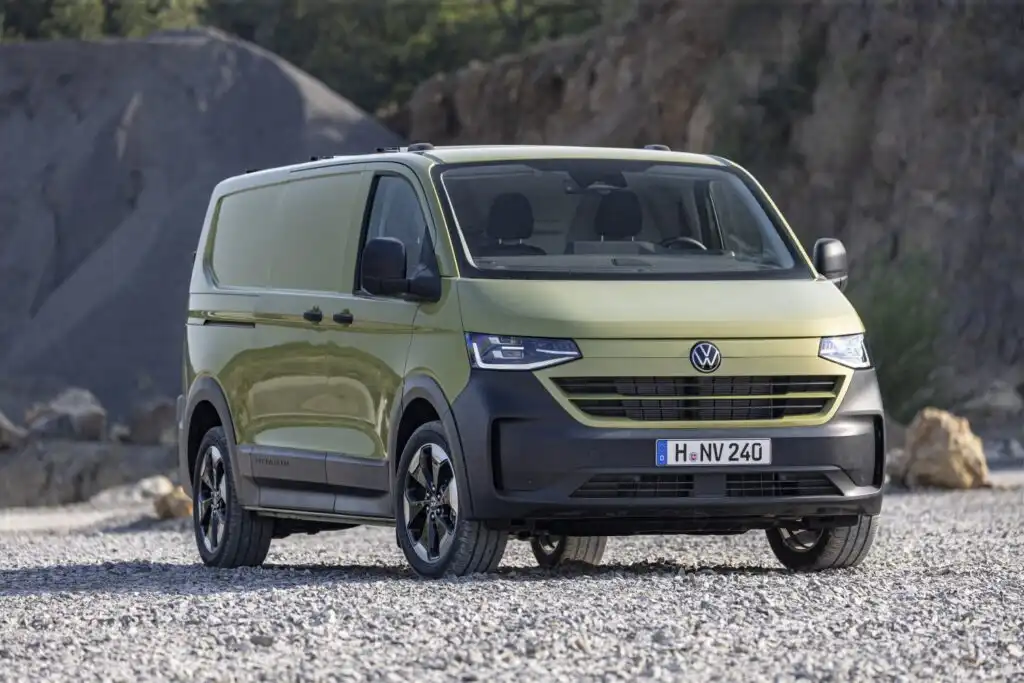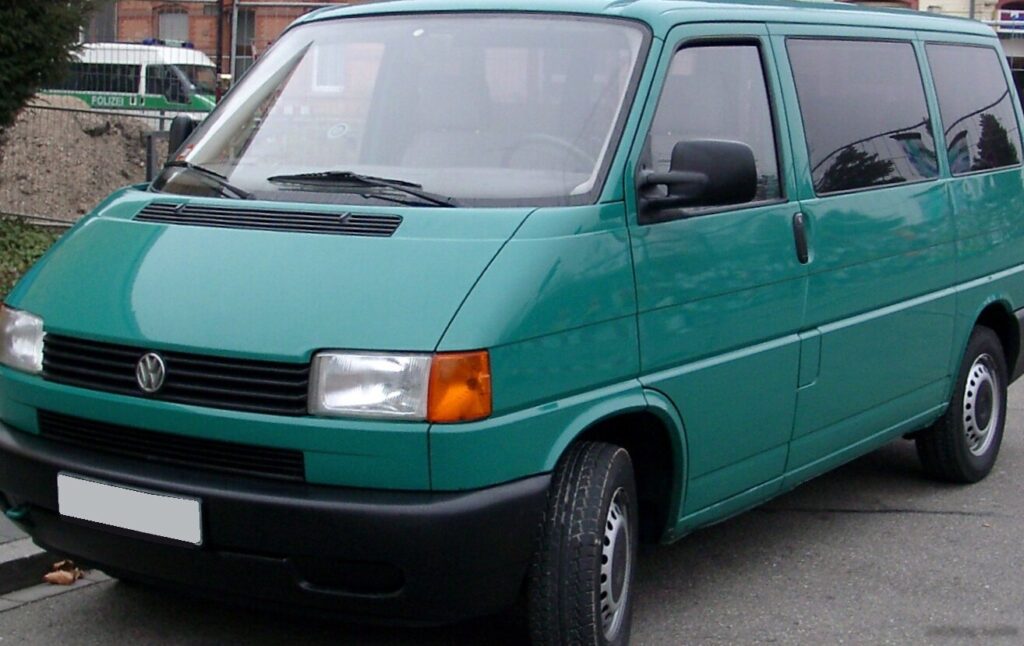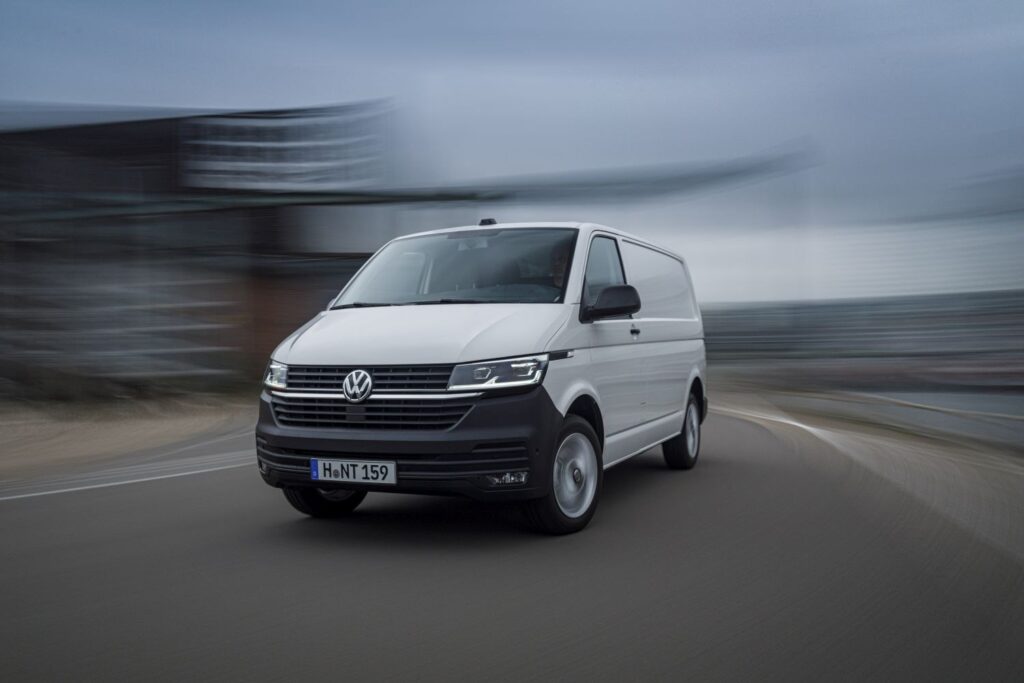
The Volkswagen Transporter, known as the Transporter T6.1 following a significant facelift in 2019, is a light commercial vehicle produced by Volkswagen Commercial Vehicles. This iteration of the Transporter builds upon the T6 platform, offering updated styling, enhanced technology, and improved efficiency. Primarily sold in Europe, Australia, and South America, the T6.1 caters to businesses and individuals requiring a versatile and reliable van for cargo transport, tradespeople, and even camper conversions. The model detailed here is the Panel Van variant, specifically equipped with the 2.0 TDI engine producing 150 horsepower, in the L2H3 configuration – denoting a long wheelbase and high roof.
Volkswagen Transporter T6.1: Overview and Market Position
The Transporter has a long and storied history, originating in 1950 as the Type 2, affectionately known as the “Bus” or “Kombi.” Each subsequent generation has refined the formula, maintaining its reputation for practicality and durability. The T6.1 represents a mid-cycle refresh of the T6, bringing the vehicle into compliance with stricter emissions regulations and incorporating modern features. While not officially sold in the United States after 2003, the Transporter remains a dominant force in the European commercial vehicle market, competing with models like the Ford Transit, Mercedes-Benz Vito, and Fiat Ducato. The L2H3 configuration provides a substantial cargo volume, making it suitable for a wide range of applications.
Engine & Performance
The 2019-2021 Volkswagen Transporter T6.1 Panel Van 2.0 TDI L2H3 is powered by a 2.0-liter turbocharged diesel engine, designated the EA288. This engine, in its 150 horsepower configuration, delivers a peak output of 150 HP at 3250-3750 rpm and 340 Nm (250.77 lb.-ft.) of torque between 1500-3000 rpm. The engine features a diesel commonrail fuel injection system and a turbocharger with intercooler, optimizing both power delivery and fuel efficiency. Power is sent to the front wheels via a six-speed manual transmission. Performance figures include a 0-100 km/h (0-62 mph) acceleration time of 11.6 seconds and a maximum speed of 173 km/h (107.5 mph). Fuel economy is rated between 6.8-7.3 liters per 100 kilometers (34.6-32.2 US mpg) combined, with CO2 emissions ranging from 179-193 g/km, adhering to Euro 6d TEMP-EVAP-ISC emission standards. The inclusion of a Start & Stop system further contributes to fuel savings.
Design & Features
The Transporter T6.1 Panel Van is a traditional, body-on-frame van design, prioritizing functionality and load-carrying capacity. The L2H3 designation indicates a long wheelbase (3400 mm / 133.86 in.) and a high roof (2477 mm / 97.52 in.), maximizing interior space. The van typically accommodates 2-3 occupants and features 4-5 doors for easy access. The exterior styling of the T6.1 received updates with the facelift, including a revised front fascia, new headlights, and a more prominent grille. Inside, the cabin features a functional layout with durable materials. Modern features, depending on the trim level, include a touchscreen infotainment system, Bluetooth connectivity, and driver-assistance systems such as ABS (Anti-lock Braking System). Safety features are a key consideration, with the T6.1 incorporating features designed to protect occupants and cargo. The large cargo area, with a maximum volume of 9300 liters (328.43 cu. ft.), is a defining characteristic, making it ideal for commercial use.
Technical Specifications
| Brand | Volkswagen |
| Model | Transporter |
| Generation | Transporter (T6.1, facelift 2019) Panel Van |
| Type (Engine) | 2.0 TDI (150 Hp) L2H3 |
| Start of production | 2019 |
| End of production | 2021 |
| Powertrain Architecture | Internal Combustion engine |
| Body type | Van |
| Seats | 2-3 |
| Doors | 4-5 |
| Fuel consumption (urban) | 7.9-8.2 l/100 km (29.8 – 28.7 US mpg) |
| Fuel consumption (extra urban) | 6.1-6.7 l/100 km (38.6 – 35.1 US mpg) |
| Fuel consumption (combined) | 6.8-7.3 l/100 km (34.6 – 32.2 US mpg) |
| CO2 emissions | 179-193 g/km |
| Fuel Type | Diesel |
| Acceleration 0 – 100 km/h | 11.6 sec |
| Acceleration 0 – 62 mph | 11.6 sec |
| Acceleration 0 – 60 mph | 11 sec |
| Maximum speed | 173 km/h (107.5 mph) |
| Emission standard | Euro 6d TEMP-EVAP-ISC |
| Weight-to-power ratio | 12.5 kg/Hp |
| Weight-to-torque ratio | 5.5 kg/Nm |
| Power | 150 Hp @ 3250-3750 rpm |
| Torque | 340 Nm @ 1500-3000 rpm (250.77 lb.-ft.) |
| Engine layout | Front, Transverse |
| Engine Model/Code | EA288 / CXFA, CXHA |
| Engine displacement | 1968 cm3 (120.09 cu. in.) |
| Number of cylinders | 4 |
| Engine configuration | Inline |
| Cylinder Bore | 81 mm (3.19 in.) |
| Piston Stroke | 95.5 mm (3.76 in.) |
| Compression ratio | 15.5:1 |
| Number of valves per cylinder | 4 |
| Fuel injection system | Diesel Commonrail |
| Engine aspiration | Turbocharger, Intercooler |
| Valvetrain | DOHC |
| Engine oil capacity | 7.4 l (7.82 US qt | 6.51 UK qt) |
| Kerb Weight | 1868-2220 kg (4118.24 – 4894.26 lbs.) |
| Max. weight | 2800-3200 kg (6172.94 – 7054.79 lbs.) |
| Max load | 932-980 kg (2054.71 – 2160.53 lbs.) |
| Trunk (boot) space – maximum | 9300 l (328.43 cu. ft.) |
| Fuel tank capacity | 70 l (18.49 US gal | 15.4 UK gal) |
| AdBlue tank | 13 l (3.43 US gal | 2.86 UK gal) |
| Permitted trailer load with brakes (12%) | 2500 kg (5511.56 lbs.) |
| Permitted trailer load without brakes | 750 kg (1653.47 lbs.) |
| Permitted towbar download | 100 kg (220.46 lbs.) |
| Length | 5304 mm (208.82 in.) |
| Width | 1904 mm (74.96 in.) |
| Width including mirrors | 2297 mm (90.43 in.) |
| Height | 2477 mm (97.52 in.) |
| Wheelbase | 3400 mm (133.86 in.) |
| Front overhang | 906 mm (35.67 in.) |
| Rear overhang | 998 mm (39.29 in.) |
| Ride height (ground clearance) | 202 mm (7.95 in.) |
| Minimum turning circle | 13.2 m (43.31 ft.) |
| Drivetrain Architecture | Front wheel drive |
| Number of gears and type of gearbox | 6 gears, manual transmission |
The Volkswagen Transporter T6.1 continues to be a popular choice for commercial operators and individuals alike, offering a blend of practicality, reliability, and modern features. Its enduring appeal lies in its versatility and ability to adapt to a wide range of needs.