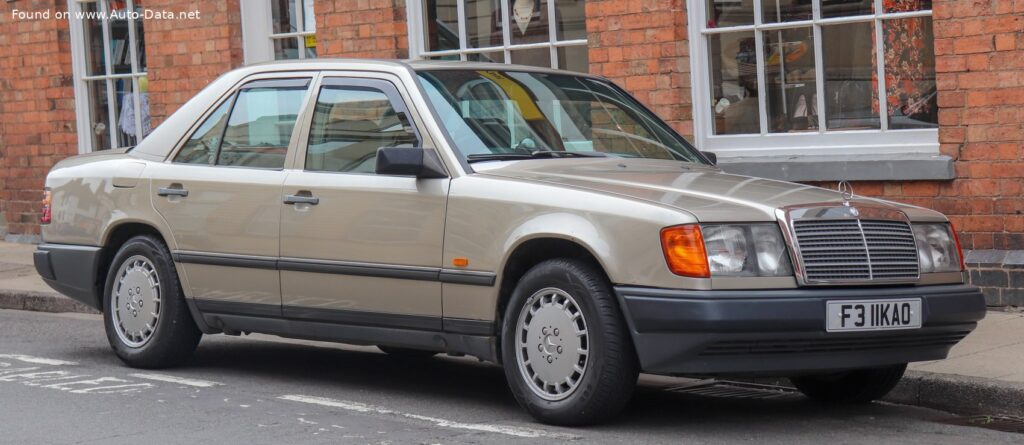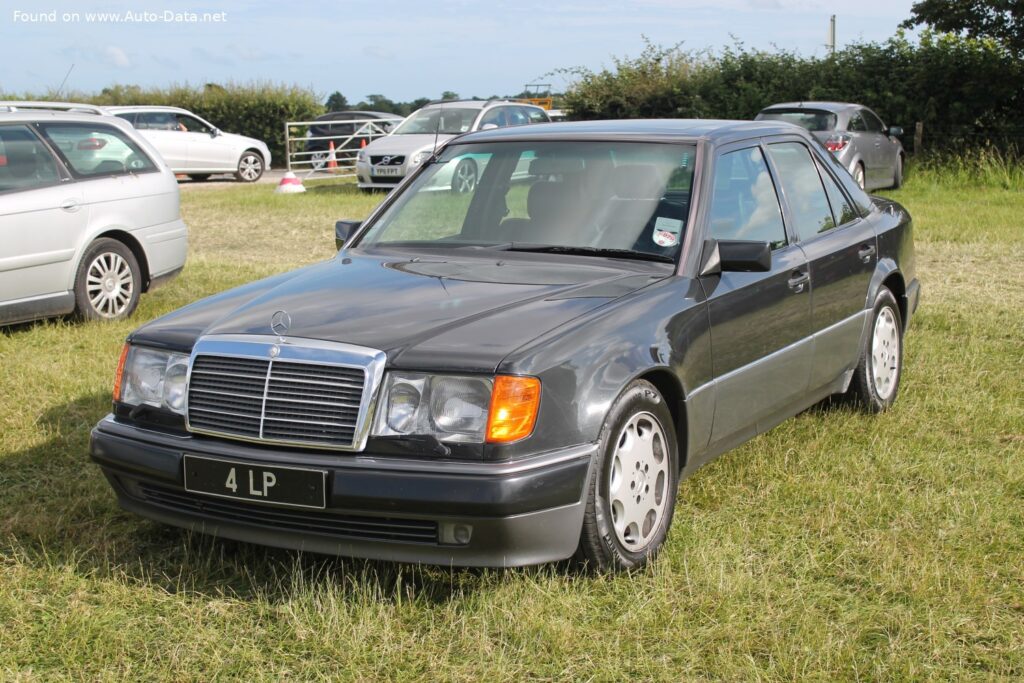
The Mercedes-Benz W124, produced from 1985 to 1996, represented a significant leap forward in engineering and design for the German automaker. The facelifted version introduced in 1989, and specifically the 250 D CAT model, refined the already successful W124 platform. This model, powered by a 2.5-liter diesel engine, was primarily aimed at the European market, where diesel-powered vehicles held a substantial share due to fuel efficiency and durability. The W124, in all its iterations, became renowned for its build quality, safety, and comfortable ride, establishing a benchmark for mid-size executive cars.
Mercedes-Benz W124 250 D CAT: A Detailed Overview
The W124 250 D CAT, produced between September 1989 and July 1993, was a key variant within the W124 range. The “CAT” designation indicates the inclusion of a catalytic converter, a crucial component for reducing harmful emissions and meeting increasingly stringent European environmental regulations. This model offered a balance between performance and economy, making it a popular choice for both private buyers and fleet operators. While not officially sold in the United States during its production run, the W124 has gained a following among American enthusiasts for its classic styling and robust engineering.
Engine & Performance
The heart of the W124 250 D CAT is its OM 602 D 25 inline five-cylinder diesel engine, displacing 2.5 liters (2497 cm3 or 152.38 cu. in.). This engine produced 90 horsepower (Hp) at 4600 rpm and 158 Nm (116.53 lb.-ft.) of torque between 2600-3100 rpm. While the horsepower figure might seem modest by modern standards, the engine’s torque delivery provided ample power for comfortable cruising and everyday driving. The engine employed precombustion chamber injection, a technology common in Mercedes-Benz diesels of the era, which contributed to its efficiency and relatively quiet operation for a diesel. Acceleration from 0 to 100 km/h (0-62 mph) took 16.5 seconds, and 0 to 60 mph was achieved in approximately 15.7 seconds. The top speed was limited to 175 km/h (108.74 mph). The engine’s power-to-weight ratio was 15.4 kg/Hp, and its torque-to-weight ratio was 8.8 kg/Nm.
Design & Features
The W124 250 D CAT was available exclusively as a four-door sedan, offering seating for five passengers. Its design, penned by Bruno Sacco, was characterized by clean lines, a relatively upright stance, and a focus on aerodynamic efficiency. The 1989 facelift brought subtle but significant changes, including revised front and rear styling, improved interior trim, and enhanced safety features. Inside, the W124 offered a comfortable and well-appointed cabin, reflecting Mercedes-Benz’s reputation for luxury. Standard features included power steering, disc brakes on all four wheels, and an anti-lock braking system (ABS). The vehicle’s robust construction and attention to detail contributed to its legendary durability. The W124’s independent multi-link rear suspension provided a comfortable ride and good handling characteristics. Tire size was 195/65 R15 for both front and rear wheels, mounted on 6.5J x 15 inch rims.
Technical Specifications
| Brand | Mercedes-Benz |
| Model | W124 |
| Generation | W124 (facelift 1989) |
| Type (Engine) | 250 D CAT (90 Hp) |
| Start of production | September, 1989 |
| End of production | July, 1993 |
| Powertrain Architecture | Internal Combustion engine |
| Body type | Sedan |
| Seats | 5 |
| Doors | 4 |
| Fuel consumption (urban) | 8.9 l/100 km (26.4 US mpg, 31.7 UK mpg, 11.2 km/l) |
| Fuel consumption (extra urban) | 5.4 l/100 km (43.6 US mpg, 52.3 UK mpg, 18.5 km/l) |
| Fuel Type | Diesel |
| Acceleration 0 – 100 km/h | 16.5 sec |
| Acceleration 0 – 62 mph | 16.5 sec |
| Acceleration 0 – 60 mph | 15.7 sec |
| Maximum speed | 175 km/h (108.74 mph) |
| Weight-to-power ratio | 15.4 kg/Hp |
| Weight-to-torque ratio | 8.8 kg/Nm |
| Power | 90 Hp @ 4600 rpm |
| Power per litre | 36 Hp/l |
| Torque | 158 Nm @ 2600-3100 rpm (116.53 lb.-ft. @ 2600-3100 rpm) |
| Engine layout | Front, Longitudinal |
| Engine Model/Code | OM 602 D 25 / 602.912 |
| Engine displacement | 2497 cm3 (152.38 cu. in.) |
| Number of cylinders | 5 |
| Engine configuration | Inline |
| Cylinder Bore | 87 mm (3.43 in.) |
| Piston Stroke | 84 mm (3.31 in.) |
| Compression ratio | 22:1 |
| Number of valves per cylinder | 2 |
| Fuel injection system | Precombustion chamber injection |
| Engine aspiration | Naturally aspirated |
| Valvetrain | SOHC |
| Engine oil capacity | 7 l (7.4 US qt | 6.16 UK qt) |
| Coolant capacity | 9.5 l (10.04 US qt | 8.36 UK qt) |
| Kerb Weight | 1390 kg (3064.43 lbs.) |
| Max. weight | 1970 kg (4343.11 lbs.) |
| Max load | 580 kg (1278.68 lbs.) |
| Fuel tank capacity | 70 l (18.49 US gal | 15.4 UK gal) |
| Length | 4740 mm (186.61 in.) |
| Width | 1740 mm (68.5 in.) |
| Height | 1428 mm (56.22 in.) |
| Wheelbase | 2800 mm (110.24 in.) |
| Front track | 1501 mm (59.09 in.) |
| Rear track | 1491 mm (58.7 in.) |
| Drivetrain | Rear wheel drive |
| Number of gears | 5 gears, manual transmission |
The Mercedes-Benz W124 250 D CAT remains a highly regarded vehicle, celebrated for its engineering excellence, durability, and timeless design. It represents a pivotal moment in Mercedes-Benz history, bridging the gap between classic luxury and modern automotive technology.