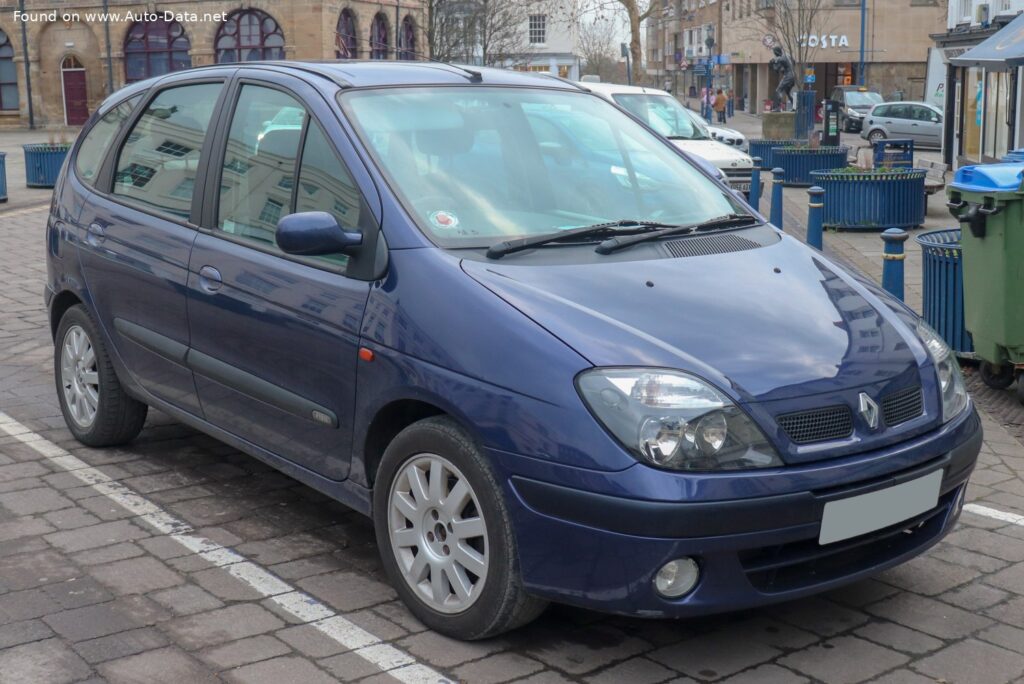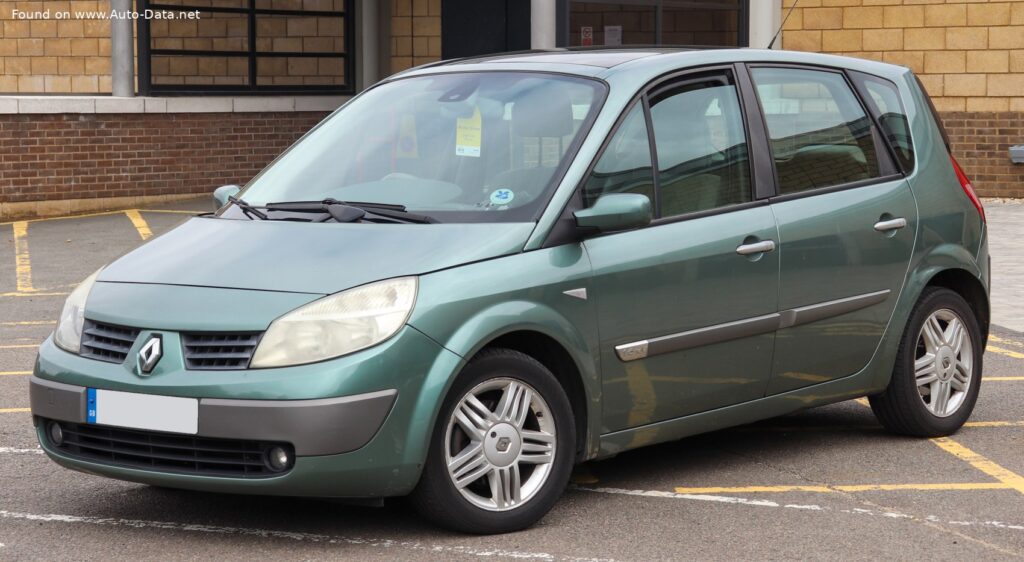
The Renault Scenic II (Phase I) 1.6 i 16V, produced between 2003 and 2006, represents a significant evolution in the compact minivan segment. As the second generation of the Scenic, it built upon the success of its predecessor, offering increased space, improved practicality, and a more refined driving experience. While not officially sold in the United States, the Scenic was a popular choice in Europe, competing with vehicles like the Volkswagen Touran and Opel Zafira. The Phase I models, specifically those equipped with the 1.6-liter engine producing 113 horsepower, were aimed at buyers seeking an economical and versatile family vehicle.
Renault Scenic II (Phase I): A Detailed Overview
The Scenic II marked a departure from the more utilitarian designs of earlier minivans, embracing a more contemporary and aesthetically pleasing style. Renault focused on creating a vehicle that was both functional and desirable, appealing to a broader range of customers. The Phase I models, characterized by their initial design features and engine options, established the foundation for the subsequent updates and refinements that would define the Scenic II throughout its production run. This generation of Scenic was known for its innovative storage solutions and modular interior, making it a practical choice for families.
Engine & Performance
The 1.6 i 16V engine powering the Scenic II Phase I is a naturally aspirated, inline-four cylinder gasoline engine. Displacing 1598 cm³ (97.52 cubic inches), it generates 113 horsepower at 6000 rpm and 152 Nm (112.11 lb.-ft.) of torque at 4200 rpm. This engine, designated the K4M, features multi-port fuel injection and a double overhead camshaft (DOHC) valvetrain with four valves per cylinder. While not a performance-oriented engine, it provides adequate power for everyday driving and reasonable fuel economy. Acceleration from 0 to 100 km/h (0-62 mph) takes approximately 12.5 seconds, with a top speed of 185 km/h (114.95 mph). The engine’s weight-to-power ratio is 11.7 kg/Hp, and its weight-to-torque ratio is 8.7 kg/Nm. The engine meets Euro 4 emission standards.
Design & Features
The Renault Scenic II Phase I is a five-door minivan designed to comfortably accommodate five passengers. Its body style prioritizes practicality and space efficiency. Key design features include a relatively high roofline, large windows for good visibility, and a distinctive front end with Renault’s corporate grille. The interior is a highlight, offering a modular seating system that allows for flexible cargo and passenger configurations. The rear seats can be folded flat or even removed entirely, creating a substantial cargo area of up to 1840 liters (64.98 cubic feet) with the seats down, and a minimum of 430 liters (15.19 cubic feet) with all seats in place. Safety features for the time included ABS (Anti-lock Braking System) as standard equipment. The Scenic II also offered a range of convenience features, such as power windows, central locking, and air conditioning, depending on the trim level.
Technical Specifications
| Brand | Renault |
| Model | Scenic |
| Generation | Scenic II (Phase I) |
| Type (Engine) | 1.6 i 16V (113 Hp) |
| Start of production | 2003 |
| End of production | 2006 |
| Powertrain Architecture | Internal Combustion engine |
| Body type | Minivan |
| Seats | 5 |
| Doors | 5 |
| Fuel consumption (urban) | 9.4 l/100 km (25 US mpg, 30.1 UK mpg, 10.6 km/l) |
| Fuel consumption (extra urban) | 6 l/100 km (39.2 US mpg, 47.1 UK mpg, 16.7 km/l) |
| Fuel consumption (combined) | 7.2 l/100 km (32.7 US mpg, 39.2 UK mpg, 13.9 km/l) |
| CO2 emissions | 173 g/km |
| Fuel Type | Petrol (Gasoline) |
| Acceleration 0 – 100 km/h | 12.5 sec |
| Acceleration 0 – 62 mph | 12.5 sec |
| Acceleration 0 – 60 mph | 11.9 sec |
| Maximum speed | 185 km/h (114.95 mph) |
| Emission standard | Euro 4 |
| Weight-to-power ratio | 11.7 kg/Hp |
| Weight-to-torque ratio | 8.7 kg/Nm |
| Power | 113 Hp @ 6000 rpm |
| Torque | 152 Nm @ 4200 rpm (112.11 lb.-ft. @ 4200 rpm) |
| Engine layout | Front, Transverse |
| Engine Model/Code | K4M |
| Engine displacement | 1598 cm³ (97.52 cu. in.) |
| Number of cylinders | 4 |
| Engine configuration | Inline |
| Cylinder Bore | 79.5 mm (3.13 in.) |
| Piston Stroke | 80.5 mm (3.17 in.) |
| Compression ratio | 10:1 |
| Number of valves per cylinder | 4 |
| Fuel injection system | Multi-port manifold injection |
| Engine aspiration | Naturally aspirated engine |
| Valvetrain | DOHC |
| Engine oil capacity | 4.8 l (5.07 US qt | 4.22 UK qt) |
| Coolant | 6 l (6.34 US qt | 5.28 UK qt) |
| Kerb Weight | 1320 kg (2910.1 lbs.) |
| Max. weight | 1915 kg (4221.85 lbs.) |
| Max load | 595 kg (1311.75 lbs.) |
| Trunk (boot) space – minimum | 430 l (15.19 cu. ft.) |
| Trunk (boot) space – maximum | 1840 l (64.98 cu. ft.) |
| Fuel tank capacity | 60 l (15.85 US gal | 13.2 UK gal) |
| Max. roof load | 80 kg (176.37 lbs.) |
| Permitted trailer load with brakes (12%) | 1300 kg (2866.01 lbs.) |
| Permitted trailer load without brakes | 650 kg (1433 lbs.) |
| Permitted towbar download | 75 kg (165.35 lbs.) |
| Length | 4259 mm (167.68 in.) |
| Width | 1810 mm (71.26 in.) |
| Width including mirrors | 2087 mm (82.17 in.) |
| Height | 1620 mm (63.78 in.) |
| Wheelbase | 2685 mm (105.71 in.) |
| Front track | 1514 mm (59.61 in.) |
| Rear (Back) track | 1514 mm (59.61 in.) |
| Front overhang | 851 mm (33.5 in.) |
| Rear overhang | 723 mm (28.46 in.) |
| Ride height (ground clearance) | 130 mm (5.12 in.) |
| Minimum turning circle (turning diameter) | 10.7 m (35.1 ft.) |
| Drivetrain Architecture | Front wheel drive |
| Number of gears and type of gearbox | 5 gears, manual transmission |
| Front suspension | Independent type McPherson |
| Rear suspension | Elastic beam |
| Front brakes | Ventilated discs, 280 mm |
| Rear brakes | Disc, 270 mm |
| Assisting systems | ABS (Anti-lock braking system) |
| Steering type | Steering rack and pinion |
| Tires size | 195/65 R15; 205/55 R16 |
| Wheel rims size | 15; 16 |
The Renault Scenic II Phase I 1.6 i 16V offered a compelling package for European families seeking a practical, versatile, and reasonably priced minivan. Its focus on interior space, modularity, and fuel efficiency made it a popular choice in a competitive segment. While never officially available in the US market, it represents a significant example of European automotive design and engineering.