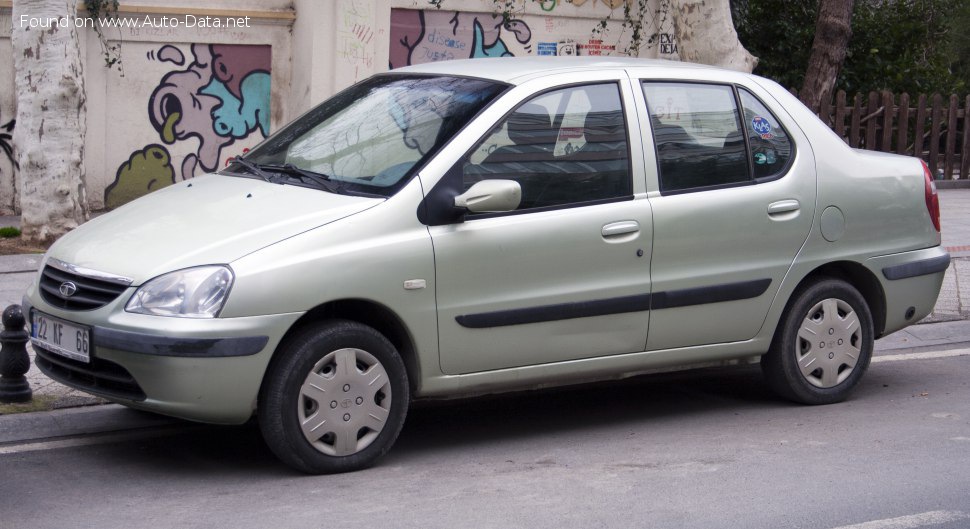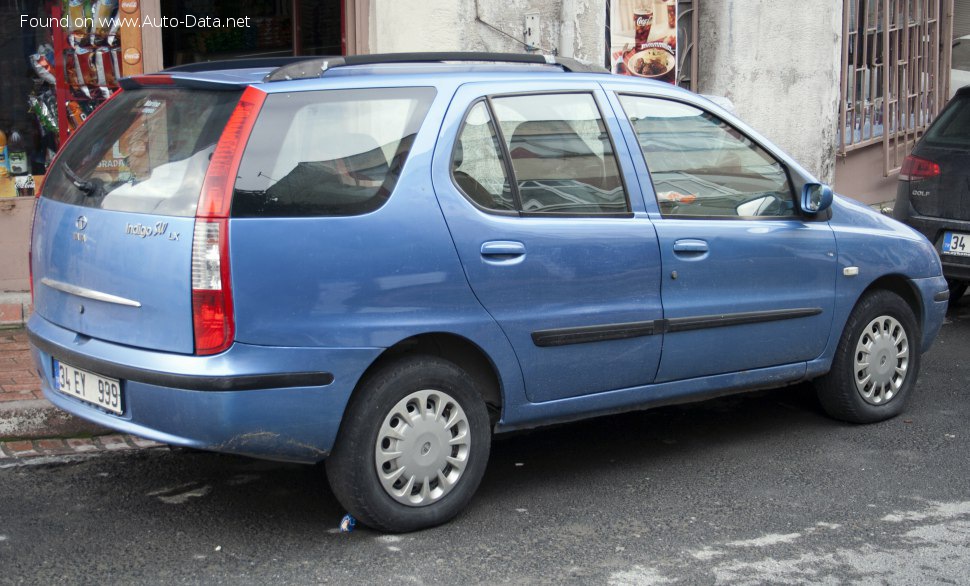
The Tata Indigo Marina 1.4 TDI (71 Hp) is a compact station wagon produced by the Indian manufacturer Tata Motors between 2006 and 2009. Positioned as an affordable and practical family vehicle, the Marina was primarily aimed at the Indian domestic market, where station wagons, or ‘estates’ as they are often called, held a degree of popularity due to their versatility. It represented Tata’s attempt to offer a more spacious and utilitarian alternative to the growing sedan segment, capitalizing on the need for vehicles capable of carrying both passengers and cargo. The Indigo Marina was based on the Indigo sedan platform, sharing many of its mechanical components but distinguished by its extended rear section and increased cargo capacity. While not officially sold in the United States, understanding the Indigo Marina provides insight into the automotive landscape of a rapidly developing market and Tata’s engineering approach during this period.
The Tata Indigo Marina: A Practical Estate
The Indigo Marina occupied a unique niche in the Indian automotive market. Unlike many Western markets where station wagons had begun to decline in popularity by the mid-2000s, India still saw demand for vehicles that could serve as both family transport and light commercial vehicles. The Marina was designed to fulfill this dual role, offering a relatively low-cost, durable, and spacious option for buyers. It was marketed towards families, small business owners, and those needing a vehicle capable of handling both urban commutes and occasional longer journeys with luggage or goods. The vehicle’s design prioritized practicality over outright luxury or performance, reflecting the economic realities of its target market.
Engine & Performance
The Indigo Marina 1.4 TDI was powered by a 1.4-liter inline-four cylinder diesel engine, producing 71 horsepower at 4500 rpm and 135 Nm (99.57 lb.-ft.) of torque at 2000 rpm. This engine utilized precombustion chamber injection and was equipped with a turbocharger and intercooler to enhance performance and efficiency. While not a particularly powerful engine by global standards, it provided adequate performance for everyday driving conditions in India, where traffic congestion and lower speed limits were common. The engine’s fuel efficiency was a key selling point, particularly given the rising cost of fuel. The Marina achieved a maximum speed of 155 km/h (96.31 mph). The weight-to-power ratio was 15.6 kg/Hp, and the weight-to-torque ratio was 8.2 kg/Nm. Power per liter was rated at 50.5 Hp/l. The engine was transversely mounted at the front of the vehicle and coupled with a five-speed manual transmission, driving the front wheels.
Design & Features
The Tata Indigo Marina featured a traditional station wagon body style with a five-door configuration and seating for five passengers. Its design was functional and straightforward, prioritizing interior space and cargo capacity. The extended rear section provided a generous trunk space, ranging from a minimum of 670 liters (23.66 cu. ft.) to a maximum of 1370 liters (48.38 cu. ft.) with the rear seats folded down. The vehicle’s dimensions were 4130 mm (162.6 in.) in length, 1625 mm (63.98 in.) in width, and 1575 mm (62.01 in.) in height, with a wheelbase of 2450 mm (96.46 in.).
In terms of features, the Indigo Marina was relatively basic, reflecting its affordability. Standard equipment typically included power steering, a basic audio system, and manually adjustable windows and mirrors. Safety features were limited by the standards of the time, but generally included front disc brakes and rear drum brakes. Suspension consisted of a spring strut setup at both the front and rear. The vehicle rode on 175/65 R14 tires. The focus was on providing a reliable and practical vehicle at a competitive price point, rather than offering a long list of luxury or advanced features.
Technical Specifications
| Brand | Tata |
| Model | Indigo |
| Generation | Indigo Marina |
| Type (Engine) | 1.4 TDI (71 Hp) |
| Start of production | 2006 |
| End of production | 2009 |
| Powertrain Architecture | Internal Combustion engine |
| Body type | Station wagon (estate) |
| Seats | 5 |
| Doors | 5 |
| Fuel Type | Diesel |
| Maximum speed | 155 km/h (96.31 mph) |
| Weight-to-power ratio | 15.6 kg/Hp |
| Weight-to-torque ratio | 8.2 kg/Nm |
| Power | 71 Hp @ 4500 rpm |
| Power per litre | 50.5 Hp/l |
| Torque | 135 Nm @ 2000 rpm (99.57 lb.-ft. @ 2000 rpm) |
| Engine layout | Front, Transverse |
| Engine displacement | 1405 cm3 (85.74 cu. in.) |
| Number of cylinders | 4 |
| Engine configuration | Inline |
| Cylinder Bore | 75 mm (2.95 in.) |
| Piston Stroke | 79.5 mm (3.13 in.) |
| Compression ratio | 22:1 |
| Number of valves per cylinder | 2 |
| Fuel injection system | Precombustion chamber injection |
| Engine aspiration | Turbocharger, Intercooler |
| Engine oil capacity | 5.5 l (5.81 US qt | 4.84 UK qt) |
| Coolant | 6 l (6.34 US qt | 5.28 UK qt) |
| Kerb Weight | 1110 kg (2447.13 lbs.) |
| Trunk (boot) space – minimum | 670 l (23.66 cu. ft.) |
| Trunk (boot) space – maximum | 1370 l (48.38 cu. ft.) |
| Fuel tank capacity | 42 l (11.1 US gal | 9.24 UK gal) |
| Length | 4130 mm (162.6 in.) |
| Width | 1625 mm (63.98 in.) |
| Height | 1575 mm (62.01 in.) |
| Wheelbase | 2450 mm (96.46 in.) |
| Front track | 1400 mm (55.12 in.) |
| Rear (Back) track | 1380 mm (54.33 in.) |
| Drivetrain Architecture | Internal Combustion engine (ICE) drives the front wheels |
| Drive wheel | Front wheel drive |
| Number of gears and type of gearbox | 5 gears, manual transmission |
| Front suspension | Spring Strut |
| Rear suspension | Spring Strut |
| Front brakes | Disc |
| Rear brakes | Drum |
| Steering type | Steering rack and pinion |
| Tires size | 175/65 R14 |
The Tata Indigo Marina 1.4 TDI, while not a groundbreaking vehicle, served a valuable purpose in the Indian market. It provided a practical, affordable, and relatively fuel-efficient option for families and small businesses, demonstrating Tata Motors’ ability to cater to the specific needs of its domestic customers. Its legacy lies in its contribution to the growth of the Indian automotive industry and its role in making personal transportation more accessible to a wider segment of the population.