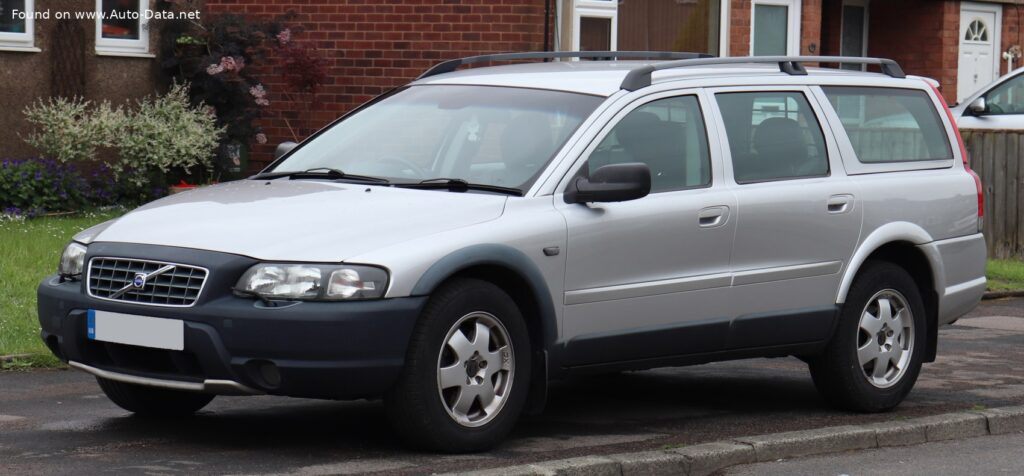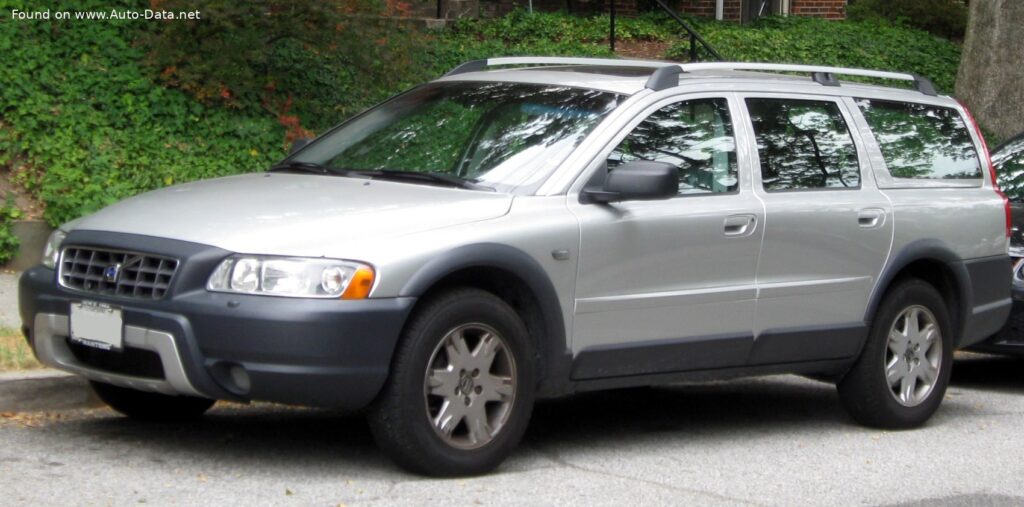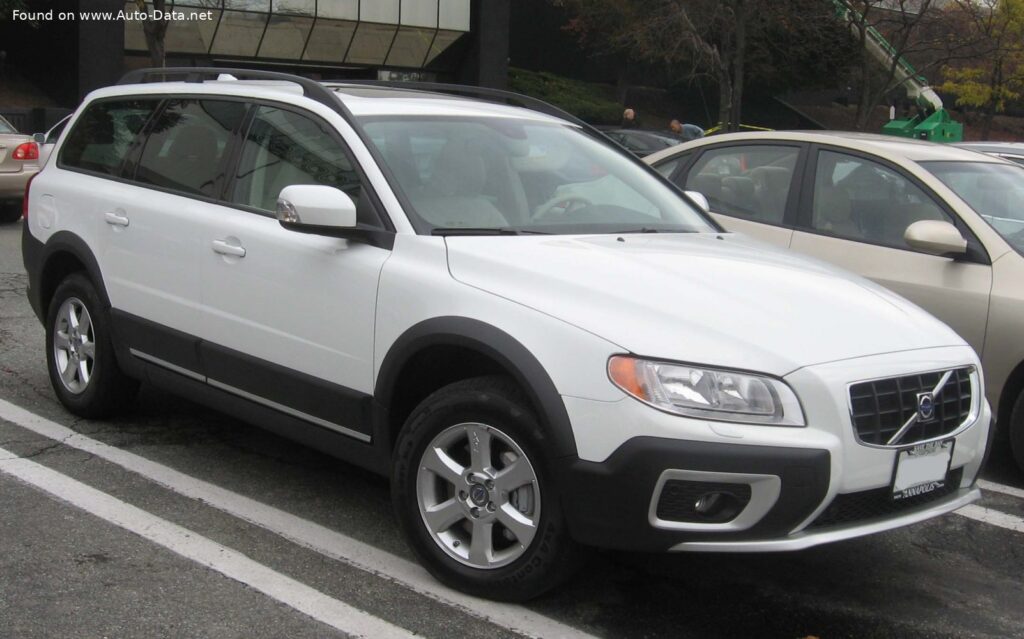
The Volvo XC70 II 2.4 D DRIVe (175 Hp) is a station wagon, or estate as it’s known in Europe, produced by the Swedish manufacturer Volvo between 2009 and 2010. Representing the second generation of the XC70, this model occupied a niche market segment – a rugged, all-weather capable wagon blending the practicality of an estate car with some of the styling and capability of a sport utility vehicle (SUV). While not officially sold in the United States during its production run, the XC70, in its various iterations, was a popular alternative to traditional SUVs for buyers seeking a more car-like driving experience with enhanced versatility. The “D” in the model designation signifies a diesel engine, and the “DRIVe” badge indicated Volvo’s efforts to improve fuel efficiency.
Volvo XC70 II: An Overview
The XC70 II built upon the foundation of the Volvo V70, adding increased ground clearance, robust body cladding, and available all-wheel drive. The 2.4 D DRIVe variant specifically focused on maximizing fuel economy through a refined diesel engine and optimized aerodynamics. This model aimed to appeal to European drivers prioritizing lower running costs and reduced environmental impact without sacrificing the comfort and safety Volvo was renowned for. It’s important to note that Volvo’s focus during this period was heavily on safety, and the XC70 II incorporated numerous advanced safety features for its time.
Engine & Performance
The heart of the XC70 II 2.4 D DRIVe is a 2.4-liter inline-five cylinder diesel engine, designated the D5244T14. This engine produces 175 horsepower at 4,000 rpm and a substantial 420 Nm (309.78 lb.-ft.) of torque between 1,500 and 2,750 rpm. The engine features a turbocharger with an intercooler, enhancing both power and efficiency. Fuel is delivered via a diesel commonrail injection system, contributing to smooth operation and reduced emissions. Power is sent to the front wheels through a six-speed manual transmission. Acceleration from 0 to 100 km/h (0-62 mph) takes 9.6 seconds, while 0 to 60 mph is achieved in approximately 9.1 seconds. The vehicle boasts a top speed of 210 km/h (130.49 mph). The engine’s power-to-weight ratio is 9.4 kg/Hp, and its torque-to-weight ratio is 3.9 kg/Nm.
Design & Features
The XC70 II maintains the classic Volvo wagon profile, characterized by a long roofline and a spacious interior. The 2.4 D DRIVe variant features protective lower body cladding, fender flares, and roof rails, giving it a more rugged appearance. The vehicle offers seating for five passengers and provides 575 liters (20.31 cu. ft.) of trunk space with the rear seats up, expanding to 1600 liters (56.5 cu. ft.) when folded down. Key features include hydraulic power steering, ABS (Anti-lock Braking System), ventilated front disc brakes, and disc brakes on the rear axle. The suspension utilizes an independent McPherson strut setup at the front and an independent multi-link system at the rear, providing a comfortable ride and stable handling. The XC70 II prioritizes practicality and comfort, offering a well-appointed interior with a focus on ergonomics and safety.
Technical Specifications
| Brand | Volvo |
| Model | XC70 |
| Generation | XC70 II |
| Type (Engine) | 2.4 D DRIVe (175 Hp) |
| Start of production | 2009 |
| End of production | 2010 |
| Powertrain Architecture | Internal Combustion engine |
| Body type | Station wagon (estate), Crossover |
| Seats | 5 |
| Doors | 5 |
| Fuel consumption (urban) | 8 l/100 km (29.4 US mpg, 35.3 UK mpg, 12.5 km/l) |
| Fuel consumption (extra urban) | 4.9 l/100 km (48 US mpg, 57.6 UK mpg, 20.4 km/l) |
| Fuel consumption (combined) | 6 l/100 km (39.2 US mpg, 47.1 UK mpg, 16.7 km/l) |
| CO2 emissions | 159 g/km |
| Fuel Type | Diesel |
| Acceleration 0 – 100 km/h | 9.6 sec |
| Acceleration 0 – 62 mph | 9.6 sec |
| Acceleration 0 – 60 mph | 9.1 sec |
| Maximum speed | 210 km/h (130.49 mph) |
| Emission standard | Euro 4 |
| Weight-to-power ratio | 9.4 kg/Hp |
| Weight-to-torque ratio | 3.9 kg/Nm |
| Power | 175 Hp @ 4000 rpm |
| Torque | 420 Nm @ 1500-2750 rpm (309.78 lb.-ft. @ 1500-2750 rpm) |
| Engine layout | Front, Transverse |
| Engine Model/Code | D5244T14 |
| Engine displacement | 2400 cm3 (146.46 cu. in.) |
| Number of cylinders | 5 |
| Engine configuration | Inline |
| Cylinder Bore | 81 mm (3.19 in.) |
| Piston Stroke | 93.15 mm (3.67 in.) |
| Compression ratio | 16.5:1 |
| Number of valves per cylinder | 4 |
| Fuel injection system | Diesel Commonrail |
| Engine aspiration | Turbocharger, Intercooler |
| Valvetrain | DOHC |
| Engine oil capacity | 5.9 l (6.23 US qt | 5.19 UK qt) |
| Coolant capacity | 10.5 l (11.1 US qt | 9.24 UK qt) |
| Kerb Weight | 1645 kg (3626.6 lbs.) |
| Max. weight | 2320 kg (5114.72 lbs.) |
| Max load | 675 kg (1488.12 lbs.) |
| Trunk (boot) space – minimum | 575 l (20.31 cu. ft.) |
| Trunk (boot) space – maximum | 1600 l (56.5 cu. ft.) |
| Fuel tank capacity | 70 l (18.49 US gal | 15.4 UK gal) |
| Max. roof load | 100 kg (220.46 lbs.) |
| Permitted trailer load with brakes (12%) | 1500 kg (3306.93 lbs.) |
| Permitted trailer load without brakes | 750 kg (1653.47 lbs.) |
| Permitted towbar download | 75 kg (165.35 lbs.) |
| Length | 4838 mm (190.47 in.) |
| Width | 1861 mm (73.27 in.) |
| Width including mirrors | 2119 mm (83.43 in.) |
| Height | 1604 mm (63.15 in.) |
| Wheelbase | 2815 mm (110.83 in.) |
| Front track | 1614 mm (63.54 in.) |
| Rear track | 1580 mm (62.2 in.) |
| Ride height (ground clearance) | 210 mm (8.27 in.) |
| Minimum turning circle | 12 m (39.37 ft.) |
| Drive wheel | Front wheel drive |
| Number of gears | 6 |
| Gearbox type | Manual transmission |
| Front suspension | Independent, McPherson with coil spring and anti-roll bar |
| Rear suspension | Independent multi-link spring suspension with stabilizer |
| Front brakes | Ventilated discs |
| Rear brakes | Disc |
| Tires size | 215/65 R16; 235/55 R17 |
| Wheel rims size | 7J x 16; 7.5J x 17 |
The Volvo XC70 II 2.4 D DRIVe represented a compelling package for buyers seeking a practical, safe, and relatively fuel-efficient wagon. While not a high-performance vehicle, its robust engine and comfortable ride made it a capable and enjoyable vehicle for everyday use and long-distance travel.