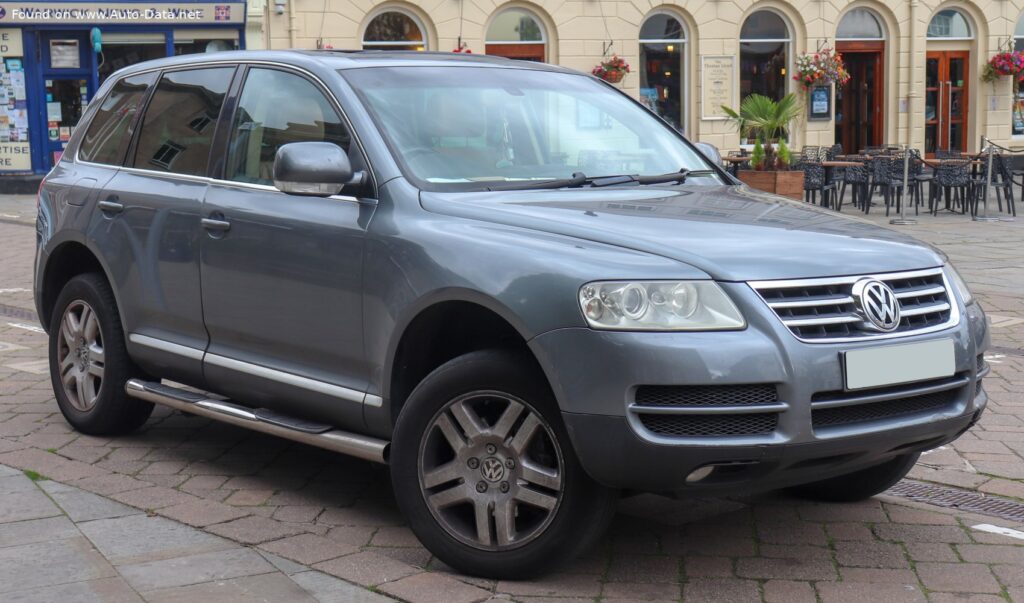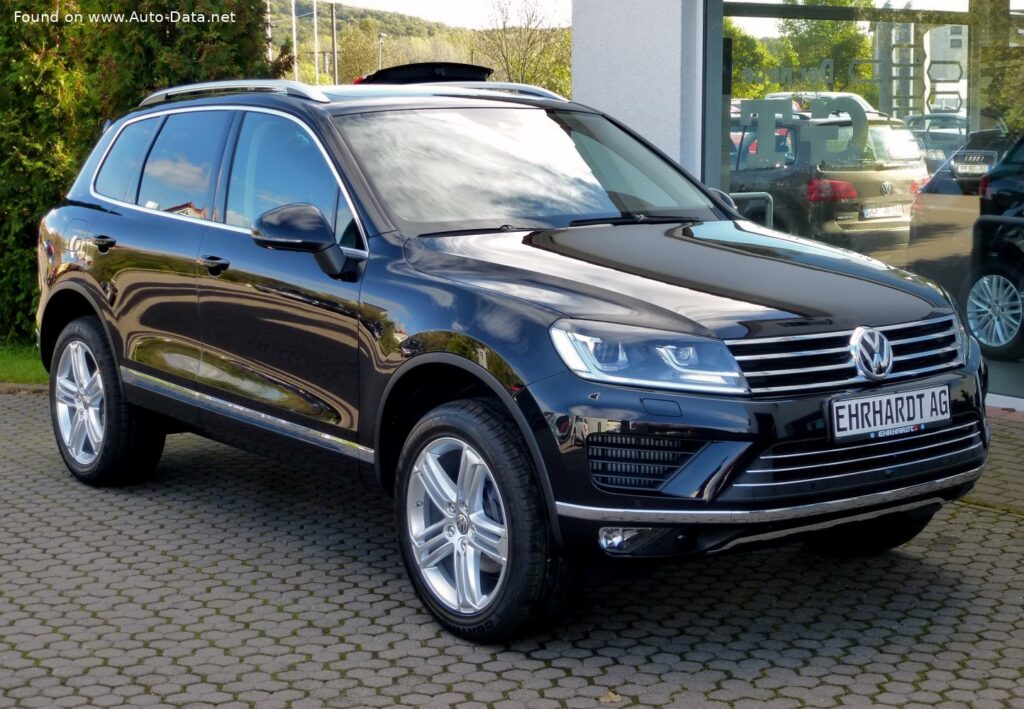
The Volkswagen Touareg II (7P), particularly the facelifted version introduced in 2014, represents a significant evolution in Volkswagen’s luxury SUV offerings. Positioned as a premium mid-size SUV, the Touareg aimed to compete with established European and Japanese rivals like the BMW X5, Porsche Cayenne (with which it shares a platform), and Land Rover Discovery. The 3.6 V6 FSI 4MOTION Tiptronic model, producing 280 horsepower, was a key variant offered between 2014 and 2018, appealing to buyers seeking a balance of performance, luxury, and all-weather capability. While the Touareg wasn’t initially a high-volume seller in the United States compared to some competitors, it established a foothold for Volkswagen in the premium SUV segment.
Volkswagen Touareg II (7P) 3.6 V6 FSI: An Overview
The Touareg II, launched in 2010 and facelifted in 2014, built upon the success of the original Touareg, offering increased refinement, improved technology, and a more sophisticated driving experience. The 2014 facelift brought styling updates, enhanced interior materials, and revised engine options. The 3.6-liter V6 FSI engine, paired with Volkswagen’s 4MOTION all-wheel-drive system and an eight-speed Tiptronic automatic transmission, was a popular choice for its smooth power delivery and all-weather traction. This generation of Touareg emphasized a blend of on-road comfort and off-road capability, making it a versatile vehicle for a variety of driving conditions.
Engine & Performance
The heart of the 2014-2018 Volkswagen Touareg 3.6 V6 FSI is a 3.6-liter VR6 engine, designated CGRA. This naturally aspirated engine produces 280 horsepower at 6,200 rpm and 360 Newton-meters (265.52 lb-ft) of torque at 2,500 rpm. The VR6 configuration, unique to Volkswagen, combines the smoothness of a V6 with the compactness of an inline engine. The engine features direct fuel injection (FSI) and a double overhead camshaft (DOHC) valvetrain with four valves per cylinder. This configuration results in a power-to-liter ratio of 77.8 hp/l. The eight-speed Tiptronic automatic transmission provides smooth and responsive gear changes, while the 4MOTION all-wheel-drive system ensures optimal traction in various conditions. The vehicle’s weight-to-power ratio is 7.6 kg/hp, and the weight-to-torque ratio is 5.9 kg/Nm, contributing to respectable acceleration and overall performance. Fuel economy is rated at 12.4 l/100 km combined (19 US mpg, 22.8 UK mpg, 8.1 km/l).
Design & Features
The Touareg II is a five-door, five-seat SUV characterized by its elegant and understated design. The 2014 facelift brought subtle but noticeable changes to the exterior, including revised headlights, a redesigned grille, and updated bumpers. The interior is well-appointed, with high-quality materials and a focus on comfort and functionality. Standard features typically included leather upholstery, heated front seats, a touchscreen infotainment system, and a suite of safety technologies. The Touareg’s spacious interior offers ample headroom and legroom for passengers, and the rear seats can be folded down to increase cargo capacity. Trunk space ranges from a minimum of 909 liters (32.1 cu ft) to a maximum of 1812 liters (63.99 cu ft) with the rear seats folded. Safety features such as ABS (Anti-lock Braking System) were standard, reflecting Volkswagen’s commitment to passenger protection. The vehicle’s ride height provides 201 mm (7.91 in) of ground clearance, enhancing its off-road capability.
Technical Specifications
| Brand | Volkswagen |
| Model | Touareg |
| Generation | Touareg II (7P, facelift 2014) |
| Type (Engine) | 3.6 V6 FSI (280 Hp) 4MOTION Tiptronic |
| Start of production | 2014 |
| End of production | 2018 |
| Powertrain Architecture | Internal Combustion engine |
| Body type | SUV |
| Seats | 5 |
| Doors | 5 |
| Fuel consumption (economy) – urban (EPA) | 13.8 l/100 km (17 US mpg, 20.5 UK mpg, 7.2 km/l) |
| Fuel consumption (economy) – extra urban (EPA) | 10.2 l/100 km (23.1 US mpg, 27.7 UK mpg, 9.8 km/l) |
| Fuel consumption (economy) – combined (EPA) | 12.4 l/100 km (19 US mpg, 22.8 UK mpg, 8.1 km/l) |
| Fuel Type | Petrol (Gasoline) |
| Weight-to-power ratio | 7.6 kg/Hp, 131.5 Hp/tonne |
| Weight-to-torque ratio | 5.9 kg/Nm, 169 Nm/tonne |
| Power | 280 Hp @ 6200 rpm |
| Power per litre | 77.8 Hp/l |
| Torque | 360 Nm @ 2500 rpm (265.52 lb.-ft. @ 2500 rpm) |
| Engine layout | Front, Longitudinal |
| Engine Model/Code | CGRA |
| Engine displacement | 3598 cm3 (219.56 cu. in.) |
| Number of cylinders | 6 |
| Engine configuration | VR-engine |
| Cylinder Bore | 89 mm (3.5 in.) |
| Piston Stroke | 96.4 mm (3.8 in.) |
| Compression ratio | 12:1 |
| Number of valves per cylinder | 4 |
| Fuel injection system | Direct injection |
| Engine aspiration | Naturally aspirated engine |
| Valvetrain | DOHC |
| Engine oil capacity | 6.7 l (7.08 US qt | 5.9 UK qt) |
| Kerb Weight | 2130 kg (4695.85 lbs.) |
| Max. weight | 2800 kg (6172.94 lbs.) |
| Max load | 670 kg (1477.1 lbs.) |
| Trunk (boot) space – minimum | 909 l (32.1 cu. ft.) |
| Trunk (boot) space – maximum | 1812 l (63.99 cu. ft.) |
| Fuel tank capacity | 100 l (26.42 US gal | 22 UK gal) |
| Permitted trailer load with brakes (12%) | 3500 kg (7716.18 lbs.) |
| Length | 4795 mm (188.78 in.) |
| Width | 1940 mm (76.38 in.) |
| Height | 1732 mm (68.19 in.) |
| Wheelbase | 2893 mm (113.9 in.) |
| Front track | 1656 mm (65.2 in.) |
| Rear (Back) track | 1676 mm (65.98 in.) |
| Ride height (ground clearance) | 201 mm (7.91 in.) |
| Drag coefficient (Cd) | 0.37 |
| Minimum turning circle (turning diameter) | 11.9 m (39.04 ft.) |
| Approach angle | 26° |
| Departure angle | 26° |
| Ramp-over (brakeover) angle | 21° |
| Drivetrain Architecture | The Internal combustion engine (ICE) drives permanently the four wheels of the vehicle. |
| Drive wheel | All wheel drive (4×4) |
| Number of gears and type of gearbox | 8 gears, automatic transmission Tiptronic |
| Front suspension | Coil spring, Double wishbone, Transverse stabilizer |
| Rear suspension | Independent multi-link spring suspension with stabilizer |
| Front brakes | Ventilated discs, 330×33 mm |
| Rear brakes | Ventilated discs, 330×28 mm |
| Assisting systems | ABS (Anti-lock braking system) |
| Steering type | Steering rack and pinion |
| Power steering | Hydraulic Steering |
| Tires size | 255/55 R18; 275/45 R20; 275/40 R21 |
| Wheel rims size | 8J x 18; 9J x 20; 9.5J x 21 |