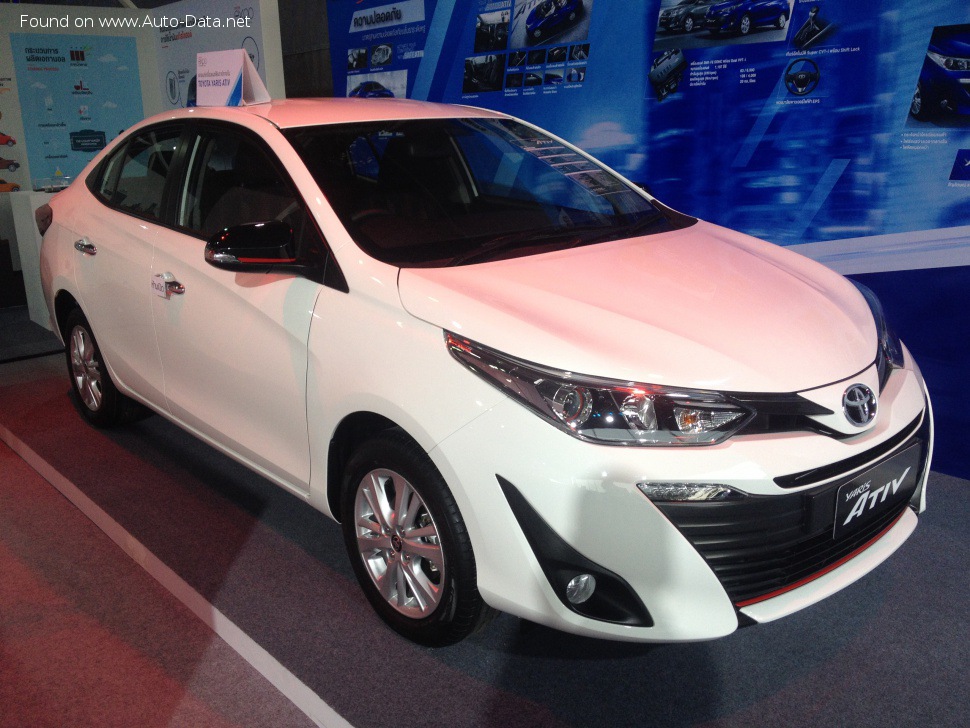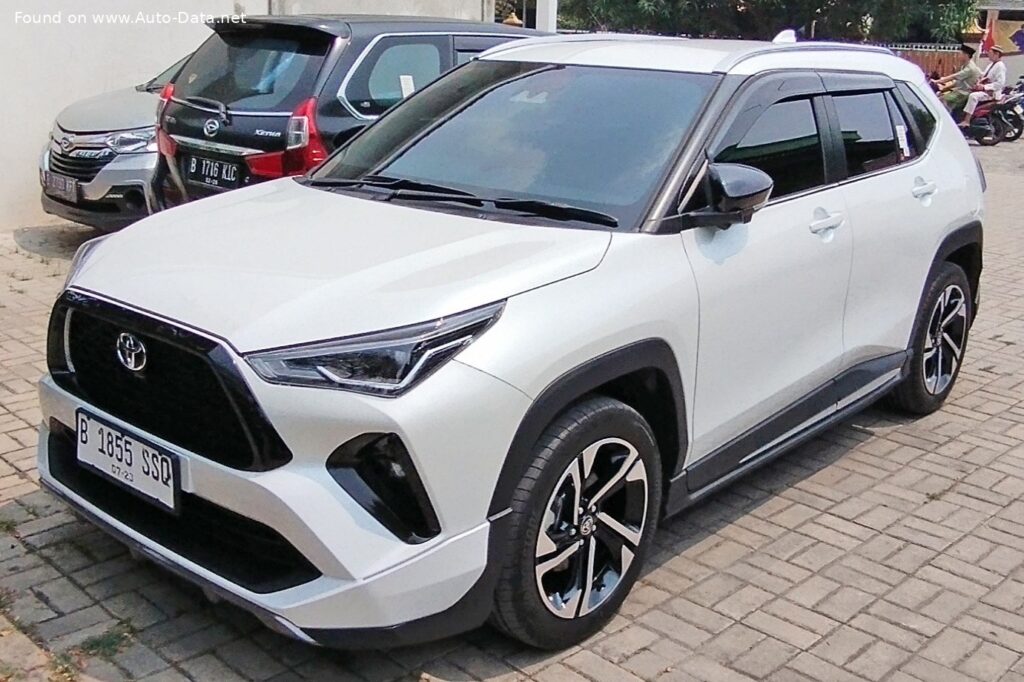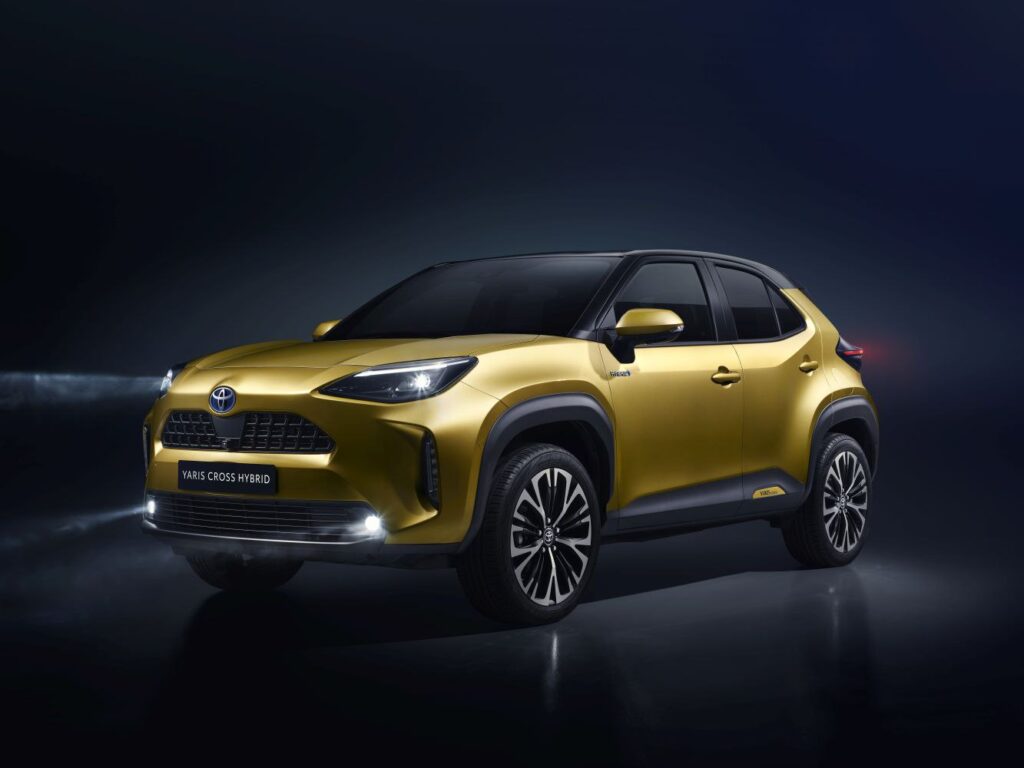
The Toyota Yaris Cross (XP210) is a subcompact crossover SUV introduced by Toyota in August 2020. Positioned as the SUV counterpart to the Yaris hatchback, the Yaris Cross aims to capitalize on the growing demand for smaller, more fuel-efficient, and versatile vehicles, particularly within the European market. While not initially sold in the United States, it represents Toyota’s strategy to expand its hybrid and all-wheel-drive offerings in a competitive segment. The XP210 generation features a hybrid powertrain and available all-wheel drive (E-Four) configuration, making it a practical choice for urban and suburban driving.
Toyota Yaris Cross (XP210): An Overview
The Yaris Cross is built on the Toyota New Global Architecture (TNGA-B) platform, shared with the latest Yaris hatchback. This platform contributes to the vehicle’s improved rigidity, handling, and safety features. The vehicle is primarily marketed in Europe and Japan, where demand for compact crossovers is high. It bridges the gap between the standard Yaris and larger Toyota C-HR, offering a more spacious and practical option for families and individuals seeking a versatile vehicle.
Engine & Performance
The Yaris Cross XP210 1.5 Hybrid E-Four utilizes Toyota’s fourth-generation hybrid technology. The powertrain combines a 1.5-liter, three-cylinder M15A-FXE gasoline engine with an electric motor. The gasoline engine produces 91 horsepower at 5500 rpm and 120 Nm (88.51 lb-ft) of torque between 3800-4800 rpm. This is paired with two electric motors – one driving the front wheels with 80 horsepower and 141 Nm (104 lb-ft) of torque, and a smaller 5 horsepower motor driving the rear axle with 52 Nm (38.35 lb-ft) of torque. The combined system output is 116 horsepower.
Power is delivered to all four wheels via an electronically controlled continuously variable transmission (ECVT). This configuration allows for both full electric driving at low speeds and a blended hybrid mode for optimal fuel efficiency. The E-Four system intelligently distributes torque between the front and rear axles, enhancing stability and traction in various driving conditions. Fuel economy is a key strength, with combined figures ranging from 3.5 to 3.8 liters per 100 kilometers (67.2 – 61.9 US mpg or 80.7 – 74.3 UK mpg). The weight-to-power ratio is 10.8 kg/Hp, and the weight-to-torque ratio is 10.4 kg/Nm.
Design & Features
The Yaris Cross boasts a compact SUV body style with a length of 4180 mm (164.57 in) and a width of 1765 mm (69.49 in). Its design incorporates styling cues from the larger Toyota RAV4 and C-HR, featuring a bold front grille, sculpted body lines, and a distinctive rear end. The interior offers seating for five passengers and provides a practical cargo space.
Key features include a touchscreen infotainment system, smartphone integration (Apple CarPlay and Android Auto), and a suite of advanced safety technologies. These safety features typically include Toyota Safety Sense, which encompasses pre-collision system with pedestrian and cyclist detection, lane departure alert with steering assist, adaptive cruise control, and road sign assist. The vehicle’s relatively high ride height (170 mm / 6.69 in) enhances visibility and provides a more commanding driving position. The Yaris Cross is designed with practicality in mind, offering a comfortable and versatile interior for everyday use.
Technical Specifications
| Brand | Toyota |
| Model | Yaris Cross |
| Generation | Yaris Cross (XP210) |
| Type (Engine) | 1.5 (116 Hp) Hybrid E-Four ECVT |
| Start of production | August, 2020 |
| Powertrain Architecture | FHEV (Full Hybrid Electric Vehicle) |
| Body type | SUV, Crossover |
| Seats | 5 |
| Doors | 5 |
| Fuel consumption (urban) | 3.4-3.8 l/100 km (69.2 – 61.9 US mpg) |
| Fuel consumption (extra urban) | 3.7-4 l/100 km (63.6 – 58.8 US mpg) |
| Fuel consumption (combined) | 3.5-3.8 l/100 km (67.2 – 61.9 US mpg) |
| Fuel Type | Petrol (Gasoline) |
| Weight-to-power ratio | 10.8 kg/Hp |
| Weight-to-torque ratio | 10.4 kg/Nm |
| Gross battery capacity | 0.76 kWh |
| Battery voltage | 177.6 V |
| Battery technology | Lithium-ion (Li-Ion) |
| Battery location | Under the rear seats |
| Electric motor power (1) | 80 Hp |
| Electric motor torque (1) | 141 Nm (104 lb.-ft.) |
| Electric motor location (1) | Integrated into the transmission |
| Electric motor power (2) | 5 Hp |
| Electric motor torque (2) | 52 Nm (38.35 lb.-ft.) |
| Electric motor location (2) | Rear axle, Transverse |
| System power | 116 Hp |
| Engine Power | 91 Hp @ 5500 rpm |
| Engine Torque | 120 Nm @ 3800-4800 rpm (88.51 lb.-ft. @ 3800-4800 rpm) |
| Engine layout | Front, Transverse |
| Engine Model/Code | M15A-FXE |
| Engine displacement | 1490 cm3 (90.93 cu. in.) |
| Number of cylinders | 3 |
| Engine configuration | Inline |
| Cylinder Bore | 80.49 mm (3.17 in.) |
| Piston Stroke | 97.61 mm (3.84 in.) |
| Fuel injection system | Multi-port manifold injection |
| Engine aspiration | Naturally aspirated engine |
| Engine oil capacity | 3.6 l (3.8 US qt | 3.17 UK qt) |
| Coolant capacity | 4.7 l (4.97 US qt | 4.14 UK qt) |
| Kerb Weight | 1250-1270 kg (2755.78 – 2799.87 lbs.) |
| Max. weight | 1525-1545 kg (3362.05 – 3406.14 lbs.) |
| Max load | 275 kg (606.27 lbs.) |
| Fuel tank capacity | 36 l (9.51 US gal | 7.92 UK gal) |
| Length | 4180 mm (164.57 in.) |
| Width | 1765 mm (69.49 in.) |
| Height | 1590 mm (62.6 in.) |
| Wheelbase | 2560 mm (100.79 in.) |
| Front track | 1515-1525 mm (59.65 – 60.04 in.) |
| Rear track | 1510-1520 mm (59.45 – 59.84 in.) |
| Ride height (ground clearance) | 170 mm (6.69 in.) |
| Minimum turning circle | 10.6 m (34.78 ft.) |
| Drivetrain Architecture | ICE drives front wheels, electric motors drive front and rear wheels. |
| Drive wheel | All wheel drive (4×4) |
| Number of gears and type of gearbox | automatic transmission ECVT |
| Front suspension | Independent type McPherson |
| Rear suspension | Torsion |
| Front brakes | Ventilated discs |
| Rear brakes | Disc |
| Assisting systems | ABS (Anti-lock braking system) |
| Steering type | Steering rack and pinion |
| Power steering | Hydraulic Steering |
| Tires size | 215/50 R18 |
| Wheel rims size | 18 |
The Toyota Yaris Cross (XP210) represents a significant step in Toyota’s commitment to hybrid technology and all-wheel-drive capability within the subcompact crossover segment. Its fuel efficiency, practicality, and advanced safety features make it a compelling option for consumers seeking a versatile and environmentally conscious vehicle.