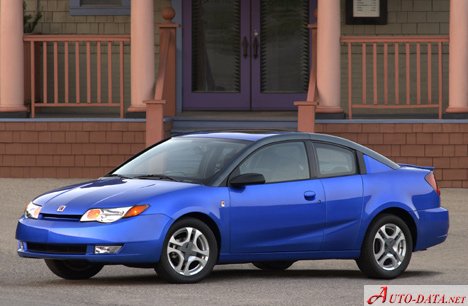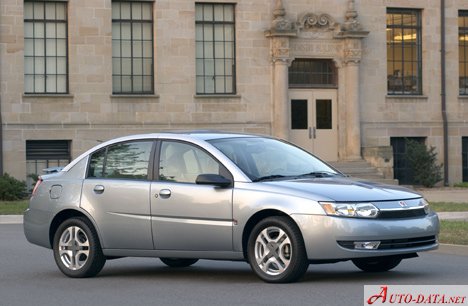
The Saturn ION was a compact car manufactured by Saturn, a General Motors (GM) division, from 2002 to 2007. Positioned as a replacement for the Saturn SL and SC series, the ION represented Saturn’s attempt to modernize its lineup and appeal to a broader customer base. Available primarily in North America, the ION was offered as a four-door sedan and a five-door hatchback (the SL2, which was discontinued in 2004). The model line featured a distinctive, somewhat polarizing, exterior design and aimed to provide a value-oriented alternative in the competitive compact car segment.
Saturn ION 2.2 i 16V Ecotec: An Overview
The 2.2 i 16V Ecotec variant of the Saturn ION, powered by a 2.2-liter inline-four engine, was a mainstay of the lineup. This model aimed to balance fuel efficiency with adequate performance for everyday driving. The ION, in general, was notable for its polymer body panels – a cost-saving measure and a signature feature of early Saturn vehicles – designed to be dent-resistant. While the ION didn’t achieve the sales success GM hoped for, it played a role in Saturn’s brand identity during a period of significant change for the division.
Engine & Performance
The heart of the Saturn ION 2.2 i 16V Ecotec is a 2.2-liter (2198 cm3 or 134.13 cu. in.) inline-four cylinder engine. This naturally aspirated engine utilizes multi-port fuel injection and a double overhead camshaft (DOHC) valvetrain with four valves per cylinder. It produces 140 horsepower (Hp) at 5800 rpm and 145 Newton-meters (106.95 lb.-ft.) of torque at 4400 rpm. This translates to a power-to-liter ratio of 63.7 Hp/l. The engine’s output allows for a 0-100 km/h (0-62 mph) acceleration time of 9.5 seconds, and a 0-60 mph time of approximately 9 seconds. The ION 2.2 i achieves a maximum speed of 175 km/h (108.74 mph). The weight-to-power ratio is 8.7 kg/Hp, and the weight-to-torque ratio is 8.4 kg/Nm. The engine requires 4.8 liters (5.07 US qt | 4.22 UK qt) of engine oil.
Design & Features
The Saturn ION 2.2 i 16V Ecotec is a four-door sedan designed to accommodate five passengers. Its body is characterized by the aforementioned polymer body panels, which were intended to resist dents and corrosion. The ION’s interior was designed with practicality in mind, offering a reasonable amount of space for passengers and cargo. Trunk space is rated at 454 liters (16.03 cu. ft.). Safety features included an Anti-lock Braking System (ABS), which was becoming increasingly standard in the early 2000s. The ION utilized a hydraulic power steering system coupled with a steering rack and pinion for responsive handling. The vehicle rides on coil springs in both the front and rear suspension. Standard tire size was 185/70 R14. The ION’s design, while intended to be modern, received mixed reviews, with some critics finding it unconventional.
Drivetrain and Chassis
The Saturn ION 2.2 i 16V Ecotec employs a front-wheel-drive (FWD) drivetrain. Power is delivered to the front wheels through a five-speed manual transmission. The vehicle’s chassis features ventilated discs on the front brakes and drum brakes on the rear. The wheelbase measures 2621 mm (103.19 in.), contributing to a stable ride. The front and rear track widths are 1494 mm (58.82 in.) and 1483 mm (58.39 in.), respectively. The overall dimensions of the ION are: length 4686 mm (184.49 in.), width 1707 mm (67.2 in.), and height 1458 mm (57.4 in.).
Technical Specifications
| Brand | Saturn |
| Model | ION |
| Generation | ION |
| Type (Engine) | 2.2 i 16V Ecotec (140 Hp) |
| Start of production | 2002 |
| End of production | March, 2007 |
| Powertrain Architecture | Internal Combustion engine |
| Body type | Sedan |
| Seats | 5 |
| Doors | 4 |
| Fuel consumption (urban) | 9.1 l/100 km (25.8 US mpg, 31 UK mpg, 11 km/l) |
| Fuel consumption (extra urban) | 7.1 l/100 km (33.1 US mpg, 39.8 UK mpg, 14.1 km/l) |
| Fuel Type | Petrol (Gasoline) |
| Acceleration 0 – 100 km/h | 9.5 sec |
| Acceleration 0 – 62 mph | 9.5 sec |
| Acceleration 0 – 60 mph | 9 sec |
| Maximum speed | 175 km/h (108.74 mph) |
| Weight-to-power ratio | 8.7 kg/Hp |
| Weight-to-torque ratio | 8.4 kg/Nm |
| Power | 140 Hp @ 5800 rpm |
| Torque | 145 Nm @ 4400 rpm (106.95 lb.-ft. @ 4400 rpm) |
| Engine layout | Front, Transverse |
| Engine displacement | 2198 cm3 (134.13 cu. in.) |
| Number of cylinders | 4 |
| Engine configuration | Inline |
| Cylinder Bore | 86 mm (3.39 in.) |
| Piston Stroke | 94.6 mm (3.72 in.) |
| Compression ratio | 10:1 |
| Number of valves per cylinder | 4 |
| Fuel injection system | Multi-port manifold injection |
| Engine aspiration | Naturally aspirated |
| Valvetrain | DOHC |
| Engine oil capacity | 4.8 l (5.07 US qt | 4.22 UK qt) |
| Kerb Weight | 1221 kg (2691.84 lbs.) |
| Trunk (boot) space | 454 l (16.03 cu. ft.) |
| Fuel tank capacity | 50 l (13.21 US gal | 11 UK gal) |
| Length | 4686 mm (184.49 in.) |
| Width | 1707 mm (67.2 in.) |
| Height | 1458 mm (57.4 in.) |
| Wheelbase | 2621 mm (103.19 in.) |
| Front track | 1494 mm (58.82 in.) |
| Rear track | 1483 mm (58.39 in.) |
| Drivetrain Architecture | Front wheel drive |
| Number of gears | 5 |
| Gearbox type | Manual transmission |
| Front suspension | Coil spring |
| Rear suspension | Coil spring |
| Front brakes | Ventilated discs |
| Rear brakes | Drum |
| Assisting systems | ABS (Anti-lock braking system) |
| Steering type | Steering rack and pinion |
| Power steering | Hydraulic |
| Tires size | 185/70 R14 |