
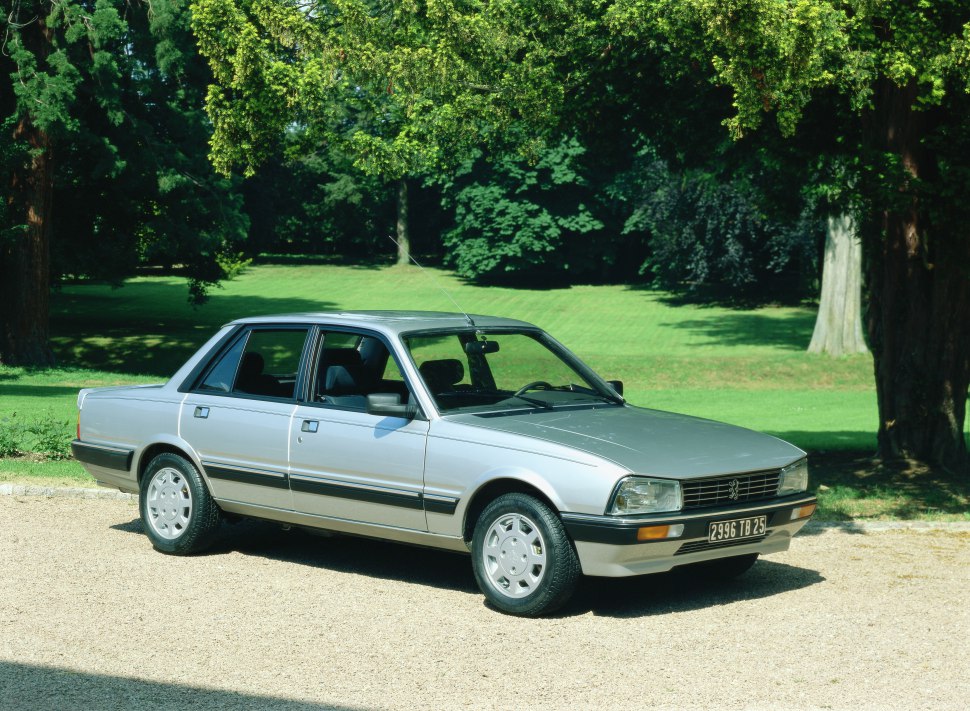
The Peugeot 505, specifically the 551A variant powered by a 2.5-liter Turbo Diesel engine, represents a significant chapter in Peugeot’s history, embodying the French automaker’s commitment to blending comfort, durability, and increasingly, efficiency. Produced from 1983 to 1993, the 505 was Peugeot’s flagship sedan, intended to replace the aging 504. While never achieving substantial sales volume in the United States – Peugeot withdrew from the US market in 1991 – the 505 gained a reputation for robust engineering and a sophisticated driving experience, particularly in Europe and other international markets. The 2.5 Turbo Diesel model, producing 90 horsepower, was a popular choice for those seeking fuel economy and long-distance cruising capability.
Peugeot 505: A Legacy of French Engineering
The 505 was designed to appeal to a discerning clientele who valued a refined driving experience. It was positioned as a competitor to vehicles like the Mercedes-Benz W124 and BMW E30, though at a generally lower price point. The 505’s design, penned by Pininfarina, was a departure from the more angular styling of its predecessor, adopting a more streamlined and modern aesthetic. The 551A designation refers to a specific iteration within the 505 range, denoting certain refinements and engine options. The 2.5 Turbo Diesel engine became a cornerstone of the 505 lineup, offering a compelling combination of performance and fuel efficiency, especially important in European markets with high fuel costs.
Engine & Performance
The heart of the Peugeot 505 2.5 Turbo Diesel (551A) is the 152A XD3T engine, a 2.5-liter inline-four cylinder diesel powerplant. This engine utilizes a turbocharger to boost power output to 90 horsepower. While 90 horsepower may seem modest by modern standards, it provided adequate performance for the 505’s weight and intended purpose – comfortable, long-distance touring. The turbocharger significantly improves torque delivery, making the vehicle surprisingly capable for highway passing and maintaining speed on inclines. The engine’s design prioritized durability and reliability, characteristics highly valued by European drivers.
The 505’s powertrain is coupled with either a five-speed manual or a three-speed automatic transmission. The manual transmission allows for greater driver control and potentially improved fuel economy, while the automatic provides convenience, particularly in urban driving conditions. The rear-wheel-drive configuration contributes to the 505’s balanced handling characteristics. The diesel engine’s inherent efficiency translates to impressive fuel economy figures, making it an economical choice for high-mileage drivers. The 505 2.5 Turbo Diesel wasn’t designed for outright speed, but rather for a smooth, refined, and economical driving experience.
Design & Features
The Peugeot 505 is a four-door sedan, characterized by its elegant and understated design. Pininfarina’s influence is evident in the car’s clean lines, balanced proportions, and overall aesthetic appeal. The interior of the 505 was designed with comfort in mind, featuring supportive seats, a spacious cabin, and a well-laid-out dashboard. While not lavishly equipped by modern standards, the 505 offered a range of features considered desirable in the 1980s and early 1990s, including power windows, central locking, and an optional sunroof.
Safety features, while limited compared to contemporary vehicles, included a robust chassis construction and available anti-lock brakes (ABS) on later models. The 505’s suspension system, featuring independent front suspension and a rigid rear axle, was tuned to provide a comfortable ride while maintaining good handling characteristics. The car’s build quality was generally considered to be high, contributing to its reputation for durability. The 505’s design reflected a commitment to practicality and functionality, making it a versatile vehicle suitable for both family transportation and long-distance travel. The car’s relatively simple mechanical design also made it easier to maintain and repair, a significant advantage for owners in regions with limited access to specialized automotive technicians.
Technical Specifications
| Brand | Peugeot |
| Model | 505 |
| Generation | 505 (551A) |
| Type (Engine) | 2.5 Turbo Diesel (90 Hp) |
| Start of production | 1983 |
| End of production | 1993 |
| Powertrain Architecture | Internal Combustion engine |
| Body type | Sedan |
| Fuel Type | Diesel |
| Power | 90 Hp |
| Engine Model/Code | 152A XD3T |
| Engine aspiration | Turbocharger |
| Engine oil capacity | 5 l (5.28 US qt | 4.4 UK qt) |
| Coolant capacity | 10 l (10.57 US qt | 8.8 UK qt) |
The Peugeot 505 2.5 Turbo Diesel (551A) remains a fondly remembered vehicle, particularly among enthusiasts who appreciate its blend of French style, robust engineering, and fuel-efficient performance. While its time in the US market was brief, the 505 left a lasting impression on those who experienced its unique character. Its legacy continues to resonate with collectors and drivers who seek a classic sedan that offers a refined and rewarding driving experience.
