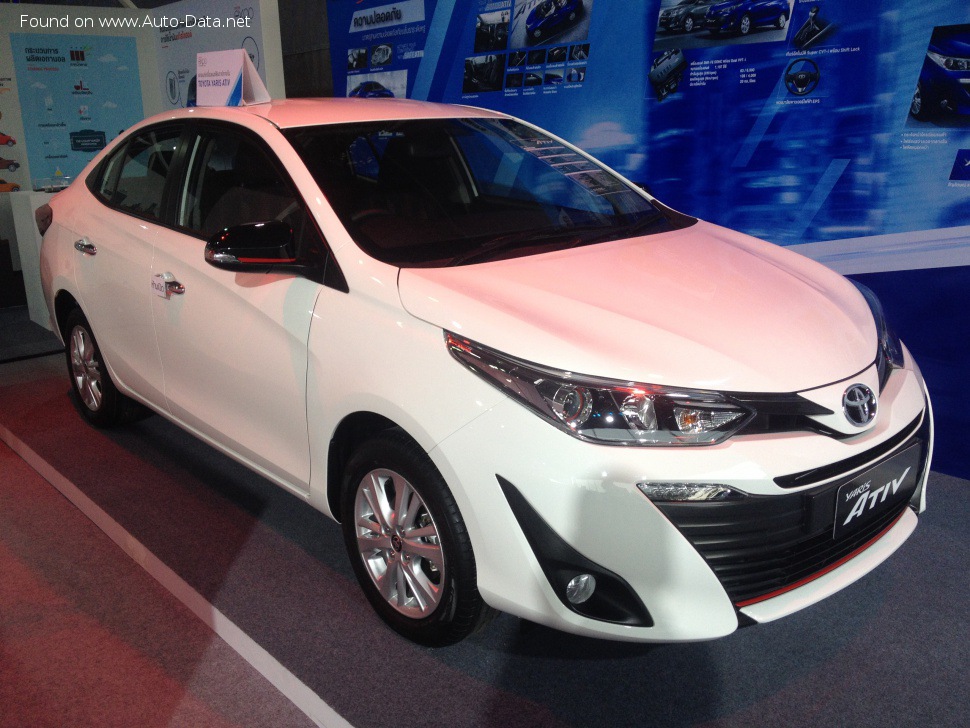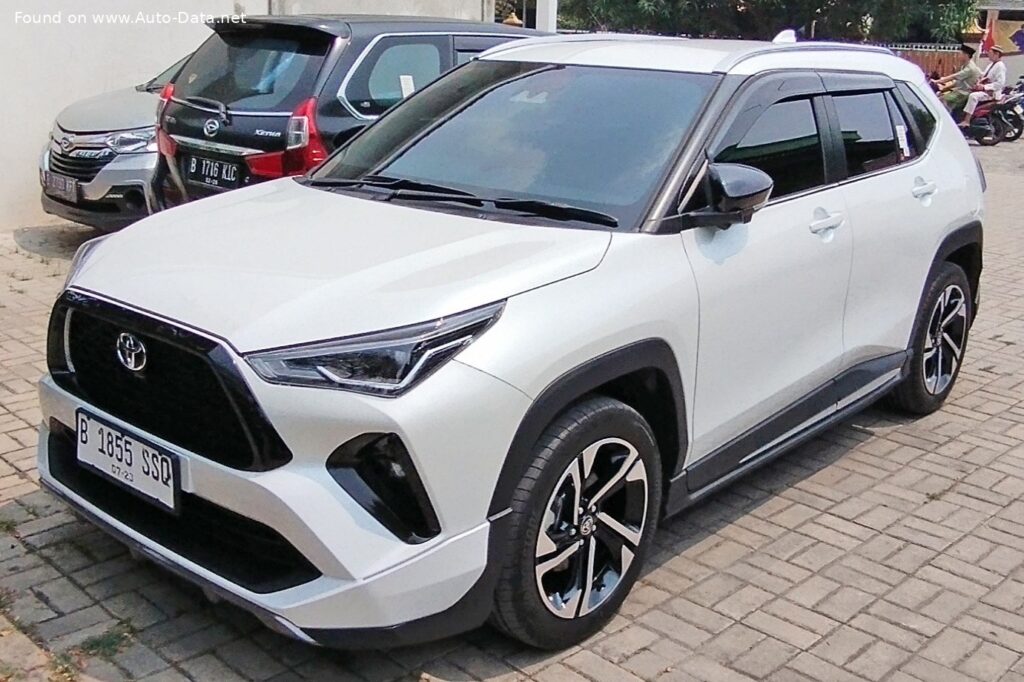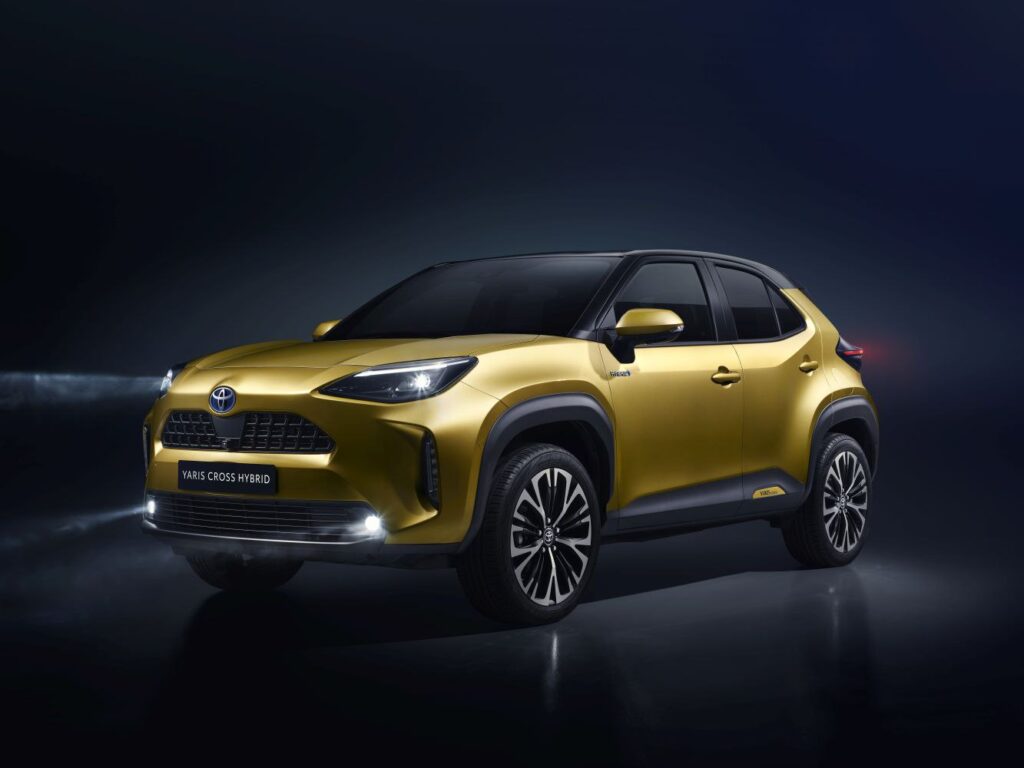
The Toyota Yaris Cross (XP210) is a subcompact crossover SUV introduced by Toyota in 2020. Designed to slot beneath the C-HR and above the standard Yaris hatchback, the Yaris Cross caters to the growing European market demand for smaller, more efficient SUVs. While not initially sold in the United States, it represents a significant expansion of the Yaris lineup, offering a more versatile and practical option compared to the traditional hatchback. The XP210 generation, specifically the 1.5 Hybrid model, combines a gasoline engine with an electric motor, delivering a fuel-efficient and relatively low-emission vehicle.
Toyota Yaris Cross (XP210): An Overview
The Yaris Cross is built on the Toyota New Global Architecture (TNGA-B) platform, shared with the latest Yaris hatchback. This platform contributes to the vehicle’s improved rigidity, handling, and safety features. The 1.5 Hybrid variant, producing a combined 116 horsepower, is a key offering in European markets, where fuel economy and environmental considerations are paramount. It’s positioned as a competitor to vehicles like the Renault Captur, Peugeot 2008, and Volkswagen T-Cross.
Engine & Performance
The Yaris Cross 1.5 Hybrid utilizes Toyota’s fourth-generation hybrid technology. The powertrain centers around a 1.5-liter, three-cylinder M15A-FXE gasoline engine producing 91 horsepower at 5500 rpm and 120 Nm (88.51 lb-ft) of torque between 3800-4800 rpm. This engine is paired with an electric motor capable of delivering 80 horsepower and 141 Nm (104 lb-ft) of torque. The combined system output is 116 horsepower. Power is delivered to the front wheels via an electronically controlled continuously variable transmission (ECVT).
The hybrid system automatically switches between gasoline engine, electric motor, or a combination of both, optimizing fuel efficiency based on driving conditions. The vehicle can operate in electric-only mode for short distances at lower speeds. The weight-to-power ratio is 10 kg/Hp, and the weight-to-torque ratio is 9.7 kg/Nm, contributing to a responsive driving experience despite the relatively small engine displacement. Fuel economy is a key strength, with combined figures ranging from 3.2 to 3.6 liters per 100 kilometers (73.5 to 65.3 US mpg).
Design & Features
The Yaris Cross features a distinct SUV-inspired design, with a raised ride height (170 mm / 6.69 in) and a more robust appearance compared to the standard Yaris. It’s a five-door crossover with seating for five passengers. The interior is designed with practicality in mind, offering a reasonable amount of space for passengers and cargo. The battery pack is cleverly located under the rear seats, preserving luggage space.
Standard features typically include Toyota Safety Sense, a suite of active safety technologies such as pre-collision system with pedestrian and cyclist detection, lane departure alert with steering assist, and adaptive cruise control. Infotainment systems include touchscreen displays with smartphone integration (Apple CarPlay and Android Auto). Higher trim levels offer features like automatic climate control, keyless entry, and a reversing camera. The focus is on providing a well-equipped and safe vehicle for urban and suburban driving.
Technical Specifications
| Brand | Toyota |
| Model | Yaris Cross |
| Generation | Yaris Cross (XP210) |
| Type (Engine) | 1.5 (116 Hp) Hybrid ECVT |
| Start of production | August, 2020 |
| Powertrain Architecture | FHEV (Full Hybrid Electric Vehicle) |
| Body type | SUV, Crossover |
| Seats | 5 |
| Doors | 5 |
| Fuel consumption (urban) | 3.2-3.4 l/100 km (73.5 – 69.2 US mpg) |
| Fuel consumption (extra urban) | 3.4-3.8 l/100 km (69.2 – 61.9 US mpg) |
| Fuel consumption (combined) | 3.2-3.6 l/100 km (73.5 – 65.3 US mpg) |
| Fuel Type | Petrol (Gasoline) |
| Weight-to-power ratio | 10 kg/Hp |
| Weight-to-torque ratio | 9.7 kg/Nm |
| Gross battery capacity | 0.76 kWh |
| Battery voltage | 177.6 V |
| Battery technology | Lithium-ion (Li-Ion) |
| Battery location | Under the rear seats |
| Electric motor power | 80 Hp |
| Electric motor Torque | 141 Nm (104 lb.-ft.) |
| Electric motor location | Integrated into the transmission |
| Electric motor type | Synchronous |
| System power | 116 Hp |
| Power | 91 Hp @ 5500 rpm |
| Torque | 120 Nm @ 3800-4800 rpm (88.51 lb.-ft. @ 3800-4800 rpm) |
| Engine layout | Front, Transverse |
| Engine Model/Code | M15A-FXE |
| Engine displacement | 1490 cm3 (90.93 cu. in.) |
| Number of cylinders | 3 |
| Engine configuration | Inline |
| Cylinder Bore | 80.49 mm (3.17 in.) |
| Piston Stroke | 97.61 mm (3.84 in.) |
| Fuel injection system | Multi-port manifold injection |
| Engine aspiration | Naturally aspirated engine |
| Engine oil capacity | 3.6 l (3.8 US qt | 3.17 UK qt) |
| Coolant | 4.7 l (4.97 US qt | 4.14 UK qt) |
| Kerb Weight | 1160-1190 kg (2557.36 – 2623.5 lbs.) |
| Max. weight | 1435-1465 kg (3163.63 – 3229.77 lbs.) |
| Max load | 275 kg (606.27 lbs.) |
| Fuel tank capacity | 36 l (9.51 US gal | 7.92 UK gal) |
| Length | 4180 mm (164.57 in.) |
| Width | 1765 mm (69.49 in.) |
| Height | 1590 mm (62.6 in.) |
| Wheelbase | 2560 mm (100.79 in.) |
| Front track | 1515-1525 mm (59.65 – 60.04 in.) |
| Rear track | 1515-1525 mm (59.65 – 60.04 in.) |
| Ride height (ground clearance) | 170 mm (6.69 in.) |
| Minimum turning circle | 10.6 m (34.78 ft.) |
| Drivetrain Architecture | Front wheel drive. FHEV. ICE and electric motor drive front wheels. |
| Drive wheel | Front wheel drive |
| Number of gears and type of gearbox | automatic transmission ECVT |
| Front suspension | Independent type McPherson |
| Rear suspension | Torsion |
| Front brakes | Ventilated discs |
| Rear brakes | Disc |
| Assisting systems | ABS (Anti-lock braking system) |
| Steering type | Steering rack and pinion |
| Power steering | Hydraulic Steering |
| Tires size | 215/50 R18 |
| Wheel rims size | 7J x 18 |
The Toyota Yaris Cross (XP210) 1.5 Hybrid ECVT represents Toyota’s commitment to providing fuel-efficient and practical vehicles for the European market. Its combination of hybrid technology, compact dimensions, and modern features makes it a compelling option in the subcompact crossover segment.