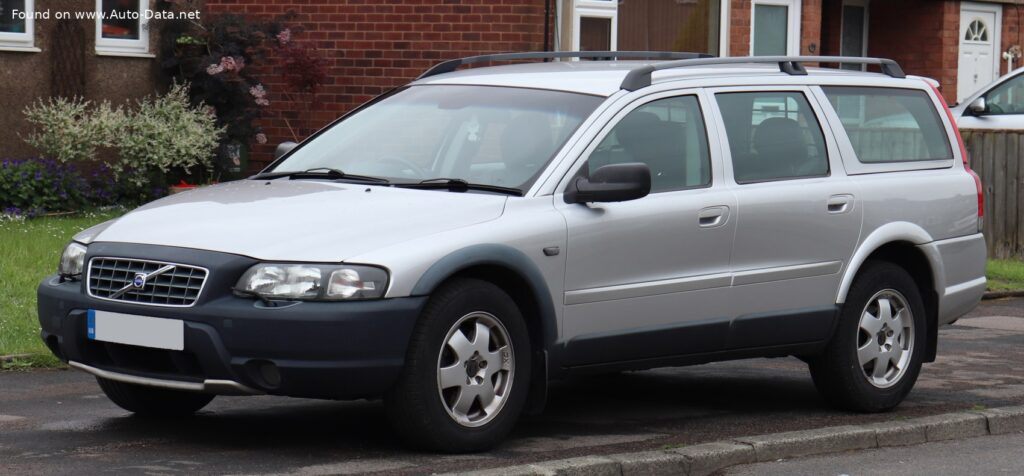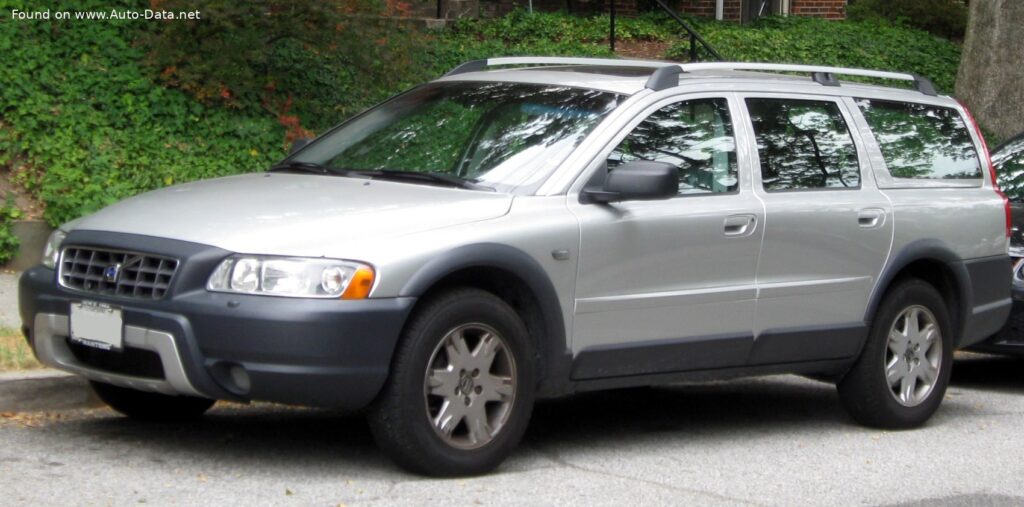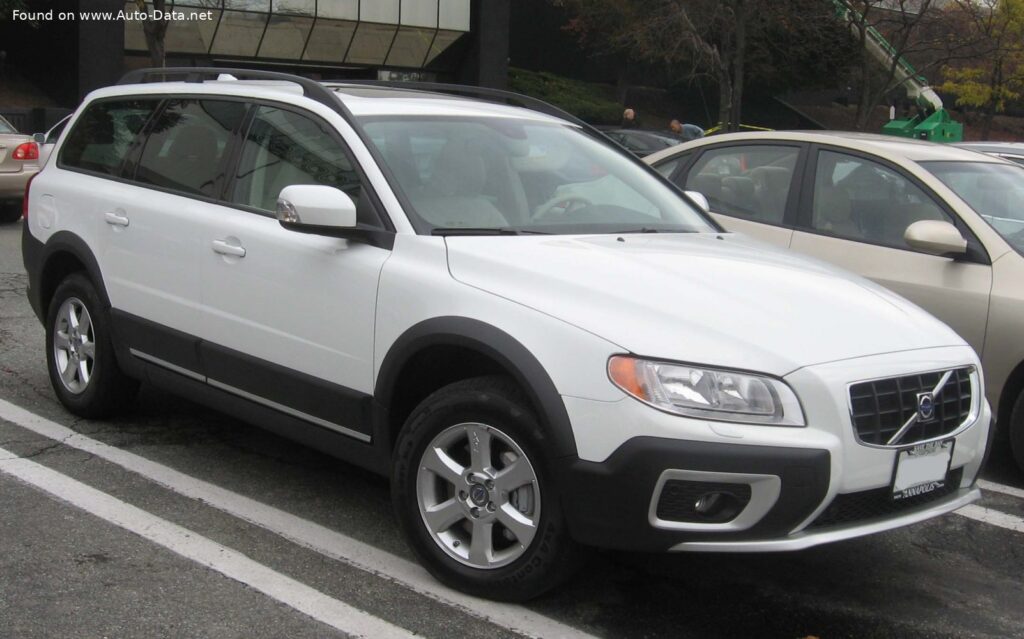
The Volvo XC70 II 2.4 D5 (205 Hp) AWD Geartronic is a station wagon, or estate as it’s known in Europe, produced by the Swedish manufacturer Volvo between 2009 and 2011. Positioned as a crossover, it blended the practicality of a wagon with some of the rugged styling and all-wheel-drive capability of an SUV. The XC70, in its second generation, aimed to provide a comfortable and capable vehicle for both on-road and light off-road use, appealing to buyers seeking a versatile family vehicle. While not officially sold in the United States during this generation, the XC70 was a popular model in Europe, offering a distinct alternative to more conventional SUVs.
Volvo XC70 II: An Overview
The XC70 II represented an evolution of Volvo’s successful cross-country wagon concept. Building upon the foundations of the Volvo V70, the XC70 added increased ground clearance, robust exterior styling cues, and standard all-wheel drive. The 2.4 D5 variant, powered by a turbocharged diesel engine, was a common choice in European markets due to its balance of fuel efficiency and performance. The “Geartronic” designation refers to Volvo’s automatic transmission, offering smooth and convenient gear changes.
Engine & Performance
The heart of the XC70 II 2.4 D5 is a 2.4-liter inline-five cylinder diesel engine, designated D5244T10. This engine produces 205 horsepower at 4000 rpm and a substantial 420 Nm (309.78 lb.-ft.) of torque between 1500 and 3250 rpm. The turbocharger and intercooler work in concert to enhance power output and efficiency. The engine’s common rail direct fuel injection system contributes to refined combustion and reduced emissions. Coupled with a six-speed automatic transmission (Geartronic), the XC70 II 2.4 D5 achieves a 0-100 km/h (0-62 mph) acceleration time of 8.9 seconds, and a calculated 0-60 mph time of 8.5 seconds. Its top speed is electronically limited to 205 km/h (127.38 mph). The engine’s power-to-weight ratio is 8.6 kg/Hp, and the torque-to-weight ratio is 4.2 kg/Nm.
Design & Features
The XC70 II maintains the classic Volvo wagon profile, characterized by a long roofline and spacious interior. However, it distinguishes itself with rugged styling elements such as protective lower body cladding, flared wheel arches, and a raised ride height of 210 mm (8.27 in). These features contribute to a more adventurous appearance and enhance its ability to handle rougher terrain. The vehicle offers seating for five passengers and provides 575 liters (20.31 cu. ft.) of trunk space with the rear seats up, expanding to a generous 1600 liters (56.5 cu. ft.) when the rear seats are folded down. Safety was a paramount concern for Volvo, and the XC70 II is equipped with standard features like ABS (Anti-lock Braking System) and a robust chassis designed to protect occupants in the event of a collision. Other notable features include electric power steering, McPherson strut front suspension, and an independent multi-link rear suspension for a comfortable ride. The XC70 also included a particulate filter to reduce harmful emissions.
Technical Specifications
| Brand | Volvo |
| Model | XC70 |
| Generation | XC70 II |
| Type (Engine) | 2.4 D5 (205 Hp) AWD Geartronic |
| Start of production | 2009 |
| End of production | 2011 |
| Powertrain Architecture | Internal Combustion engine |
| Body type | Station wagon (estate), Crossover |
| Seats | 5 |
| Doors | 5 |
| Fuel consumption (urban) | 10 l/100 km (23.5 US mpg, 28.2 UK mpg, 10 km/l) |
| Fuel consumption (extra urban) | 6.1 l/100 km (38.6 US mpg, 46.3 UK mpg, 16.4 km/l) |
| Fuel consumption (combined) | 7.5 l/100 km (31.4 US mpg, 37.7 UK mpg, 13.3 km/l) |
| CO2 emissions | 199 g/km |
| Fuel Type | Diesel |
| Acceleration 0 – 100 km/h | 8.9 sec |
| Acceleration 0 – 62 mph | 8.9 sec |
| Acceleration 0 – 60 mph | 8.5 sec |
| Maximum speed | 205 km/h (127.38 mph) |
| Emission standard | Euro 4 |
| Weight-to-power ratio | 8.6 kg/Hp |
| Weight-to-torque ratio | 4.2 kg/Nm |
| Power | 205 Hp @ 4000 rpm |
| Torque | 420 Nm @ 1500-3250 rpm (309.78 lb.-ft. @ 1500-3250 rpm) |
| Engine layout | Front, Transverse |
| Engine Model/Code | D5244T10 |
| Engine displacement | 2400 cm3 (146.46 cu. in.) |
| Number of cylinders | 5 |
| Engine configuration | Inline |
| Cylinder Bore | 81 mm (3.19 in.) |
| Piston Stroke | 93.15 mm (3.67 in.) |
| Compression ratio | 16.5:1 |
| Number of valves per cylinder | 4 |
| Fuel injection system | Diesel Commonrail |
| Engine aspiration | Turbocharger, Intercooler |
| Valvetrain | DOHC |
| Engine oil capacity | 6 l (6.34 US qt | 5.28 UK qt) |
| Coolant | 8.9 l (9.4 US qt | 7.83 UK qt) |
| Kerb Weight | 1759 kg (3877.93 lbs.) |
| Max. weight | 2400 kg (5291.09 lbs.) |
| Max load | 641 kg (1413.16 lbs.) |
| Trunk (boot) space – minimum | 575 l (20.31 cu. ft.) |
| Trunk (boot) space – maximum | 1600 l (56.5 cu. ft.) |
| Fuel tank capacity | 70 l (18.49 US gal | 15.4 UK gal) |
| Max. roof load | 100 kg (220.46 lbs.) |
| Permitted trailer load with brakes (12%) | 2100 kg (4629.71 lbs.) |
| Permitted trailer load without brakes | 750 kg (1653.47 lbs.) |
| Permitted towbar download | 75 kg (165.35 lbs.) |
| Length | 4838 mm (190.47 in.) |
| Width | 1861 mm (73.27 in.) |
| Width including mirrors | 2119 mm (83.43 in.) |
| Height | 1604 mm (63.15 in.) |
| Wheelbase | 2815 mm (110.83 in.) |
| Front track | 1614 mm (63.54 in.) |
| Rear (Back) track | 1580 mm (62.2 in.) |
| Front overhang | 979 mm (38.54 in.) |
| Rear overhang | 1045 mm (41.14 in.) |
| Ride height (ground clearance) | 210 mm (8.27 in.) |
| Minimum turning circle (turning diameter) | 12 m (39.37 ft.) |
| Drivetrain Architecture | All wheel drive (4×4). ICE drives front wheels, rear wheels engaged via clutch. |
| Number of gears and type of gearbox | 6 gears, automatic transmission Geartronic |
| Front suspension | Independent, McPherson with coil spring and anti-roll bar |
| Rear suspension | Independent multi-link spring suspension with stabilizer |
| Front brakes | Ventilated discs |
| Rear brakes | Disc |
| Tires size | 215/65 R16 |
| Wheel rims size | 7J x 16 |
The Volvo XC70 II 2.4 D5 AWD Geartronic offered a compelling package for buyers seeking a practical, safe, and capable wagon. Its blend of comfort, performance, and all-weather capability made it a popular choice in European markets, representing a distinctive alternative to traditional SUV offerings.