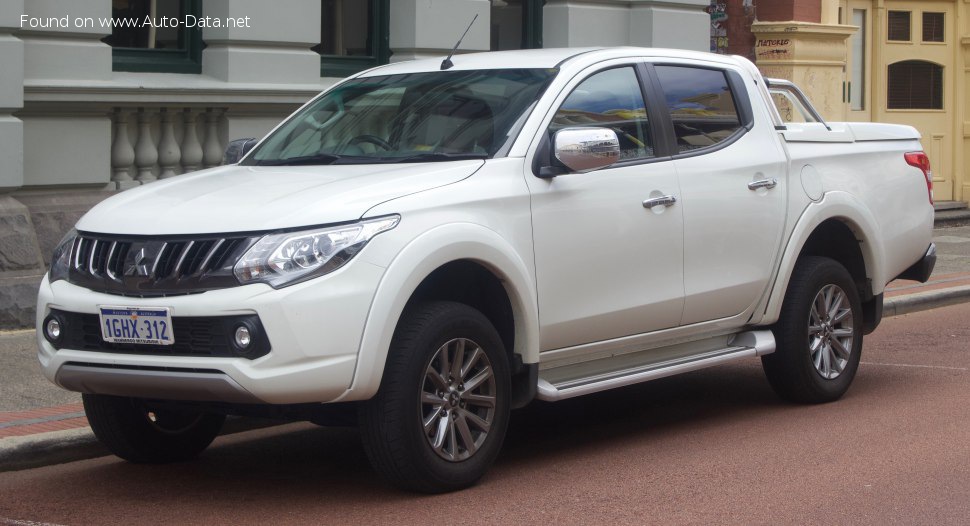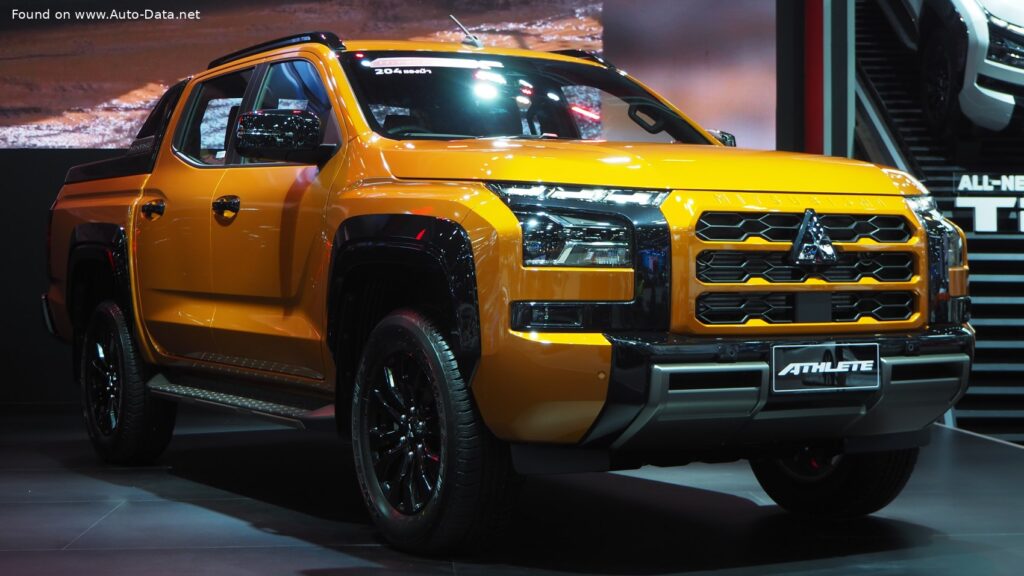
The Mitsubishi Triton VI Double Cab GSR 2.4 (204 Hp) 4WD Automatic represents the latest iteration of Mitsubishi’s globally recognized pickup truck. Introduced in February 2024, this model is part of the sixth generation of the Triton, known as the Triton VI. While not traditionally a high-volume seller in the North American market – where Mitsubishi has focused on SUVs and smaller cars – the Triton is a significant player in the Asia-Pacific region, Europe, Latin America, and Africa, competing with vehicles like the Toyota Hilux, Nissan Navara, and Ford Ranger. The Double Cab configuration offers a balance between cargo capacity and passenger comfort, making it suitable for both work and family use. This particular GSR variant emphasizes performance with its 2.4-liter diesel engine and advanced four-wheel-drive system.
Mitsubishi Triton VI Double Cab GSR 2.4: An Overview
The Triton, historically known as the L200 in many international markets, has built a reputation for ruggedness, reliability, and practicality. The sixth generation, and specifically the GSR 2.4 model, aims to enhance these qualities with updated technology, improved safety features, and a more refined driving experience. The Double Cab body style provides seating for five passengers and a versatile cargo bed, catering to a wide range of needs. The GSR trim level typically denotes a higher level of equipment and performance enhancements compared to base models.
Engine & Performance
Powering the Mitsubishi Triton VI Double Cab GSR 2.4 is a 2.4-liter inline-four cylinder diesel engine, designated the 4N16. This engine produces 204 horsepower at 3500 rpm and 470 Nm (346.65 lb.-ft.) of torque between 1500 and 2750 rpm. The engine features a turbocharger with an intercooler, a diesel commonrail fuel injection system, and a double overhead camshaft (DOHC) valvetrain with variable valve timing (VVT). This combination delivers a broad torque curve, providing strong pulling power for towing and hauling, while also offering reasonable fuel efficiency. The engine’s power-to-weight ratio is 10.5 kg/Hp, or 95.3 Hp/tonne, and the torque-to-weight ratio is 4.6 kg/Nm, or 219.6 Nm/tonne. The engine is paired with a six-speed automatic transmission, delivering smooth and efficient gear changes. The drivetrain is a sophisticated four-wheel-drive system, allowing for permanent rear-wheel drive with on-demand engagement of the front wheels via an electrically or mechanically operated clutch. Fuel economy figures, measured using the WLTC standard, are 11.8 l/100 km (19.9 US mpg, 23.9 UK mpg, 8.5 km/l) in urban conditions, 7.7 l/100 km (30.5 US mpg, 36.7 UK mpg, 13 km/l) in extra-urban driving, and 8.8 l/100 km (26.7 US mpg, 32.1 UK mpg, 11.4 km/l) combined.
Design & Features
The Mitsubishi Triton VI Double Cab GSR 2.4 is a four-door pickup truck with a robust and modern design. It measures 5360 mm (211.02 in.) in length, 1930 mm (75.98 in.) in width, and 1815 mm (71.46 in.) in height, with a wheelbase of 3130 mm (123.23 in.). The vehicle boasts a kerb weight of 2140 kg (4717.89 lbs.) and a maximum weight of 2915 kg (6426.47 lbs.), with a maximum load capacity of 775 kg (1708.58 lbs.). The GSR trim level typically includes features such as alloy wheels (18-inch in this case, with 265/60 R18 tires), a refined interior with upgraded materials, and advanced safety technologies. Standard safety equipment includes an Anti-lock Braking System (ABS). The suspension system consists of coil springs and a double wishbone setup at the front, and leaf springs at the rear, providing a balance between ride comfort and load-carrying capability. The vehicle also incorporates a Start & Stop System to improve fuel efficiency. The fuel tank has a capacity of 75 liters (19.81 US gal, 16.5 UK gal).
Technical Specifications
| Brand | Mitsubishi |
| Model | Triton |
| Generation | Triton VI Double Cab |
| Type (Engine) | GSR 2.4 (204 Hp) 4WD Automatic |
| Start of production | February, 2024 |
| Powertrain Architecture | Internal Combustion engine |
| Body type | Pick-up |
| Seats | 5 |
| Doors | 4 |
| Fuel consumption (economy) – urban (WLTC) | 11.8 l/100 km (19.9 US mpg, 23.9 UK mpg, 8.5 km/l) |
| Fuel consumption (economy) – extra urban (WLTC) | 7.7 l/100 km (30.5 US mpg, 36.7 UK mpg, 13 km/l) |
| Fuel consumption (economy) – combined (WLTC) | 8.8 l/100 km (26.7 US mpg, 32.1 UK mpg, 11.4 km/l) |
| Fuel Type | Diesel |
| Weight-to-power ratio | 10.5 kg/Hp, 95.3 Hp/tonne |
| Weight-to-torque ratio | 4.6 kg/Nm, 219.6 Nm/tonne |
| Power | 204 Hp @ 3500 rpm |
| Power per litre | 83.6 Hp/l |
| Torque | 470 Nm @ 1500-2750 rpm (346.65 lb.-ft. @ 1500-2750 rpm) |
| Engine layout | Front, Longitudinal |
| Engine Model/Code | 4N16 |
| Engine displacement | 2439 cm3 (148.84 cu. in.) |
| Number of cylinders | 4 |
| Engine configuration | Inline |
| Cylinder Bore | 86 mm (3.39 in.) |
| Piston Stroke | 105 mm (4.13 in.) |
| Compression ratio | 15.1:1 |
| Number of valves per cylinder | 4 |
| Fuel injection system | Diesel Commonrail |
| Engine aspiration | Turbocharger, Intercooler |
| Valvetrain | DOHC, VVT |
| Engine oil capacity | 6.7 l (7.08 US qt | 5.9 UK qt) |
| Coolant | 7.7 l (8.14 US qt | 6.78 UK qt) |
| Kerb Weight | 2140 kg (4717.89 lbs.) |
| Max. weight | 2915 kg (6426.47 lbs.) |
| Max load | 775 kg (1708.58 lbs.) |
| Fuel tank capacity | 75 l (19.81 US gal | 16.5 UK gal) |
| Length | 5360 mm (211.02 in.) |
| Width | 1930 mm (75.98 in.) |
| Height | 1815 mm (71.46 in.) |
| Wheelbase | 3130 mm (123.23 in.) |
| Front track | 1570 mm (61.81 in.) |
| Rear (Back) track | 1565 mm (61.61 in.) |
| Ride height (ground clearance) | 220 mm (8.66 in.) |
| Minimum turning circle (turning diameter) | 12.4 m (40.68 ft.) |
| Drivetrain Architecture | All wheel drive (4×4). ICE drives rear wheels, front wheels engaged via clutch. |
| Number of gears and type of gearbox | 6 gears, automatic transmission |
| Front suspension | Coil spring, Double wishbone |
| Rear suspension | Leaf spring |
| Front brakes | Ventilated discs |
| Rear brakes | Drum |
| Steering type | Steering rack and pinion |
| Power steering | Electric Steering |
| Tires size | 265/60 R18 |
| Wheel rims size | 18 |
The Mitsubishi Triton VI Double Cab GSR 2.4 4WD Automatic continues the Triton’s legacy as a capable and versatile pickup truck, offering a compelling combination of performance, practicality, and features for a diverse range of users.