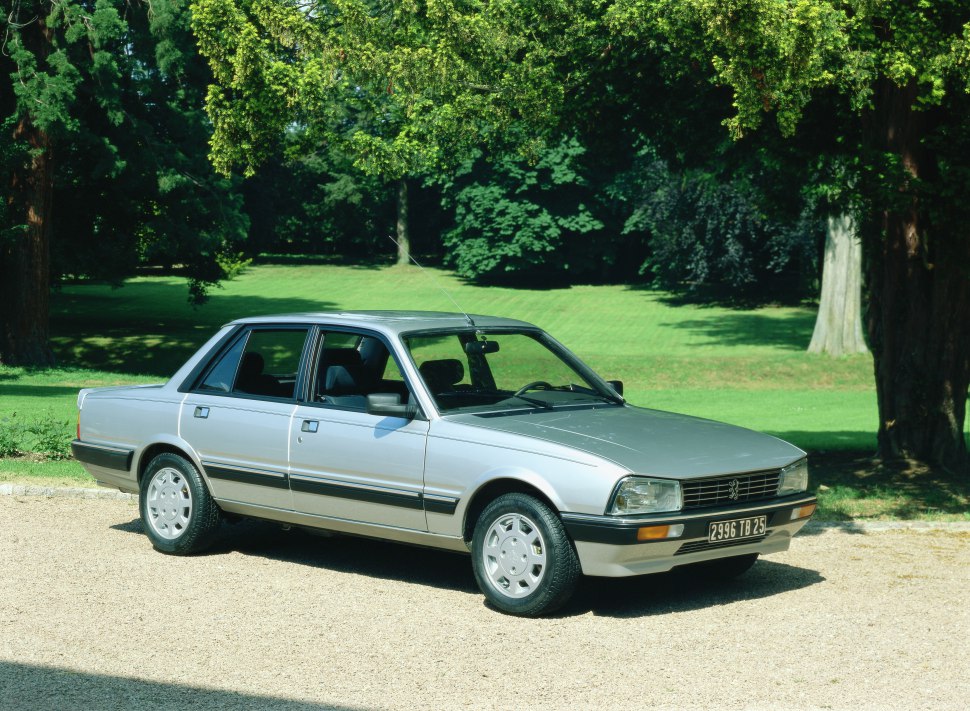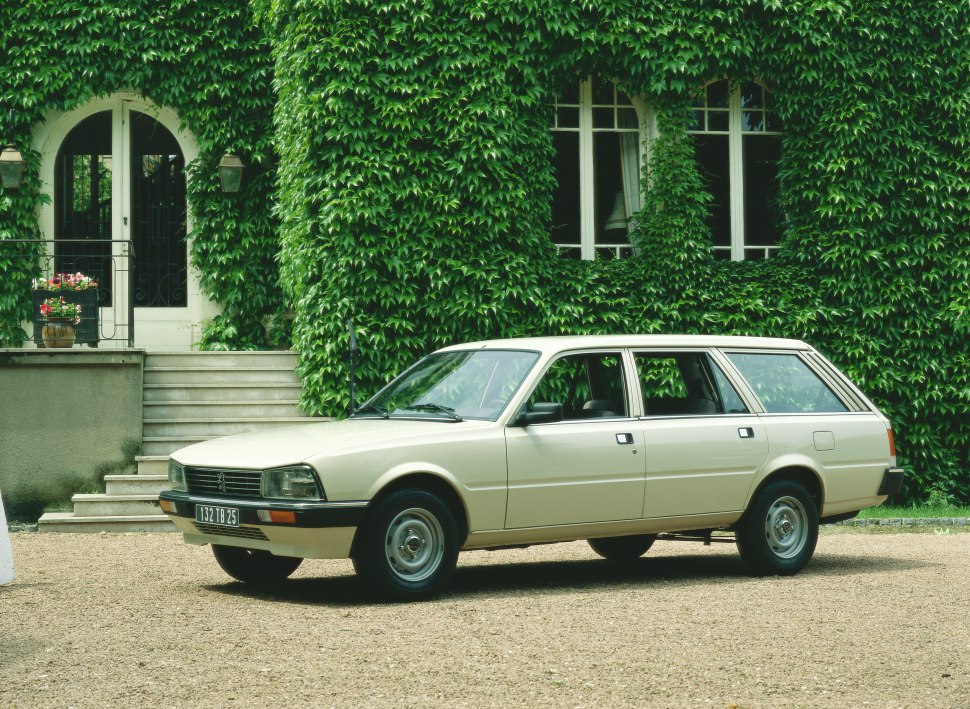
The Peugeot 505 Break (551D) 2.0, produced between 1985 and 1987, represents a refined iteration of Peugeot’s executive car line. As a station wagon (estate) variant of the 505, it catered to buyers seeking a blend of practicality, comfort, and French automotive flair. While not officially sold in the United States, the 505 held a significant position in the European market as a competitor to vehicles like the Volvo 240, Ford Sierra, and Opel/Vauxhall Commodore. The Break body style, offering increased cargo capacity, further broadened its appeal to families and those requiring versatile transportation.
Peugeot 505 Break (551D): A Detailed Overview
The 505 series, launched in 1978, was Peugeot’s replacement for the successful 504. The Break variant, introduced later, provided a more spacious and functional alternative to the sedan and coupé models. The 551D designation specifically refers to the 2.0-liter engine variant produced during the mid-1980s. This model aimed to balance performance with fuel efficiency, making it a popular choice for long-distance travel and everyday use.
Engine & Performance
The 505 Break (551D) is powered by a 1,971 cc (120.28 cu. in.) inline-four cylinder petrol (gasoline) engine, designated 106E XN1A. This engine produces 98 horsepower (Hp) at 5,200 rpm and 181 Newton-meters (133.5 lb.-ft.) of torque at 3,000 rpm. The engine’s configuration is naturally aspirated and utilizes a carburettor fuel injection system, typical for vehicles of this era. Power delivery is relatively smooth, prioritizing usability over outright performance. The engine’s longitudinal front-engine layout contributes to balanced handling characteristics. Acceleration from 0 to 100 km/h (0-62 mph) takes 12.8 seconds, while 0 to 60 mph is achieved in approximately 12.2 seconds. The vehicle boasts a maximum speed of 168 km/h (104.39 mph). The weight-to-power ratio is 13.3 kg/Hp, and the weight-to-torque ratio is 7.2 kg/Nm, indicating a reasonable balance between weight and engine output.
Design & Features
The Peugeot 505 Break features a classic station wagon body style with a five-door configuration and seating for five passengers. Its design is characterized by clean lines, a relatively low roofline for a wagon, and a spacious interior. The Break’s defining feature is its generous cargo area, offering a minimum of 1,120 liters (39.55 cu. ft.) and expanding to a maximum of 2,240 liters (79.1 cu. ft.) with the rear seats folded down. This versatility made it a practical choice for families and those needing to transport large items.
In terms of features, the 505 Break (551D) offered a level of refinement expected of an executive car in the 1980s. It included hydraulic power steering for ease of maneuverability and an Anti-lock Braking System (ABS) as a safety feature, which was becoming increasingly common during this period. The suspension utilizes coil springs on both the front and rear axles, providing a comfortable ride. The vehicle rides on 185/65 HR14 tires. While not equipped with modern infotainment systems, the 505 Break prioritized driver and passenger comfort through a well-appointed interior and a focus on ride quality.
Technical Specifications
| Brand | Peugeot |
| Model | 505 |
| Generation | 505 Break (551D) |
| Type (Engine) | 2.0 (98 Hp) |
| Start of production | 1985 |
| End of production | 1987 |
| Powertrain Architecture | Internal Combustion engine |
| Body type | Station wagon (estate) |
| Seats | 5 |
| Doors | 5 |
| Fuel consumption (urban) | 9.3 l/100 km (25.3 US mpg, 30.4 UK mpg, 10.8 km/l) |
| Fuel consumption (extra urban) | 6.4 l/100 km (36.8 US mpg, 44.1 UK mpg, 15.6 km/l) |
| Fuel consumption (combined) | 9 l/100 km (26.1 US mpg, 31.4 UK mpg, 11.1 km/l) |
| Fuel Type | Petrol (Gasoline) |
| Acceleration 0 – 100 km/h | 12.8 sec |
| Acceleration 0 – 62 mph | 12.8 sec |
| Acceleration 0 – 60 mph | 12.2 sec |
| Maximum speed | 168 km/h (104.39 mph) |
| Weight-to-power ratio | 13.3 kg/Hp |
| Weight-to-torque ratio | 7.2 kg/Nm |
| Power | 98 Hp @ 5200 rpm |
| Torque | 181 Nm @ 3000 rpm (133.5 lb.-ft. @ 3000 rpm) |
| Engine layout | Front, Longitudinal |
| Engine Model/Code | 106E XN1A |
| Engine displacement | 1971 cm3 (120.28 cu. in.) |
| Number of cylinders | 4 |
| Engine configuration | Inline |
| Cylinder Bore | 88 mm (3.46 in.) |
| Piston Stroke | 81 mm (3.19 in.) |
| Compression ratio | 8.8:1 |
| Number of valves per cylinder | 2 |
| Fuel injection system | Carburettor |
| Engine oil capacity | 4 l (4.23 US qt | 3.52 UK qt) |
| Coolant capacity | 8.5 l (8.98 US qt | 7.48 UK qt) |
| Kerb Weight | 1300 kg (2866.01 lbs.) |
| Max. weight | 1980 kg (4365.15 lbs.) |
| Max load | 680 kg (1499.14 lbs.) |
| Trunk (boot) space – minimum | 1120 l (39.55 cu. ft.) |
| Trunk (boot) space – maximum | 2240 l (79.1 cu. ft.) |
| Fuel tank capacity | 70 l (18.49 US gal | 15.4 UK gal) |
| Length | 4900 mm (192.91 in.) |
| Width | 1730 mm (68.11 in.) |
| Height | 1540 mm (60.63 in.) |
| Wheelbase | 2900 mm (114.17 in.) |
| Front track | 1460 mm (57.48 in.) |
| Rear (Back) track | 1440 mm (56.69 in.) |
| Drivetrain Architecture | Rear wheel drive |
| Number of gears and type of gearbox | 5 gears, manual transmission |
| Front suspension | Coil spring |
| Rear suspension | Coil spring |
| Front brakes | Disc |
| Rear brakes | Drum |
| Assisting systems | ABS (Anti-lock braking system), Hydraulic Steering |
| Tires size | 185/65 HR14 |
The Peugeot 505 Break (551D) 2.0 represents a compelling example of 1980s European automotive engineering. Its blend of practicality, comfort, and stylish design ensured its popularity in its target markets, and it remains a sought-after classic car today.