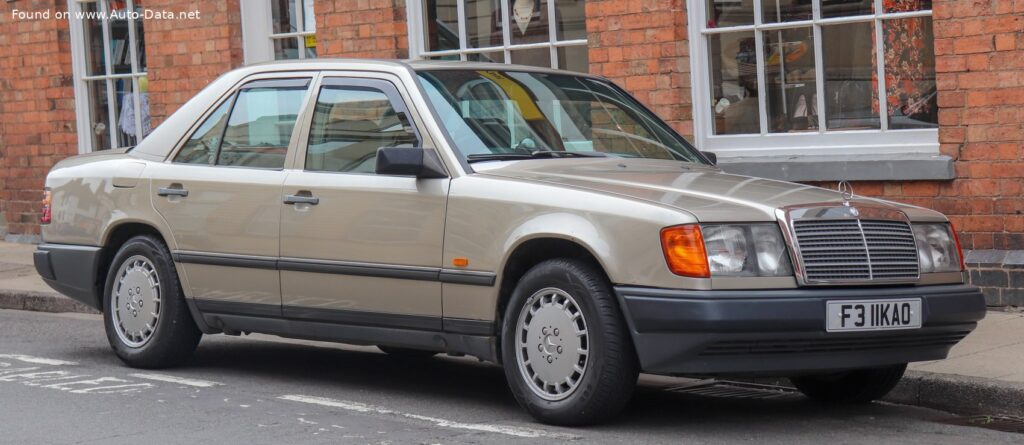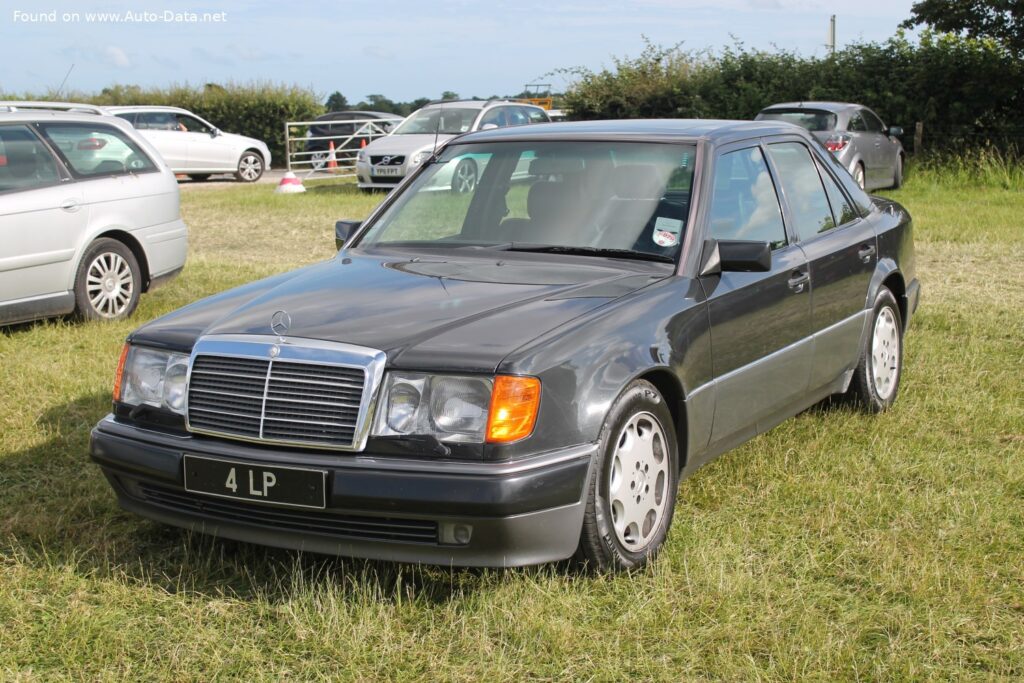
The Mercedes-Benz W124, particularly the 300 D variant produced from 1989 to 1993, represents a pivotal point in the manufacturer’s mid-size sedan lineage. Positioned as a successor to the W201 (190E) and the W115, the W124 aimed to blend luxury, durability, and advanced engineering into a practical family vehicle. The facelifted 1989 model, as detailed here, refined the original design and incorporated improvements based on initial production feedback. While primarily a European market vehicle, the W124 gained a following in other regions due to its reputation for longevity and build quality. The 300 D, powered by a robust diesel engine, offered a compelling alternative to gasoline-powered competitors, emphasizing fuel efficiency and torque.
The Mercedes-Benz W124 300 D: A Legacy of Engineering
The W124 series was a significant departure from its predecessors, introducing a more contemporary design language and a focus on safety. The 1989 facelift brought subtle but important changes, including revised styling cues, improved interior materials, and enhancements to the vehicle’s mechanical components. The 300 D specifically catered to buyers seeking the benefits of diesel power – excellent fuel economy and substantial low-end torque – without sacrificing the Mercedes-Benz experience of comfort and refinement. It was a popular choice in Europe, where diesel fuel was more readily available and often subject to lower taxation than gasoline.
Engine & Performance
The heart of the 300 D is its 3.0-liter inline-six cylinder diesel engine, designated OM 603 D 30 / 603.912. This engine produces 113 horsepower at 4600 rpm and 210 Nm (154.89 lb.-ft.) of torque at 2800 rpm. While the horsepower figure might seem modest by modern standards, the engine’s strength lies in its torque delivery, making it well-suited for long-distance cruising and hauling passengers. The engine utilizes precombustion chamber injection, a technology common in Mercedes-Benz diesels of the era, to improve combustion efficiency and reduce emissions. Power is sent to the rear wheels via a 5-speed manual transmission. Performance figures include a 0-100 km/h (0-62 mph) acceleration time of 13.7 seconds and a maximum speed of 190 km/h (118.06 mph). The weight-to-power ratio is 12.7 kg/Hp, and the weight-to-torque ratio is 6.9 kg/Nm.
Design & Features
The W124 300 D is a four-door sedan with a classic three-box design. The 1989 facelift brought a more integrated front fascia, revised taillights, and subtle body-colored trim elements. The interior is characterized by its solid construction, comfortable seating for five occupants, and a focus on practicality. Key features included power steering, ventilated front disc brakes, and an Anti-lock Braking System (ABS) – a significant safety advancement for the time. The vehicle’s independent multi-link rear suspension contributed to a comfortable ride and improved handling. The trunk offers a generous 520 liters (18.36 cu. ft.) of cargo space. The W124’s design prioritized safety, with a robust passenger cell and crumple zones designed to absorb impact energy in the event of a collision. The vehicle’s build quality and attention to detail were hallmarks of the Mercedes-Benz brand.
Technical Specifications
| Brand | Mercedes-Benz |
| Model | W124 |
| Generation | W124 (facelift 1989) |
| Type (Engine) | 300 D (113 Hp) |
| Start of production | September, 1989 |
| End of production | July, 1993 |
| Powertrain Architecture | Internal Combustion engine |
| Body type | Sedan |
| Seats | 5 |
| Doors | 4 |
| Fuel consumption (urban) | 9.8 l/100 km (24 US mpg, 28.8 UK mpg, 10.2 km/l) |
| Fuel consumption (extra urban) | 5.4 l/100 km (43.6 US mpg, 52.3 UK mpg, 18.5 km/l) |
| Fuel Type | Diesel |
| Acceleration 0 – 100 km/h | 13.7 sec |
| Acceleration 0 – 62 mph | 13.7 sec |
| Acceleration 0 – 60 mph | 13 sec |
| Maximum speed | 190 km/h (118.06 mph) |
| Weight-to-power ratio | 12.7 kg/Hp |
| Weight-to-torque ratio | 6.9 kg/Nm |
| Power | 113 Hp @ 4600 rpm |
| Power per litre | 37.7 Hp/l |
| Torque | 210 Nm @ 2800 rpm (154.89 lb.-ft. @ 2800 rpm) |
| Engine layout | Front, Longitudinal |
| Engine Model/Code | OM 603 D 30 / 603.912 |
| Engine displacement | 2996 cm3 (182.83 cu. in.) |
| Number of cylinders | 6 |
| Engine configuration | Inline |
| Cylinder Bore | 87 mm (3.43 in.) |
| Piston Stroke | 84 mm (3.31 in.) |
| Compression ratio | 22:1 |
| Number of valves per cylinder | 2 |
| Fuel injection system | Precombustion chamber injection |
| Engine aspiration | Naturally aspirated engine |
| Valvetrain | SOHC |
| Engine oil capacity | 7.5 l (7.93 US qt | 6.6 UK qt) |
| Coolant | 9 l (9.51 US qt | 7.92 UK qt) |
| Kerb Weight | 1440 kg (3174.66 lbs.) |
| Max. weight | 2020 kg (4453.34 lbs.) |
| Max load | 580 kg (1278.68 lbs.) |
| Trunk (boot) space – minimum | 520 l (18.36 cu. ft.) |
| Fuel tank capacity | 70 l (18.49 US gal | 15.4 UK gal) |
| Length | 4740 mm (186.61 in.) |
| Width | 1740 mm (68.5 in.) |
| Height | 1428 mm (56.22 in.) |
| Wheelbase | 2800 mm (110.24 in.) |
| Front track | 1501 mm (59.09 in.) |
| Rear (Back) track | 1491 mm (58.7 in.) |
| Drivetrain Architecture | Rear wheel drive |
| Number of gears and type of gearbox | 5 gears, manual transmission |
| Front suspension | Wishbone |
| Rear suspension | Independent multi-link suspension |
| Front brakes | Ventilated discs |
| Rear brakes | Disc |
| Assisting systems | ABS (Anti-lock braking system) |
| Steering type | Cone worm with recirculation balls |
| Power steering | Hydraulic Steering |
| Tires size | Front wheel tires: 195/65 R15Rear wheel tires: 195/65 R15 |
| Wheel rims size | Front wheel rims: 6.5J x 15Rear wheel rims: 6.5J x 15 |
The Mercedes-Benz W124 300 D, particularly the facelifted version, remains a highly regarded vehicle among enthusiasts and collectors. Its combination of robust engineering, comfortable ride, and fuel efficiency has ensured its enduring appeal. The W124 series, and the 300 D in particular, represents a high point in Mercedes-Benz’s commitment to building durable and refined automobiles.