
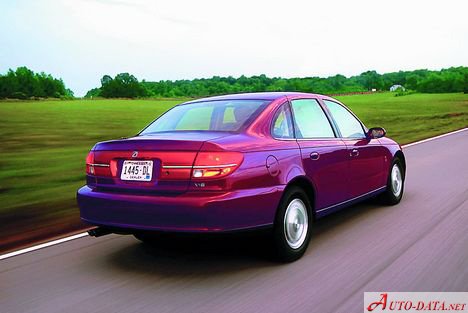
The Saturn LS, produced from 1999 to 2004, represented Saturn’s entry into the mid-size sedan segment. Positioned above the SL and SC models, the LS aimed to offer a more refined and spacious alternative while retaining the brand’s commitment to innovative design and customer service. This generation of the LS was exclusive to the North American market, embodying Saturn’s unique approach to automotive retail and engineering within General Motors. The 2.2i 16V Automatic model, detailed here, was a key variant, offering a balance of performance and fuel efficiency for the everyday driver.
Saturn LS 2.2i 16V: An Overview
The Saturn LS was a significant vehicle for the brand, showcasing a move towards more conventional sedan styling while still incorporating Saturn’s signature design cues. It was intended to appeal to buyers seeking a comfortable, reliable, and reasonably priced mid-size car. The 2.2i 16V model, equipped with a 2.2-liter inline-four engine and a four-speed automatic transmission, was a popular choice, providing adequate power for daily commuting and highway driving. The LS competed with established rivals like the Honda Accord, Toyota Camry, and Ford Taurus, offering a distinctive alternative in a crowded market.
Engine & Performance
The Saturn LS 2.2i 16V was powered by General Motors’ L61 2.2-liter inline-four cylinder engine. This naturally aspirated engine produced 139 horsepower at 5200 rpm and 193 Nm (142.35 lb.-ft.) of torque at 4400 rpm. The engine featured multi-port fuel injection and a double overhead camshaft (DOHC) valvetrain, contributing to its relatively efficient operation. Power was delivered to the front wheels via a four-speed automatic transmission. Acceleration from 0 to 60 mph was achieved in approximately 9.3 seconds, while 0-100 km/h took 9.8 seconds. The LS had a top speed of 170 km/h (105.63 mph). The engine’s power-to-weight ratio was 9.6 kg/Hp, and the torque-to-weight ratio was 6.9 kg/Nm, indicating a reasonable level of performance for its class. Fuel economy figures were respectable for the time, with combined fuel consumption rated at 8.4 l/100 km (28 US mpg, 33.6 UK mpg, 11.9 km/l). Urban driving yielded 9.8 l/100 km (24 US mpg), while extra-urban driving achieved 7.1 l/100 km (33.1 US mpg).
Design & Features
The Saturn LS was a four-door sedan with a relatively conservative, yet modern, design for its era. It offered seating for five passengers and a trunk capacity of 495 liters (17.48 cu. ft.). The vehicle’s dimensions were 4835 mm (190.35 in.) in length, 1755 mm (69.09 in.) in width, and 1430 mm (56.3 in.) in height, with a wheelbase of 2705 mm (106.5 in.). The LS featured a front suspension utilizing spring struts and a coil spring rear suspension. Braking was handled by ventilated discs at the front and drum brakes at the rear, with ABS (Anti-lock Braking System) as a standard safety feature. The steering system was a hydraulic power-assisted rack and pinion setup. Standard tire size was 195/60 R15, mounted on 15-inch wheel rims. Interior features focused on comfort and practicality, with a focus on providing a user-friendly experience. While not overtly luxurious, the LS offered a comfortable cabin and a reasonable level of standard equipment for its price point.
Technical Specifications
| Brand | Saturn |
| Model | LS |
| Generation | LS |
| Type (Engine) | 2.2i 16V (139 Hp) Automatic |
| Start of production | May, 1999 |
| End of production | June, 2004 |
| Powertrain Architecture | Internal Combustion engine |
| Body type | Sedan |
| Seats | 5 |
| Doors | 4 |
| Fuel consumption (urban) | 9.8 l/100 km (24 US mpg) |
| Fuel consumption (extra urban) | 7.1 l/100 km (33.1 US mpg) |
| Fuel consumption (combined) | 8.4 l/100 km (28 US mpg) |
| Fuel Type | Petrol (Gasoline) |
| Acceleration 0 – 100 km/h | 9.8 sec |
| Acceleration 0 – 62 mph | 9.8 sec |
| Acceleration 0 – 60 mph | 9.3 sec |
| Maximum speed | 170 km/h (105.63 mph) |
| Weight-to-power ratio | 9.6 kg/Hp |
| Weight-to-torque ratio | 6.9 kg/Nm |
| Power | 139 Hp @ 5200 rpm |
| Torque | 193 Nm @ 4400 rpm (142.35 lb.-ft. @ 4400 rpm) |
| Engine layout | Front, Transverse |
| Engine Model/Code | L61 |
| Engine displacement | 2198 cm3 (134.13 cu. in.) |
| Number of cylinders | 4 |
| Engine configuration | Inline |
| Cylinder Bore | 86 mm (3.39 in.) |
| Piston Stroke | 94.6 mm (3.72 in.) |
| Compression ratio | 9.5:1 |
| Number of valves per cylinder | 4 |
| Fuel injection system | Multi-port manifold injection |
| Engine aspiration | Naturally aspirated engine |
| Valvetrain | DOHC |
| Engine oil capacity | 4.7 l (4.97 US qt | 4.14 UK qt) |
| Coolant capacity | 7 l (7.4 US qt | 6.16 UK qt) |
| Kerb Weight | 1335 kg (2943.17 lbs.) |
| Trunk (boot) space | 495 l (17.48 cu. ft.) |
| Fuel tank capacity | 60 l (15.85 US gal | 13.2 UK gal) |
| Length | 4835 mm (190.35 in.) |
| Width | 1755 mm (69.09 in.) |
| Height | 1430 mm (56.3 in.) |
| Wheelbase | 2705 mm (106.5 in.) |
| Front track | 1520 mm (59.84 in.) |
| Rear track | 1510 mm (59.45 in.) |
| Drivetrain Architecture | Front wheel drive |
| Number of gears | 4 |
| Gearbox type | Automatic transmission |
| Front suspension | Spring Strut |
| Rear suspension | Coil spring |
| Front brakes | Ventilated discs |
| Rear brakes | Drum |
| Steering type | Steering rack and pinion |
| Power steering | Hydraulic Steering |
| Tires size | 195/60 R15 |
| Wheel rims size | 15 |
The Saturn LS 2.2i 16V Automatic, while not a groundbreaking vehicle, represented a solid offering in the mid-size sedan segment. It provided a comfortable ride, reasonable performance, and good fuel economy, making it a practical choice for many buyers. Although Saturn ultimately ceased production in 2010, the LS remains a notable example of the brand’s attempt to carve out a unique niche in the American automotive landscape.
