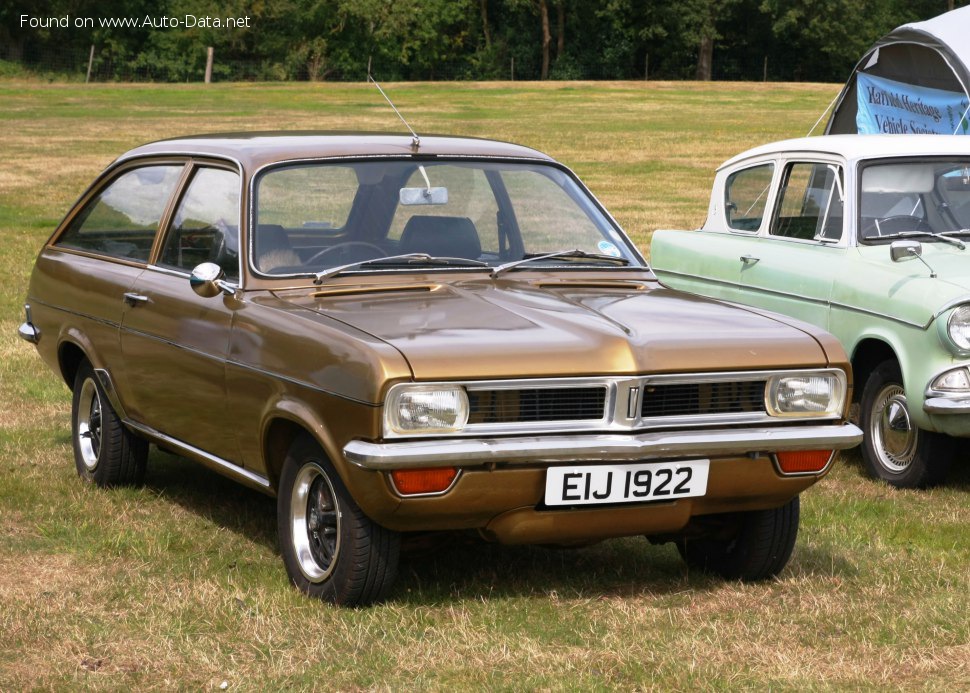
The Vauxhall Viva HC Estate 1600, produced between 1970 and 1972, represents a significant iteration of the Viva line, offering a practical and affordable family vehicle within the British automotive market. As a station wagon (estate) variant of the HC series, it provided increased cargo capacity compared to the saloon models, catering to the needs of families and those requiring versatile transportation. While not officially sold in the United States, understanding the Viva HC Estate provides insight into the compact car landscape of early 1970s Europe and Vauxhall’s position within it. The Viva HC series was intended to modernize the Viva range, offering improved styling and features compared to its predecessors.
Vauxhall Viva HC Estate: A Detailed Overview
The Viva HC Estate 1600 occupied the small family car segment in the United Kingdom. It was positioned as a budget-friendly option, competing with vehicles like the Ford Escort Estate and Hillman Avenger Estate. The “HC” designation signified the third generation of the Viva, introduced in 1966, and the Estate body style further broadened its appeal by offering enhanced practicality. The 1600 model denoted the engine displacement, a key selling point for buyers seeking a balance of performance and economy.
Engine & Performance
Powering the Viva HC Estate 1600 was a 1.6-liter (1599 cm3 or 97.58 cu. in.) inline four-cylinder engine. This naturally aspirated engine produced 81 horsepower (Hp) at 5500 rpm and 130 Newton-meters (95.88 lb.-ft.) of torque at 3200 rpm. While not a performance car by modern standards, the engine provided adequate power for everyday driving. The power-to-weight ratio was 10.6 kg/Hp, and the torque-to-weight ratio was 6.6 kg/Nm. Acceleration from 0 to 60 mph (0-97 km/h) took approximately 16.2 seconds, and it could reach a maximum speed of 142 km/h (88.23 mph). The engine featured an overhead camshaft (OHC) valvetrain and a compression ratio of 8.5:1. It utilized a 4-speed manual transmission, delivering power to the rear wheels.
Design & Features
The Viva HC Estate was a three-door station wagon with seating for five passengers. Its body style prioritized practicality, offering a generous trunk space ranging from 759 liters (26.8 cu. ft.) with the rear seats up to 1764 liters (62.3 cu. ft.) with the rear seats folded down. The vehicle’s dimensions were 4138 mm (162.91 in.) in length, 1643 mm (64.69 in.) in width, and 1366 mm (53.78 in.) in height. The wheelbase measured 2461 mm (96.89 in.).
In terms of features, the Viva HC Estate reflected the automotive standards of the early 1970s. Safety features were relatively basic compared to modern vehicles, typically including seatbelts and a steering column-mounted gear shift. The interior was functional and designed for durability, with vinyl or cloth upholstery options. The vehicle’s suspension system was designed for comfortable ride quality, and the rear-wheel-drive configuration provided predictable handling characteristics. The minimum turning circle was 9.62 meters (31.56 ft.).
Technical Specifications
| Brand | Vauxhall |
| Model | Viva |
| Generation | Viva HC Estate |
| Type (Engine) | 1600 (81 Hp) |
| Start of production | 1970 |
| End of production | 1972 |
| Powertrain Architecture | Internal Combustion engine |
| Body type | Station wagon (estate) |
| Seats | 5 |
| Doors | 3 |
| Fuel Type | Petrol (Gasoline) |
| Acceleration 0 – 100 km/h | 17 sec |
| Acceleration 0 – 62 mph | 17 sec |
| Acceleration 0 – 60 mph | 16.2 sec |
| Maximum speed | 142 km/h (88.23 mph) |
| Weight-to-power ratio | 10.6 kg/Hp |
| Weight-to-torque ratio | 6.6 kg/Nm |
| Power | 81 Hp @ 5500 rpm |
| Power per litre | 50.7 Hp/l |
| Torque | 130 Nm @ 3200 rpm (95.88 lb.-ft. @ 3200 rpm) |
| Engine displacement | 1599 cm3 (97.58 cu. in.) |
| Number of cylinders | 4 |
| Engine configuration | Inline |
| Cylinder Bore | 85.7 mm (3.37 in.) |
| Piston Stroke | 69.2 mm (2.72 in.) |
| Compression ratio | 8.5:1 |
| Engine aspiration | Naturally aspirated |
| Valvetrain | OHC |
| Engine oil capacity | 4.6 l (4.86 US qt | 4.05 UK qt) |
| Coolant | 7.9 l (8.35 US qt | 6.95 UK qt) |
| Kerb Weight | 857-1007 kg (1889.36 – 2220.05 lbs.) |
| Max. weight | 1320-1474 kg (2910.1 – 3249.61 lbs.) |
| Max load | 463-467 kg (1020.74 – 1029.56 lbs.) |
| Trunk (boot) space – minimum | 759 l (26.8 cu. ft.) |
| Trunk (boot) space – maximum | 1764 l (62.3 cu. ft.) |
| Fuel tank capacity | 54 l (14.27 US gal | 11.88 UK gal) |
| Length | 4138 mm (162.91 in.) |
| Width | 1643 mm (64.69 in.) |
| Height | 1366 mm (53.78 in.) |
| Wheelbase | 2461 mm (96.89 in.) |
| Front track | 1306 mm (51.42 in.) |
| Rear (Back) track | 1308 mm (51.5 in.) |
| Ride height (ground clearance) | 127 mm (5 in.) |
| Minimum turning circle | 9.62 m (31.56 ft.) |
| Drivetrain Architecture | Rear wheel drive |
| Number of gears | 4 |
| Type of gearbox | Manual transmission |
The Vauxhall Viva HC Estate 1600, while a relatively simple vehicle by today’s standards, played a vital role in providing affordable and practical transportation for British families during the early 1970s. Its combination of reasonable performance, spacious interior, and economical operation made it a popular choice in its segment.