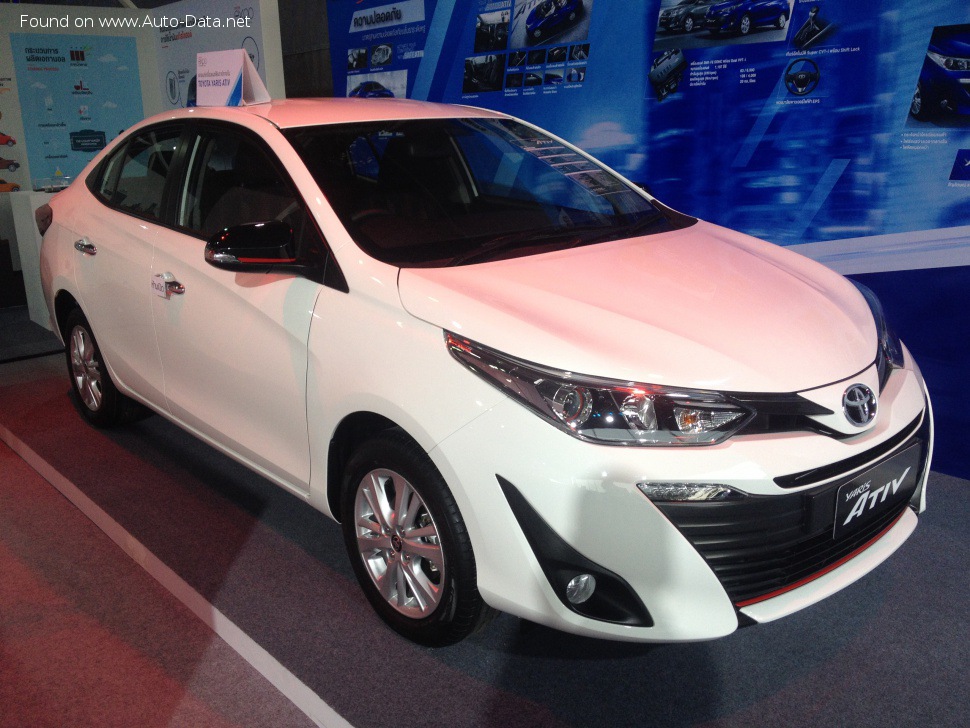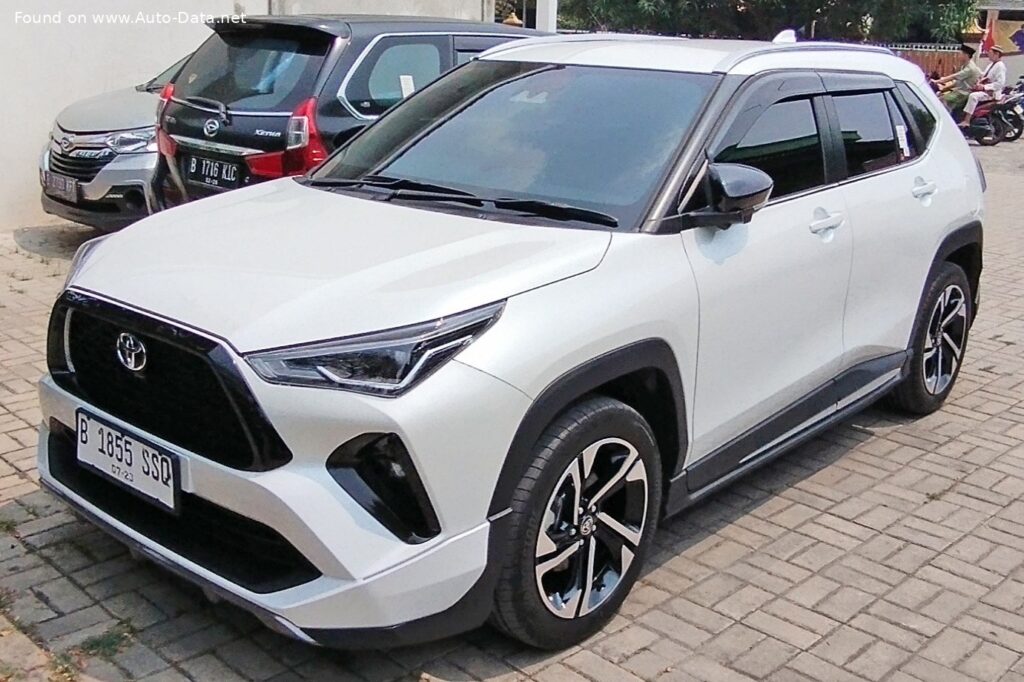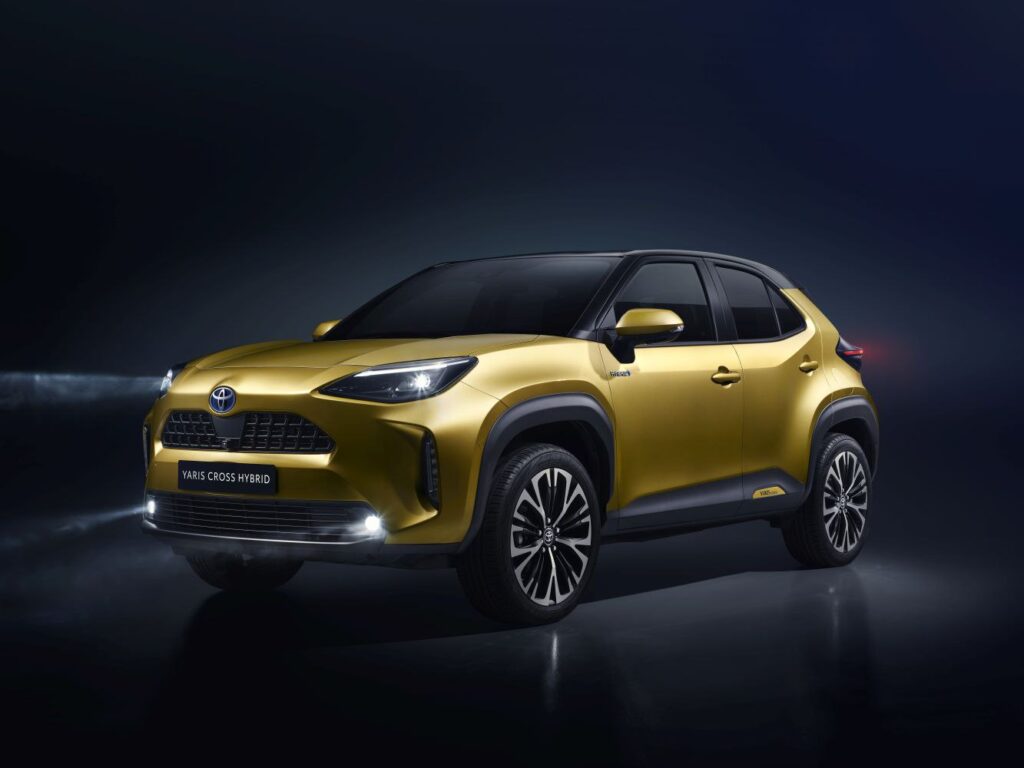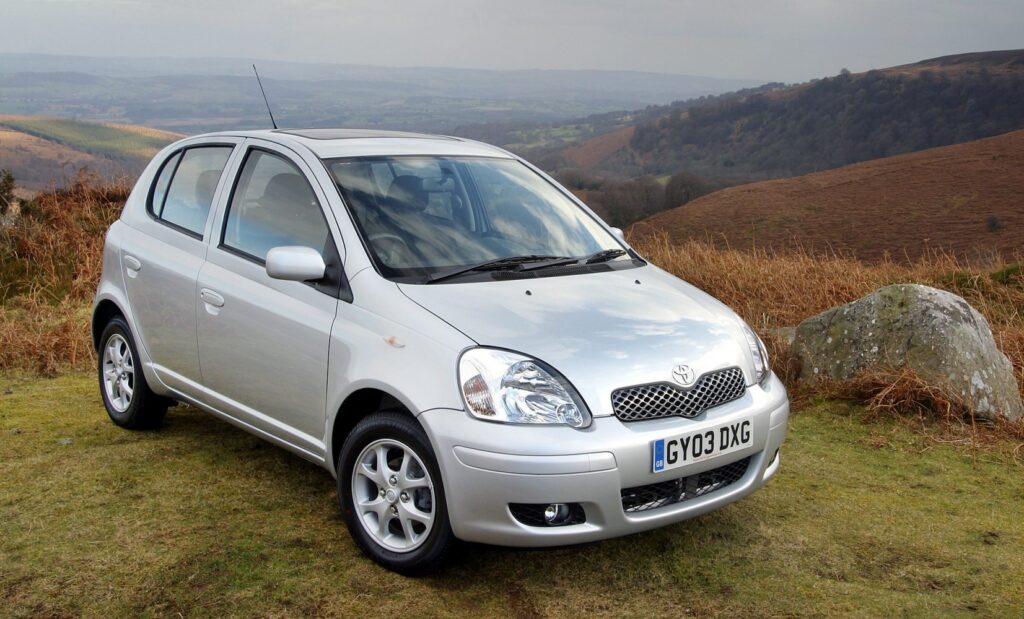
The Toyota Yaris, known in Japan as the Vitz, is a subcompact hatchback produced by Toyota since 1999. The first generation, known as the Yaris I, was a significant departure for Toyota, representing a move towards more contemporary and youthful styling. This generation, particularly the facelifted version introduced in 2003, aimed to provide an affordable, reliable, and fuel-efficient vehicle for urban drivers. While not initially sold in the United States, the Yaris gained popularity in Europe and Asia as a practical and economical choice. The 2003 facelift brought subtle styling revisions and refinements to the original design, enhancing its appeal in a competitive market segment.
Toyota Yaris I (Facelift 2003) 1.0 VVT-i: An Overview
The Yaris I (facelift 2003) 5-door 1.0 VVT-i represents a key iteration of Toyota’s entry into the subcompact hatchback class. Positioned as a direct competitor to vehicles like the Ford Fiesta, Volkswagen Polo, and Renault Clio, the Yaris focused on maximizing interior space within a small footprint. The 1.0-liter engine option, producing 65 horsepower, was specifically targeted at drivers prioritizing fuel economy and low running costs. This model was particularly popular in Europe, where stringent fuel efficiency standards and congested city streets demanded a nimble and economical vehicle.
Engine & Performance
The heart of the 2003 Toyota Yaris 1.0 VVT-i is the 1SZ-FE inline-four cylinder engine, displacing 998 cubic centimeters (60.9 cubic inches). This naturally aspirated engine utilizes multi-port fuel injection and Toyota’s Variable Valve Timing-intelligent (VVT-i) technology to optimize performance and efficiency. While not a powerhouse, the engine delivers a modest 65 horsepower at 6000 rpm and 90 Nm (66.38 lb.-ft.) of torque at 4100 rpm. This configuration results in a 0-100 km/h (0-62 mph) acceleration time of 13.6 seconds and a top speed of 155 km/h (96.31 mph). The engine’s primary strength lies in its fuel efficiency, achieving a combined fuel consumption of 5.6 liters per 100 kilometers (42 US mpg or 50.4 UK mpg). The powertrain is coupled with a five-speed manual transmission, delivering power to the front wheels.
Design & Features
The Yaris I (facelift 2003) features a practical and functional hatchback body style, offering five seats and five doors. The design prioritizes interior space and visibility. The facelift brought minor cosmetic changes, including revised front and rear bumpers, updated headlights, and a refreshed grille. Inside, the Yaris offers a surprisingly spacious cabin for its size, thanks to a clever interior layout. While not lavishly equipped, the 2003 model typically included features such as power steering, an anti-lock braking system (ABS), and a basic audio system. Safety features were relatively standard for the time, focusing on passive safety measures. The rear seats are foldable, increasing cargo capacity from a minimum of 205 liters (7.24 cu. ft.) to a maximum of 950 liters (33.55 cu. ft.). The vehicle’s compact dimensions – a length of 3640 mm (143.31 in) and a width of 1660 mm (65.35 in) – make it easy to maneuver in urban environments.
Technical Specifications
| Brand | Toyota |
| Model | Yaris |
| Generation | Yaris I (facelift 2003) 5-door |
| Type (Engine) | 1.0 VVT-i (65 Hp) |
| Start of production | 2003 |
| End of production | 2005 |
| Powertrain Architecture | Internal Combustion engine |
| Body type | Hatchback |
| Seats | 5 |
| Doors | 5 |
| Fuel consumption (urban) | 6.8 l/100 km (34.6 US mpg, 41.5 UK mpg, 14.7 km/l) |
| Fuel consumption (extra urban) | 4.9 l/100 km (48 US mpg, 57.6 UK mpg, 20.4 km/l) |
| Fuel consumption (combined) | 5.6 l/100 km (42 US mpg, 50.4 UK mpg, 17.9 km/l) |
| CO2 emissions | 134 g/km |
| Fuel Type | Petrol (Gasoline) |
| Acceleration 0 – 100 km/h | 13.6 sec |
| Acceleration 0 – 62 mph | 13.6 sec |
| Acceleration 0 – 60 mph | 12.9 sec |
| Maximum speed | 155 km/h (96.31 mph) |
| Emission standard | Euro 4 |
| Weight-to-power ratio | 13.7 kg/Hp |
| Weight-to-torque ratio | 9.9 kg/Nm |
| Power | 65 Hp @ 6000 rpm |
| Torque | 90 Nm @ 4100 rpm (66.38 lb.-ft. @ 4100 rpm) |
| Engine layout | Front, Transverse |
| Engine Model/Code | 1SZ-FE |
| Engine displacement | 998 cm3 (60.9 cu. in.) |
| Number of cylinders | 4 |
| Engine configuration | Inline |
| Cylinder Bore | 69 mm (2.72 in.) |
| Piston Stroke | 66.7 mm (2.63 in.) |
| Compression ratio | 10:1 |
| Number of valves per cylinder | 4 |
| Fuel injection system | Multi-port manifold injection |
| Engine aspiration | Naturally aspirated |
| Engine oil capacity | 3.2 l (3.38 US qt | 2.82 UK qt) |
| Coolant capacity | 4.7 l (4.97 US qt | 4.14 UK qt) |
| Kerb Weight | 890-975 kg (1962.11 – 2149.51 lbs.) |
| Max. weight | 1370 kg (3020.33 lbs.) |
| Max load | 395-480 kg (870.83 – 1058.22 lbs.) |
| Trunk (boot) space – minimum | 205 l (7.24 cu. ft.) |
| Trunk (boot) space – maximum | 950 l (33.55 cu. ft.) |
| Fuel tank capacity | 45 l (11.89 US gal | 9.9 UK gal) |
| Permitted trailer load with brakes (12%) | 650 kg (1433 lbs.) |
| Permitted trailer load without brakes | 400 kg (881.85 lbs.) |
| Length | 3640 mm (143.31 in.) |
| Width | 1660 mm (65.35 in.) |
| Height | 1500 mm (59.06 in.) |
| Wheelbase | 2370 mm (93.31 in.) |
| Front track | 1440-1450 mm (56.69 – 57.09 in.) |
| Rear track | 1420-1430 mm (55.91 – 56.3 in.) |
| Drag coefficient (Cd) | 0.30 |
| Minimum turning circle | 10.4 m (34.12 ft.) |
| Drive wheel | Front wheel drive |
| Number of gears | 5 gears, manual transmission |
| Front suspension | Independent, McPherson with coil spring and anti-roll bar |
| Rear suspension | Trailing arm, Coil spring, Torsion |
| Front brakes | Ventilated discs, 235 mm |
| Rear brakes | Drum |
| Assisting systems | ABS (Anti-lock braking system) |
| Steering type | Steering rack and pinion |
| Power steering | Electric |
| Tires size | 155/80 R13; 175/65 R14 |
| Wheel rims size | 13; 5.5J x 14 |
The Toyota Yaris I (facelift 2003) 1.0 VVT-i remains a testament to Toyota’s commitment to building reliable, efficient, and practical vehicles. While not a performance-oriented car, its strengths lie in its affordability, fuel economy, and ease of use, making it a popular choice for urban commuters and first-time car buyers.