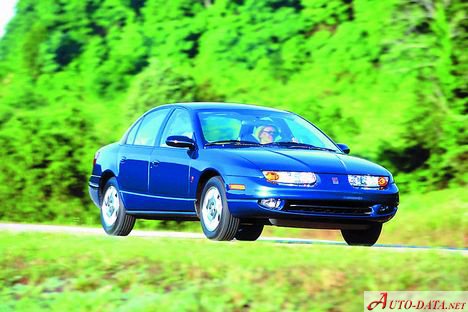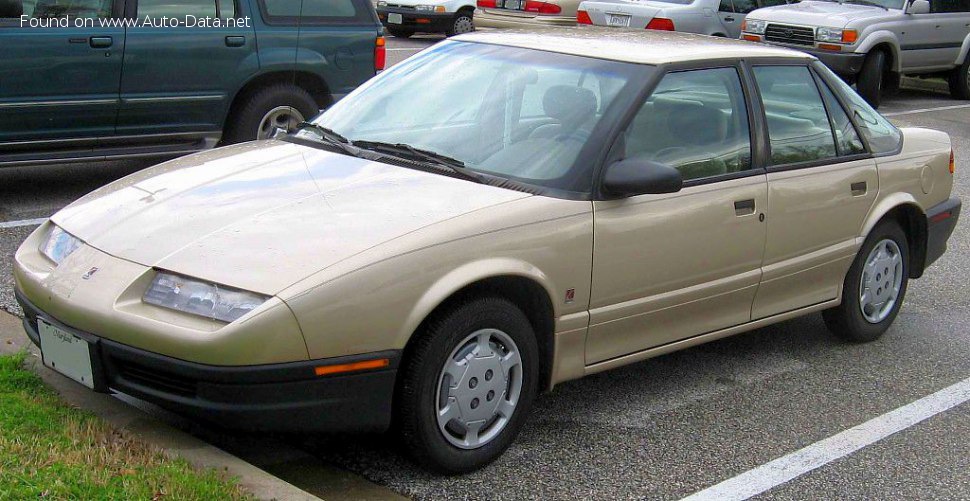
The Saturn SL, produced between 1990 and 1995, represents a pivotal moment in General Motors’ attempt to revolutionize automotive manufacturing and marketing. Designed as the cornerstone of the newly formed Saturn Corporation, the SL was a compact sedan intended to compete with Japanese imports, particularly in terms of fuel efficiency, reliability, and customer service. The 1.9 i variant, equipped with a 1.9-liter inline-four engine producing 100 horsepower, was a key offering in the SL lineup. This model aimed to provide a practical and affordable transportation solution for American families, while simultaneously showcasing a new approach to car ownership. The Saturn SL, and the 1.9 i specifically, was not a performance vehicle, but rather a statement of intent – a commitment to a different kind of automotive experience.
Saturn SL 1.9 i: A New Approach to Automotive Design
The Saturn SL 1.9 i distinguished itself from many contemporary American cars through its unique design and engineering philosophies. The most notable feature was its polymer (plastic) body panels bonded to a steel space frame. This construction method, inspired by European manufacturers like Renault, offered several advantages, including corrosion resistance, reduced weight, and ease of repair. While initially met with skepticism, the polymer panels proved durable and contributed to the SL’s relatively low curb weight. The 1.9 i model, with its focus on fuel economy and everyday usability, became a popular choice for buyers seeking a sensible and reliable compact sedan.
Engine & Performance
The heart of the Saturn SL 1.9 i is its 1901 cc (116.01 cu. in.) inline-four cylinder engine, designated the L24. This naturally aspirated engine produces 100 horsepower at 5000 rpm and 155 Nm (114.32 lb.-ft.) of torque at 2400 rpm. While not a powerhouse, the engine’s output is sufficient for comfortable city and highway driving. The engine features a multi-port fuel injection system and an overhead camshaft (OHC) valvetrain with two valves per cylinder. The power-to-weight ratio of 10.5 kg/Hp (94.9 Hp/tonne) and torque-to-weight ratio of 6.8 kg/Nm (147.1 Nm/tonne) contribute to a reasonably responsive driving experience. The engine is transversely mounted at the front of the vehicle, driving the front wheels through a five-speed manual transmission. Fuel consumption is rated at 7.5 l/100 km (31.4 US mpg, 37.7 UK mpg, 13.3 km/l), making it a relatively economical choice for its time. Engine oil capacity is 3.8 liters (4.02 US qt | 3.34 UK qt) and requires a specific oil specification.
Design & Features
The Saturn SL is a four-door, five-seat sedan with a relatively conservative design. Its styling was intended to be inoffensive and appeal to a broad range of buyers. The polymer body panels allowed for a smooth, seamless appearance, and the car’s overall shape prioritized aerodynamic efficiency. Inside, the SL offered a practical and functional interior, with a focus on ergonomics and ease of use. Safety features for the era included an Anti-lock braking system (ABS), which was becoming increasingly common on new vehicles. The SL’s interior space is adequate for a compact sedan, with a trunk capacity of 337 liters (11.9 cu. ft.). The vehicle’s dimensions are 4478 mm (176.3 in.) in length, 1718 mm (67.64 in.) in width, and 1334 mm (52.52 in.) in height, with a wheelbase of 2601 mm (102.4 in.). The front and rear track widths are 1443 mm (56.81 in.) and 1422 mm (55.98 in.) respectively. The suspension utilizes a spring strut setup at the front and a double wishbone configuration at the rear. Braking is provided by ventilated discs at the front and drums at the rear. The SL rolls on 175/70 R14 S tires.
Technical Specifications
| Brand | Saturn |
| Model | SL |
| Generation | SL |
| Type (Engine) | 1.9 i (100 Hp) |
| Start of production | 1990 |
| End of production | 1995 |
| Powertrain Architecture | Internal Combustion engine |
| Body type | Sedan |
| Seats | 5 |
| Doors | 4 |
| Fuel consumption (combined) | 7.5 l/100 km |
| Fuel consumption (US mpg) | 31.4 US mpg |
| Fuel consumption (UK mpg) | 37.7 UK mpg |
| Fuel consumption (km/l) | 13.3 km/l |
| Fuel Type | Petrol (Gasoline) |
| Weight-to-power ratio | 10.5 kg/Hp |
| Weight-to-torque ratio | 6.8 kg/Nm |
| Power | 100 Hp @ 5000 rpm |
| Power per litre | 52.6 Hp/l |
| Torque | 155 Nm @ 2400 rpm (114.32 lb.-ft. @ 2400 rpm) |
| Engine layout | Front, Transverse |
| Engine Model/Code | L24 |
| Engine displacement | 1901 cm3 (116.01 cu. in.) |
| Number of cylinders | 4 |
| Engine configuration | Inline |
| Cylinder Bore | 82 mm (3.23 in.) |
| Piston Stroke | 90 mm (3.54 in.) |
| Compression ratio | 9.3:1 |
| Number of valves per cylinder | 2 |
| Fuel injection system | Multi-port manifold injection |
| Engine aspiration | Naturally aspirated engine |
| Valvetrain | OHC |
| Engine oil capacity | 3.8 l (4.02 US qt | 3.34 UK qt) |
| Coolant capacity | 6.5 l (6.87 US qt | 5.72 UK qt) |
| Kerb Weight | 1054 kg (2323.67 lbs.) |
| Trunk (boot) space – minimum | 337 l (11.9 cu. ft.) |
| Fuel tank capacity | 49 l (12.94 US gal | 10.78 UK gal) |
| Length | 4478 mm (176.3 in.) |
| Width | 1718 mm (67.64 in.) |
| Height | 1334 mm (52.52 in.) |
| Wheelbase | 2601 mm (102.4 in.) |
| Front track | 1443 mm (56.81 in.) |
| Rear (Back) track | 1422 mm (55.98 in.) |
| Drivetrain Architecture | Front wheel drive |
| Drive wheel | Front wheel drive |
| Number of gears and type of gearbox | 5 gears, manual transmission |
| Front suspension | Spring Strut |
| Rear suspension | Double wishbone |
| Front brakes | Ventilated discs |
| Rear brakes | Drum |
| Assisting systems | ABS (Anti-lock braking system) |
| Steering type | Steering rack and pinion |
| Tires size | 175/70 R14 S |