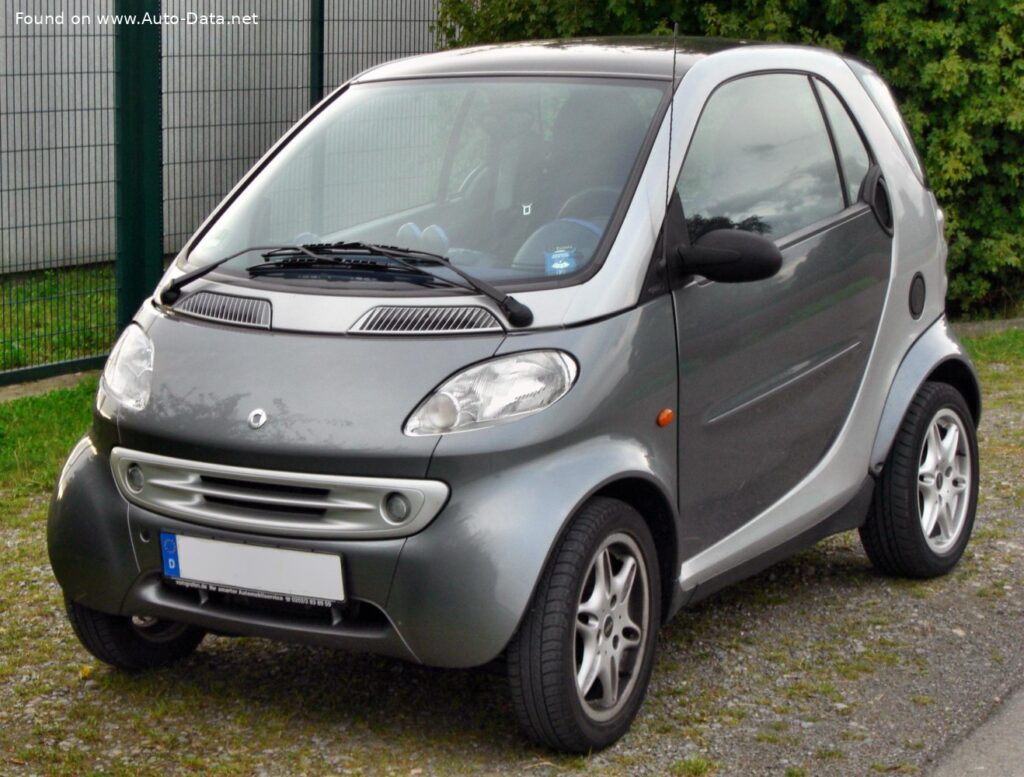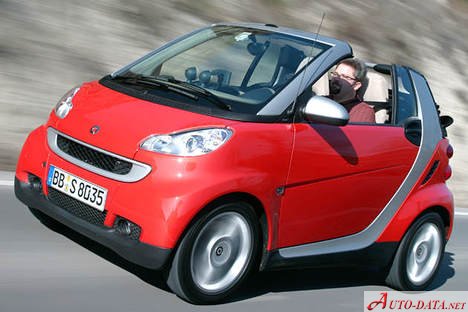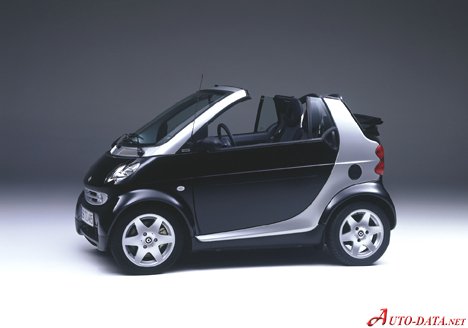
The Smart Fortwo Cabrio (A450) 0.7 i, produced between 1998 and 2007, represents the initial foray into the microcar segment by the then-new Smart automobile marque. This diminutive two-seater convertible was a radical departure from conventional automotive design, intended to address urban mobility challenges with a focus on fuel efficiency and ease of parking. While not officially sold in the United States during its initial production run, the Fortwo quickly gained notoriety for its unique appearance and innovative engineering, becoming a popular city car throughout Europe. The A450 generation laid the foundation for the Smart Fortwo’s enduring appeal and established the brand’s identity as a provider of compact, efficient transportation solutions.
The Smart Fortwo Cabrio (A450): A Pioneering Microcar
The Smart Fortwo, and specifically the Cabrio variant, was conceived as a solution to the growing congestion and parking difficulties in European cities. Its small size – measuring just under 9 feet long – allowed it to navigate narrow streets and fit into parking spaces that larger vehicles couldn’t access. The Cabrio version added an open-air driving experience, enhancing the car’s appeal as a stylish and practical urban runabout. The A450 generation was the first iteration of the Fortwo, and it established many of the design and engineering principles that would define the model for years to come. It was a bold statement in automotive design, challenging conventional notions of what a car could be.
Engine & Performance
The A450 0.7 i Fortwo Cabrio was powered by a relatively small, but surprisingly capable, 698 cc (42.59 cubic inches) inline three-cylinder gasoline engine. This engine, designated M 160.920, produced 50 horsepower at 5250 rpm and 59 lb.-ft. of torque at 1800 rpm. While these figures may seem modest by modern standards, they were sufficient for the car’s intended purpose – urban commuting. The engine featured multi-port manifold fuel injection and, in some later iterations, a turbocharger to improve performance. Power was delivered to the rear wheels via a 6-speed automatic transmission. Acceleration from 0 to 60 mph took approximately 17.4 seconds, and the car had a top speed of 83.89 mph (135 km/h). Fuel economy was a key selling point, with combined fuel consumption rated at 50 US mpg (60.1 UK mpg or 4.7 l/100 km). The weight-to-power ratio of 16.1 kg/Hp contributed to its relatively nimble handling, despite its small engine.
Design & Features
The Smart Fortwo Cabrio’s design was dictated by its size constraints and its intended urban environment. The car’s body was constructed around a steel safety cell, designed to protect occupants in the event of a collision. The exterior styling was unconventional, with a high roofline and short overhangs. The Cabrio version featured a retractable fabric roof that could be fully opened for an open-air driving experience. The interior was minimalist, focusing on functionality and ease of use. Despite its small size, the Fortwo offered a surprising amount of interior space for two occupants. Safety features included ABS (Anti-lock Braking System), which was a notable inclusion for a vehicle of this size and price point. The car’s small turning radius made it exceptionally maneuverable in tight spaces. The Fortwo’s unique design and compact dimensions quickly made it a recognizable and iconic vehicle on European streets.
Technical Specifications
| General Information | |
| Brand | Smart |
| Model | Fortwo |
| Generation | Fortwo Cabrio (A450) |
| Type (Engine) | 0.7 i (50 Hp) |
| Start of production | 1998 |
| End of production | 2007 |
| Powertrain Architecture | Internal Combustion engine |
| Body type | Cabriolet |
| Seats | 2 |
| Doors | 3 |
| Performance Specs | |
| Fuel consumption (urban) | 6 l/100 km (39.2 US mpg, 47.1 UK mpg, 16.7 km/l) |
| Fuel consumption (extra urban) | 4 l/100 km (58.8 US mpg, 70.6 UK mpg, 25 km/l) |
| Fuel consumption (combined) | 4.7 l/100 km (50 US mpg, 60.1 UK mpg, 21.3 km/l) |
| Fuel Type | Petrol (Gasoline) |
| Acceleration 0 – 100 km/h | 18.3 sec |
| Acceleration 0 – 62 mph | 18.3 sec |
| Acceleration 0 – 60 mph | 17.4 sec |
| Maximum speed | 135 km/h (83.89 mph) |
| Weight-to-power ratio | 16.1 kg/Hp |
| Weight-to-torque ratio | 10.1 kg/Nm |
| Engine Specs | |
| Power | 50 Hp @ 5250 rpm |
| Torque | 80 Nm @ 1800 rpm (59 lb.-ft. @ 1800 rpm) |
| Engine layout | Rear, Transverse |
| Engine Model/Code | M 160.920 |
| Engine displacement | 698 cm3 (42.59 cu. in.) |
| Number of cylinders | 3 |
| Engine configuration | Inline |
| Cylinder Bore | 66.5 mm (2.62 in.) |
| Piston Stroke | 67 mm (2.64 in.) |
| Compression ratio | 9:1 |
| Number of valves per cylinder | 2 |
| Fuel injection system | Multi-port manifold injection |
| Engine aspiration | Turbocharger (some models) |
| Valvetrain | OHC |
| Engine oil capacity | 3.1 l (3.28 US qt | 2.73 UK qt) |
| Coolant capacity | 4.2 l (4.44 US qt | 3.7 UK qt) |
| Space, Volume and Weights | |
| Kerb Weight | 805 kg (1774.72 lbs.) |
| Max. weight | 990 kg (2182.58 lbs.) |
| Max load | 185 kg (407.86 lbs.) |
| Fuel tank capacity | 33 l (8.72 US gal | 7.26 UK gal) |
| Dimensions | |
| Length | 2500 mm (98.43 in.) |
| Width | 1515 mm (59.65 in.) |
| Height | 1549 mm (60.98 in.) |
| Wheelbase | 1812 mm (71.34 in.) |
| Drivetrain, Brakes and Suspension | |
| Drivetrain Architecture | Rear wheel drive |
| Number of gears and type of gearbox | 6 gears, automatic transmission |
| Front brakes | Disc |
| Rear brakes | Disc |
| Assisting systems | ABS (Anti-lock braking system) |
| Tires size | 145/65 R15; 175/55 R15 |
The Smart Fortwo Cabrio (A450) 0.7 i, despite its diminutive size and modest power output, was a significant vehicle in the automotive landscape. It demonstrated that a small, fuel-efficient car could be both practical and stylish, and it paved the way for the continued development of the Smart brand and the microcar segment. Its impact extended beyond its sales figures, influencing urban transportation strategies and challenging conventional automotive norms.