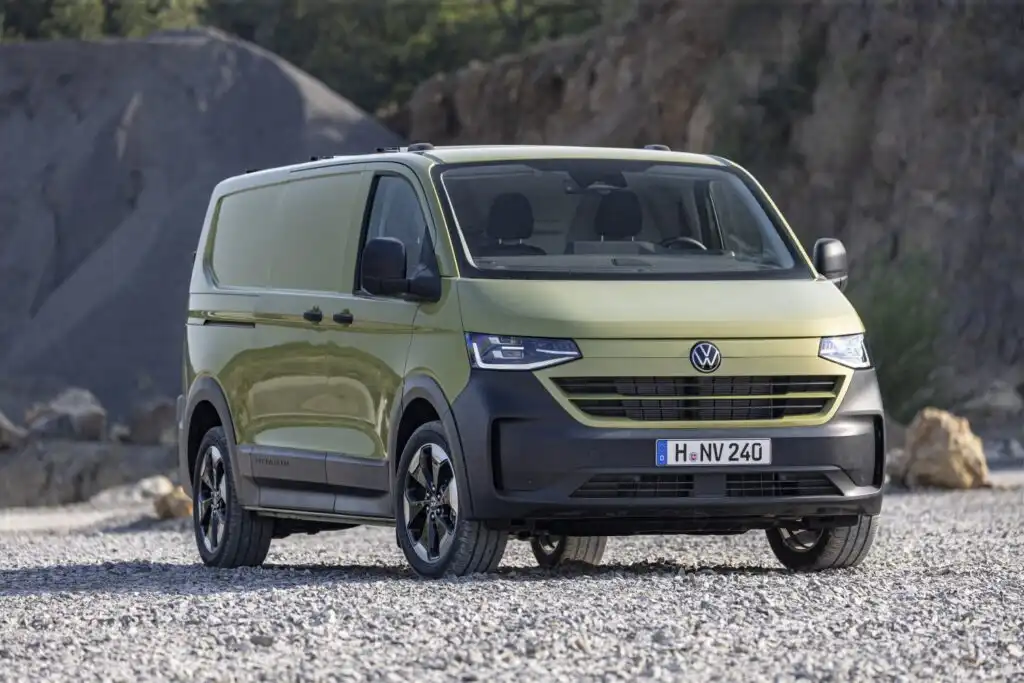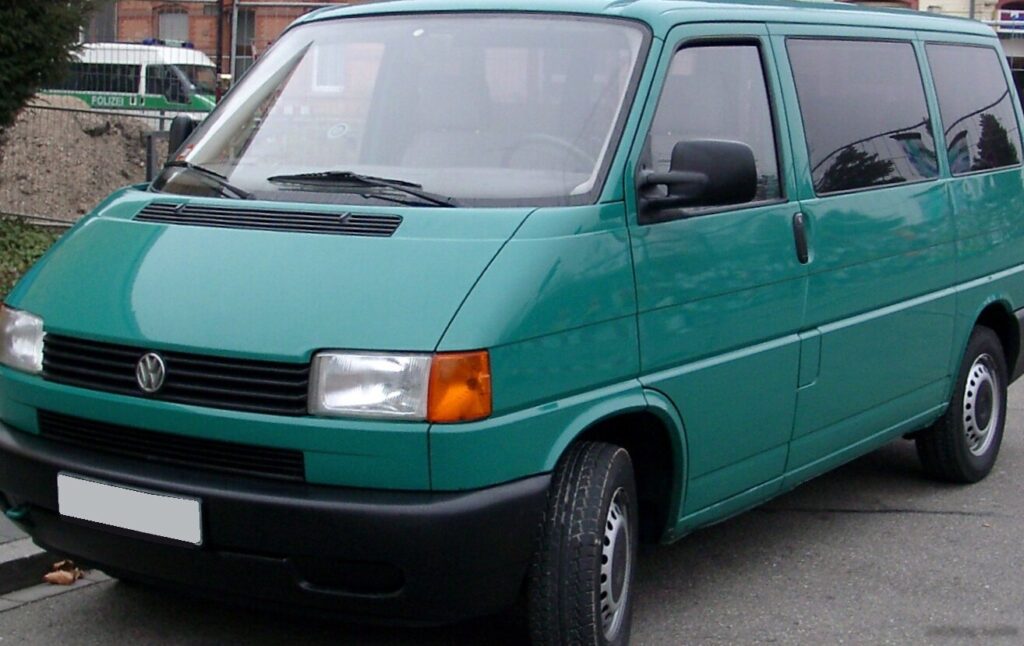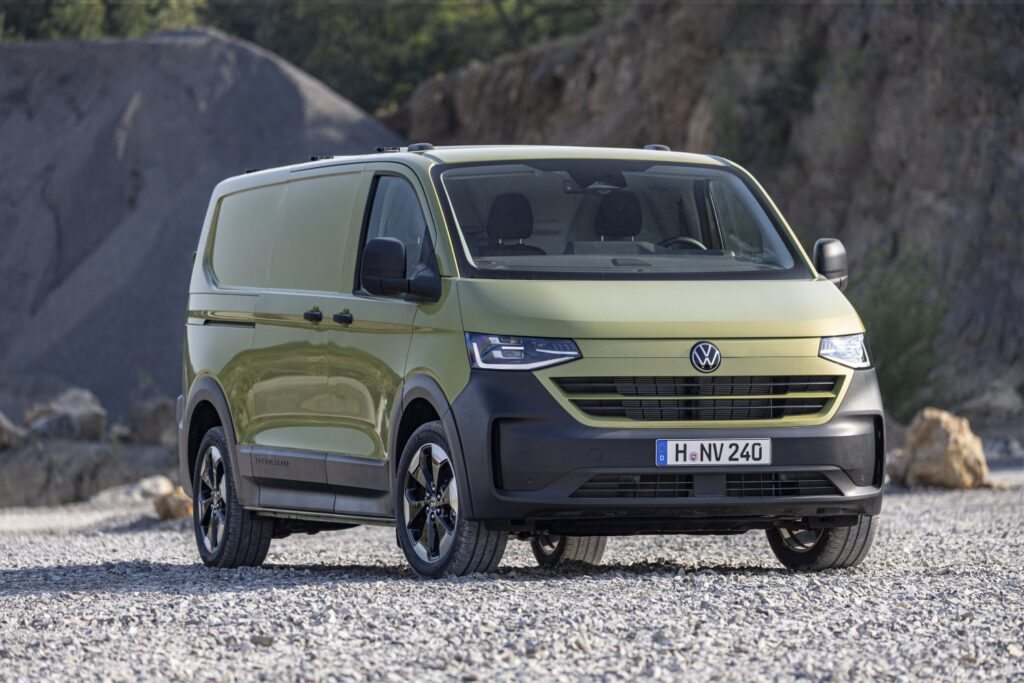
The Volkswagen Transporter (T7) Panel Van represents the latest iteration of Volkswagen’s iconic commercial vehicle, continuing a legacy that began in 1950. Introduced in August 2024, the T7 is primarily aimed at the European market, where it serves as a versatile workhorse for businesses and tradespeople. While not directly sold in the United States, understanding the T7 provides insight into Volkswagen’s advancements in light commercial vehicle technology and efficiency. This generation focuses heavily on integrating modern technology, improved driving dynamics, and enhanced safety features into a practical and reliable van platform. The T7 Panel Van, specifically the 2.0 TDI (170 Hp) Automatic L2H1 variant, is a popular configuration offering a balance of performance, fuel economy, and cargo capacity.
Volkswagen Transporter (T7) Panel Van: An Overview
The Transporter T7 builds upon the foundations laid by its predecessors, offering a more refined and technologically advanced package. It slots into the mid-size van segment, competing with vehicles like the Ford Transit Custom, Mercedes-Benz Vito, and Citroën Dispatch. The “L2H1” designation indicates a long wheelbase and a standard roof height, providing a generous cargo area. The 2.0 TDI engine is a mainstay in the European Volkswagen lineup, known for its durability and fuel efficiency. The T7 represents a significant step forward in terms of driver assistance systems and connectivity, bringing it in line with modern passenger vehicle standards.
Engine & Performance
The heart of the Volkswagen Transporter T7 Panel Van 2.0 TDI (170 Hp) Automatic L2H1 is a 2.0-liter turbocharged diesel engine, internally known as the Panther engine. This inline-four cylinder engine produces 170 horsepower (Hp) and 390 Newton-meters (287.65 lb.-ft.) of torque. The engine utilizes a diesel commonrail fuel injection system and a turbocharger with an intercooler to optimize performance and efficiency. Power is delivered to the front wheels via an 8-speed automatic transmission, providing smooth and efficient gear changes. Acceleration from 0 to 100 km/h (0-62 mph) takes approximately 14 seconds, while 0 to 60 mph is achieved in around 13.3 seconds. The van has a maximum speed of 175 km/h (108.74 mph). The engine’s design incorporates a Start & Stop system and a particulate filter to minimize emissions, meeting Euro 6e emission standards. The weight-to-power ratio is 11.1 kg/Hp, and the weight-to-torque ratio is 4.8 kg/Nm, indicating a reasonable balance between power and weight.
Design & Features
The T7 Panel Van features a functional and modern design. Its body type is a traditional van, with 4-5 doors and seating for 2-3 occupants. The L2H1 configuration provides a substantial cargo area, making it suitable for a wide range of commercial applications. Key features include a robust chassis, a comfortable cabin, and a comprehensive suite of safety and driver assistance systems. Modern vans like the T7 prioritize safety, and this model includes ABS (Anti-lock braking system) as standard. The interior is designed with practicality in mind, featuring durable materials and ergonomic controls. The van’s dimensions are 5450 mm (214.57 in.) in length, 2032 mm (80 in.) in width, and 1979 mm (77.91 in.) in height, with a wheelbase of 3500 mm (137.8 in.). The turning circle is 13.8 meters (45.28 ft.).
Technical Specifications
| Brand | Volkswagen |
| Model | Transporter |
| Generation | Transporter (T7) Panel Van |
| Type (Engine) | 2.0 TDI (170 Hp) Automatic L2H1 |
| Start of production | August, 2024 |
| Powertrain Architecture | Internal Combustion engine |
| Body type | Van |
| Seats | 2-3 |
| Doors | 4-5 |
| Combined fuel consumption (WLTP) | 7.6 l/100 km |
| Fuel Consumption (US mpg) | 30.9 US mpg |
| Fuel Consumption (UK mpg) | 37.2 UK mpg |
| Fuel Consumption (km/l) | 13.2 km/l |
| CO2 emissions (WLTP) | 199 g/km |
| Fuel Type | Diesel |
| Acceleration 0 – 100 km/h | 14 sec |
| Acceleration 0 – 62 mph | 14 sec |
| Acceleration 0 – 60 mph | 13.3 sec |
| Maximum speed | 175 km/h (108.74 mph) |
| Emission standard | Euro 6e |
| Weight-to-power ratio | 11.1 kg/Hp |
| Weight-to-torque ratio | 4.8 kg/Nm |
| Power | 170 Hp |
| Power per litre | 85.2 Hp/l |
| Torque | 390 Nm (287.65 lb.-ft.) |
| Engine layout | Front, Transverse |
| Engine Model/Code | Panther |
| Engine displacement | 1996 cm3 (121.8 cu. in.) |
| Number of cylinders | 4 |
| Engine configuration | Inline |
| Cylinder Bore | 84.01 mm (3.31 in.) |
| Piston Stroke | 90.03 mm (3.54 in.) |
| Compression ratio | 16.5:1 |
| Number of valves per cylinder | 4 |
| Fuel injection system | Diesel Commonrail |
| Engine aspiration | Turbocharger, Intercooler |
| Valvetrain | DOHC |
| Kerb Weight | 1881 kg (4146.9 lbs.) |
| Max. weight | 3025 kg (6668.98 lbs.) |
| Max load | 1144 kg (2522.09 lbs.) |
| Fuel tank capacity | 70 l (18.49 US gal | 15.4 UK gal) |
| AdBlue tank | 20 l (5.28 US gal | 4.4 UK gal) |
| Max. roof load | 170 kg (374.79 lbs.) |
| Permitted trailer load with brakes (12%) | 2800 kg (6172.94 lbs.) |
| Permitted trailer load without brakes | 750 kg (1653.47 lbs.) |
| Permitted towbar download | 100 kg (220.46 lbs.) |
| Length | 5450 mm (214.57 in.) |
| Width | 2032 mm (80 in.) |
| Width including mirrors | 2275 mm (89.57 in.) |
| Height | 1979 mm (77.91 in.) |
| Wheelbase | 3500 mm (137.8 in.) |
| Minimum turning circle | 13.8 m (45.28 ft.) |
| Drivetrain Architecture | Front wheel drive |
| Number of gears and type of gearbox | 8 gears, automatic transmission |
| Steering type | Steering rack and pinion |
| Power steering | Electric Steering |
| Tires size | 215/65 R16; 215/60 R17 |
| Wheel rims size | 6.5J x 16; 6.5J x 17 |
The Volkswagen Transporter T7 Panel Van 2.0 TDI (170 Hp) Automatic L2H1 represents a modern and efficient solution for commercial transport needs in Europe. Its combination of a refined diesel engine, advanced technology, and practical design makes it a compelling choice in the competitive mid-size van segment.