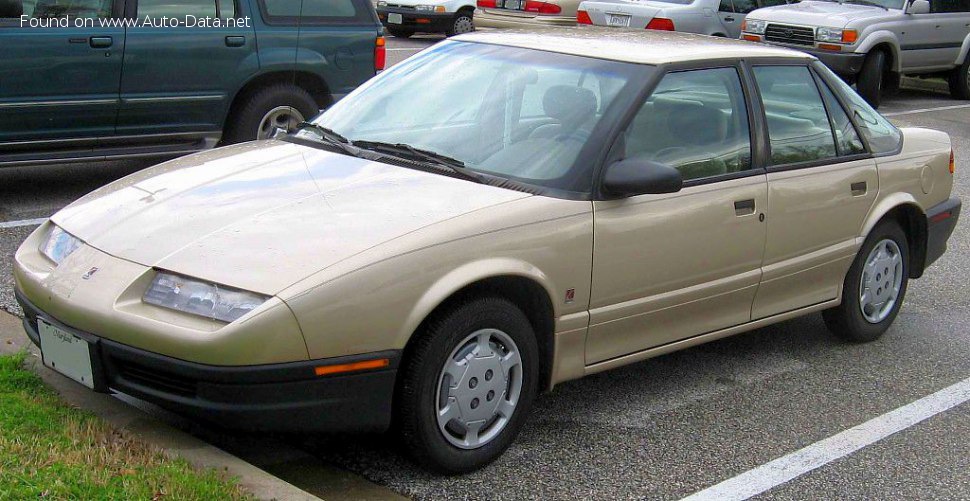
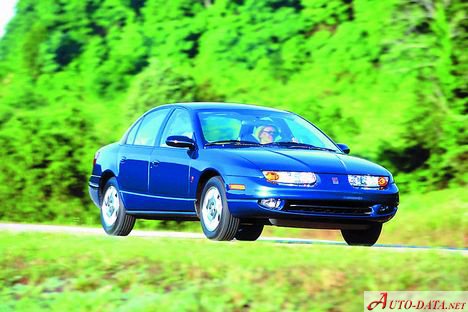
The Saturn SL, specifically the 55-Type 1.9i variant, represents a significant chapter in the history of General Motors’ attempt to revolutionize the American automotive market. Produced from 1995 to 2003, the SL was a compact sedan designed to challenge established Japanese imports with a unique sales and service experience, and a focus on practicality. This model, powered by a 1.9-liter inline-four engine producing 100 horsepower, aimed to provide affordable and reliable transportation for the everyday driver. The Saturn SL played a crucial role in establishing the brand’s identity before its eventual phasing out, and its innovative approach to car ownership left a lasting impact on the industry.
Saturn SL (55-Type) 1.9i: A Detailed Overview
The Saturn SL (55-Type) was the cornerstone of the Saturn brand’s initial lineup. Introduced as part of GM’s effort to create a “different” car company, the SL distinguished itself through its polymer body panels – a departure from traditional steel construction – and a no-haggle, customer-focused sales process. The 55-Type designation refers to a specific iteration of the SL, representing refinements and updates made during its production run. The 1.9i model, equipped with a 1.9-liter engine, was a popular choice for its balance of fuel efficiency and adequate performance. It was primarily sold in the North American market, representing GM’s attempt to capture a segment of buyers seeking a value-oriented, yet modern, compact sedan.
Engine & Performance
The heart of the Saturn SL 1.9i is a 1.9-liter (1901 cm3 or 116.01 cu. in.) inline-four cylinder engine. This naturally aspirated engine produces 100 horsepower at 5000 rpm and 155 Nm (114.32 lb.-ft.) of torque at 2400 rpm. The engine features a multi-port fuel injection system and an overhead camshaft (OHC) valvetrain with two valves per cylinder. Power per liter is rated at 52.6 hp/l. The engine’s transverse mounting and front-wheel drive configuration contribute to its relatively compact footprint. The SL 1.9i’s performance is characterized by adequate acceleration for everyday driving, with a weight-to-power ratio of 10.6 kg/Hp (94.5 Hp/tonne) and a weight-to-torque ratio of 6.8 kg/Nm (146.5 Nm/tonne). The engine is paired with a 5-speed manual transmission, providing drivers with direct control over gear selection. Fuel economy is a strong point, achieving approximately 8.1 l/100 km (29 US mpg, 34.9 UK mpg, 12.3 km/l) in urban driving, 5.9 l/100 km (39.9 US mpg, 47.9 UK mpg, 16.9 km/l) on the highway, and a combined figure of 6.9 l/100 km (34.1 US mpg, 40.9 UK mpg, 14.5 km/l).
Design & Features
The Saturn SL is a four-door sedan with a relatively conservative, yet functional, design. Its most notable feature is its body construction, utilizing dent-resistant polymer panels over a steel frame. This innovative approach was intended to reduce repair costs and improve durability. The SL offers seating for five passengers and a trunk capacity of 343 liters (12.11 cu. ft.). Inside, the SL prioritized practicality and ease of use. Safety features for the era included an Anti-lock Braking System (ABS), which was becoming increasingly common in the mid-1990s. The steering system is a rack and pinion setup with hydraulic power assistance, providing responsive handling. The SL rides on 185/65 R14 tires. The interior design was straightforward, focusing on ergonomics and providing a comfortable driving experience. While not luxurious, the SL offered a level of refinement that was competitive within its price range. The fuel tank capacity is 46 liters (12.15 US gal, 10.12 UK gal).
Technical Specifications
| Brand | Saturn |
| Model | SL |
| Generation | SL (55-Type) |
| Type (Engine) | 1.9i (100 Hp) |
| Start of production | 1995 |
| End of production | 2003 |
| Powertrain Architecture | Internal Combustion engine |
| Body type | Sedan |
| Seats | 5 |
| Doors | 4 |
| Fuel consumption (urban) | 8.1 l/100 km (29 US mpg, 34.9 UK mpg, 12.3 km/l) |
| Fuel consumption (extra urban) | 5.9 l/100 km (39.9 US mpg, 47.9 UK mpg, 16.9 km/l) |
| Fuel consumption (combined) | 6.9 l/100 km (34.1 US mpg, 40.9 UK mpg, 14.5 km/l) |
| Fuel Type | Petrol (Gasoline) |
| Weight-to-power ratio | 10.6 kg/Hp, 94.5 Hp/tonne |
| Weight-to-torque ratio | 6.8 kg/Nm, 146.5 Nm/tonne |
| Power | 100 Hp @ 5000 rpm |
| Power per litre | 52.6 Hp/l |
| Torque | 155 Nm @ 2400 rpm (114.32 lb.-ft. @ 2400 rpm) |
| Engine layout | Front, Transverse |
| Engine Model/Code | L24 |
| Engine displacement | 1901 cm3 (116.01 cu. in.) |
| Number of cylinders | 4 |
| Engine configuration | Inline |
| Cylinder Bore | 82 mm (3.23 in.) |
| Piston Stroke | 90 mm (3.54 in.) |
| Compression ratio | 9.3:1 |
| Number of valves per cylinder | 2 |
| Fuel injection system | Multi-port manifold injection |
| Engine aspiration | Naturally aspirated |
| Valvetrain | OHC |
| Engine oil capacity | 3.8 l (4.02 US qt | 3.34 UK qt) |
| Coolant capacity | 6.5 l (6.87 US qt | 5.72 UK qt) |
| Kerb Weight | 1058 kg (2332.49 lbs.) |
| Trunk (boot) space (minimum) | 343 l (12.11 cu. ft.) |
| Fuel tank capacity | 46 l (12.15 US gal | 10.12 UK gal) |
| Length | 4524 mm (178.11 in.) |
| Width | 1687 mm (66.42 in.) |
| Height | 1397 mm (55 in.) |
| Wheelbase | 2601 mm (102.4 in.) |
| Front track | 1443 mm (56.81 in.) |
| Rear track | 1422 mm (55.98 in.) |
| Drivetrain Architecture | Front wheel drive, Internal Combustion engine |
| Number of gears and type of gearbox | 5 gears, manual transmission |
| Front suspension | Coil spring |
| Rear suspension | Coil spring |
| Front brakes | Ventilated discs |
| Rear brakes | Drum |
| Assisting systems | ABS (Anti-lock braking system) |
| Steering type | Steering rack and pinion |
| Power steering | Hydraulic |
| Tires size | 185/65 R14 |
The Saturn SL 1.9i, while not a performance icon, offered a compelling package of affordability, practicality, and innovation. Its unique approach to automotive sales and its durable construction made it a popular choice for buyers seeking a reliable and easy-to-own vehicle. The SL’s legacy lies in its contribution to the Saturn brand’s identity and its role in challenging the status quo of the American automotive industry.