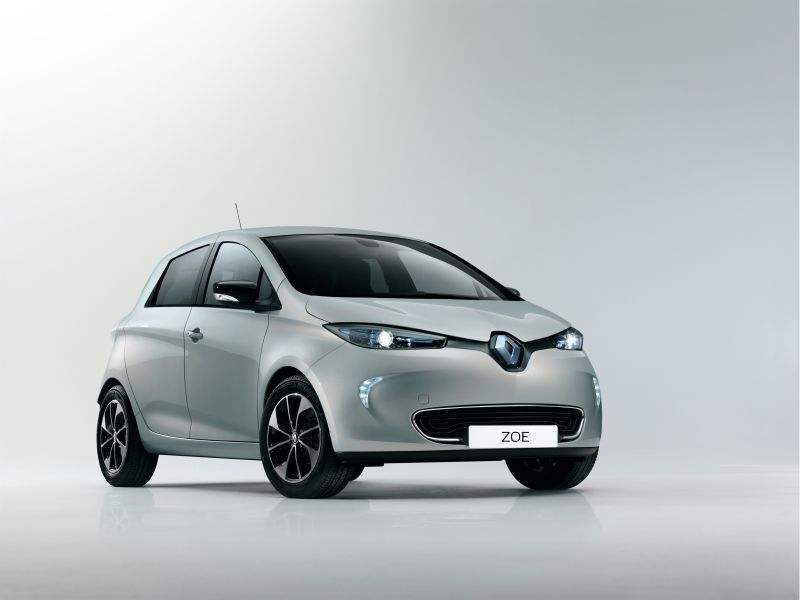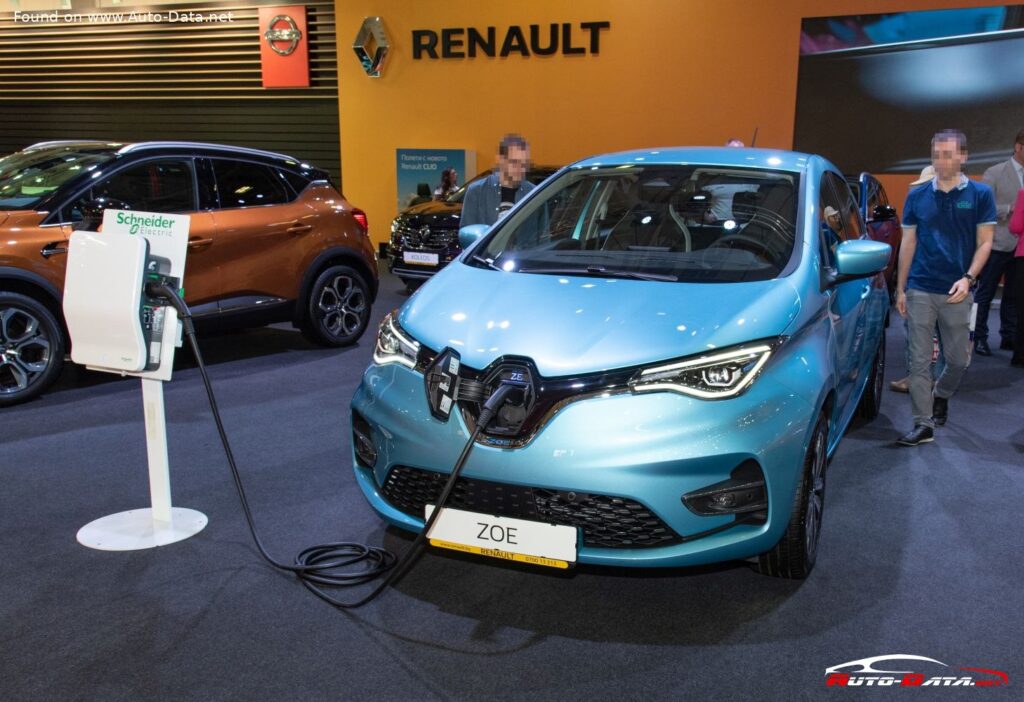
The Renault Zoe is a supermini electric car produced by the French manufacturer Renault. Introduced in 2012, the Zoe was Renault’s first mass-market all-electric vehicle and played a significant role in popularizing electric mobility in Europe. The Zoe I, representing the first generation, underwent several revisions, with the Phase II update in 2019 bringing notable improvements in range, power, and technology. This iteration, specifically the R135 52 kWh variant producing 135 horsepower, became a key model in Renault’s electric lineup, targeting urban commuters and environmentally conscious drivers. While not officially sold in the United States, the Zoe represents a crucial step in the development and adoption of electric vehicles globally.
Renault Zoe I (Phase II, 2019) R135 52 kWh: An Overview
The 2019 Renault Zoe R135 52 kWh represents a significant upgrade to the original Zoe, addressing earlier criticisms regarding range and performance. Positioned as a compact, five-door hatchback, the Zoe aimed to provide a practical and affordable electric vehicle solution for European city dwellers. The Phase II update focused on increasing the battery capacity to 52 kWh, resulting in a substantially improved real-world range. This model competed with other emerging electric vehicles like the Nissan Leaf and Volkswagen e-Golf, offering a compelling alternative with its distinctive styling and focus on user-friendly technology.
Engine & Performance
The Renault Zoe R135 is powered by a single electric motor, delivering 135 horsepower (Hp) at 4200-11163 rpm and 245 Nm (180.7 lb.-ft.) of torque between 1500-3600 rpm. This electric motor, designated model 5AQ 60, is transversely mounted at the front of the vehicle, driving the front wheels. The powertrain architecture is a Battery Electric Vehicle (BEV), meaning it relies solely on electricity for propulsion. Acceleration from 0 to 100 km/h (0-62 mph) takes 9.5 seconds, while 0 to 60 mph is achieved in approximately 9 seconds. The top speed is electronically limited to 140 km/h (86.99 mph). The weight-to-power ratio is 11.1 kg/Hp, and the weight-to-torque ratio is 6.1 kg/Nm, indicating a reasonably efficient power delivery for its class. The system utilizes a single-speed automatic transmission.
Design & Features
The Renault Zoe I (Phase II) features a distinctive hatchback body style, offering five seats and five doors. Its design prioritizes aerodynamic efficiency to maximize range, with a smooth silhouette and sculpted lines. The 52 kWh lithium-ion battery pack is located under the floor, contributing to a low center of gravity and improved handling. Interior features focus on practicality and technology, including a digital instrument cluster and a touchscreen infotainment system. Safety features include ABS (Anti-lock Braking System) and a range of driver-assistance systems, depending on the trim level. Trunk space is a practical 338 liters (11.94 cu. ft.) with the rear seats up, expanding to 1225 liters (43.26 cu. ft.) when folded down. The Zoe’s compact dimensions – 4084 mm (160.79 in.) in length, 1730 mm (68.11 in.) in width, and 1562 mm (61.5 in.) in height – make it well-suited for navigating urban environments.
Charging and Range
A key improvement in the Phase II Zoe was its increased range. With a gross battery capacity of 52 kWh and a voltage of 400V, the Zoe R135 offers a WLTP (Worldwide Harmonised Light Vehicles Test Procedure) certified all-electric range of 386 km (239.85 mi). Real-world range typically falls between 240-375 km (149.13 – 233.01 mi), depending on driving conditions and style. Energy consumption is rated at 17.7 kWh/100 km (28.49 kWh/100 mi), equating to 118 MPGe (miles per gallon equivalent) and 5.6 km/kWh (3.5 mi/kWh). The battery weighs 326 kg (718.71 lbs.).
Technical Specifications
| Brand | Renault |
| Model | Zoe |
| Generation | Zoe I (Phase II, 2019) |
| Type (Engine) | R135 52 kWh (135 Hp) Electric |
| Start of production | September, 2019 |
| End of production | March, 2024 |
| Powertrain Architecture | BEV (Electric Vehicle) |
| Body type | Hatchback |
| Seats | 5 |
| Doors | 5 |
| Fuel Type | Electricity |
| Acceleration 0 – 100 km/h | 9.5 sec |
| Acceleration 0 – 62 mph | 9.5 sec |
| Acceleration 0 – 60 mph | 9 sec |
| Maximum speed | 140 km/h (86.99 mph) |
| Weight-to-power ratio | 11.1 kg/Hp |
| Weight-to-torque ratio | 6.1 kg/Nm |
| Gross battery capacity | 52 kWh |
| Battery voltage | 400 V |
| Battery technology | Lithium-ion (Li-Ion) |
| Battery weight | 326 kg (718.71 lbs.) |
| Battery location | Below the floor |
| All-electric range (WLTP) | 386 km (239.85 mi) |
| All-electric range | 240-375 km (149.13 – 233.01 mi) |
| Average Energy consumption (WLTP) | 17.7 kWh/100 km (28.49 kWh/100 mi) |
| Electric motor power | 135 Hp @ 4200-11163 rpm |
| Electric motor Torque | 245 Nm @ 1500-3600 rpm (180.7 lb.-ft. @ 1500-3600 rpm) |
| Electric motor model/code | 5AQ 60 |
| Electric motor location | Front, Transverse |
| Kerb Weight | 1502 kg (3311.34 lbs.) |
| Max. weight | 1988 kg (4382.79 lbs.) |
| Max load | 486 kg (1071.45 lbs.) |
| Trunk (boot) space – minimum | 338 l (11.94 cu. ft.) |
| Trunk (boot) space – maximum | 1225 l (43.26 cu. ft.) |
| Length | 4084 mm (160.79 in.) |
| Width | 1730 mm (68.11 in.) |
| Width including mirrors | 1945 mm (76.57 in.) |
| Height | 1562 mm (61.5 in.) |
| Wheelbase | 2588 mm (101.89 in.) |
| Front track | 1506 mm (59.29 in.) |
| Rear (Back) track | 1489 mm (58.62 in.) |
| Ride height (ground clearance) | 120 mm (4.72 in.) |
| Minimum turning circle (turning diameter) | 10.56 m (34.65 ft.) |
| Drivetrain Architecture | One electric motor drives the front wheels. |
| Drive wheel | Front wheel drive |
| Number of gears and type of gearbox | 1 gears, automatic transmission |
| Front brakes | Ventilated discs, 280 mm |
| Rear brakes | Ventilated discs, 260 mm |