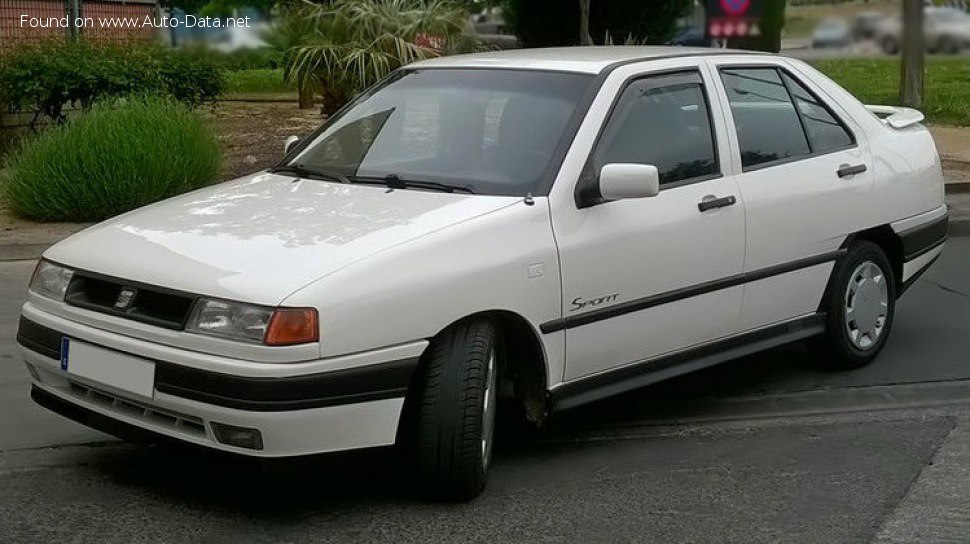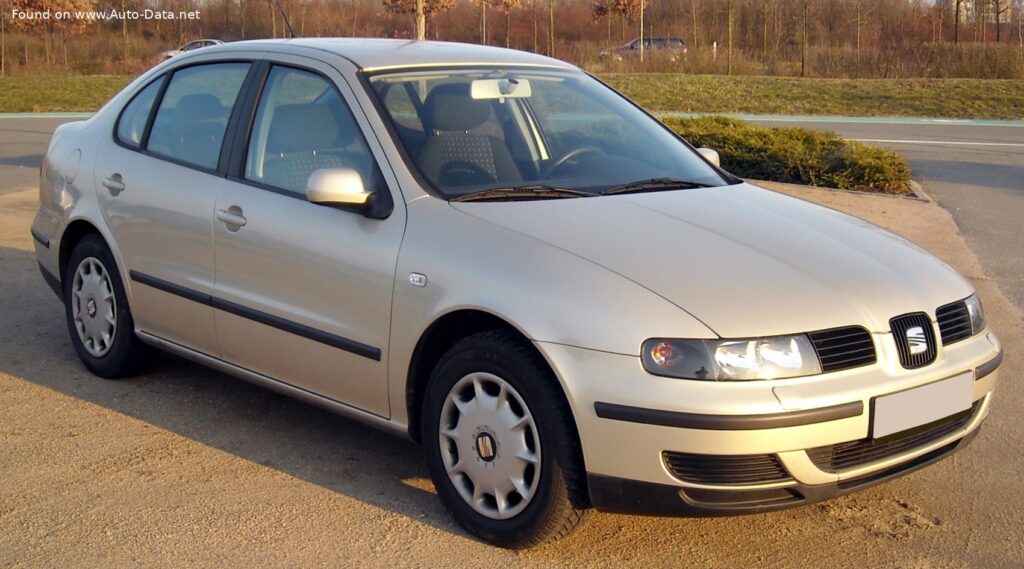
The SEAT Toledo II (1M2), specifically the 1.9 TDI 90 horsepower variant, represents a significant model in SEAT’s lineup during the late 1990s and early 2000s. Introduced in September 1999 and continuing in production until July 2004, the Toledo II was SEAT’s offering in the compact sedan segment, primarily aimed at the European market. While not officially sold in the United States, understanding its specifications and characteristics provides insight into the engineering and automotive trends of the period. The Toledo II was a key part of SEAT’s strategy to establish itself as a modern, independent automaker under the Volkswagen Group umbrella, offering a practical and relatively affordable alternative to more established brands.
SEAT Toledo II (1M2) 1.9 TDI: A Detailed Overview
The Toledo II marked a departure from its predecessor, moving towards a more conventional sedan design. It shared its platform with the Volkswagen Bora (Jetta in North America) and the Audi A3, benefiting from the Volkswagen Group’s modular construction techniques. This platform sharing allowed SEAT to offer a competitive vehicle with a reasonable price point. The 1.9 TDI engine was a cornerstone of SEAT’s diesel offerings during this era, known for its fuel efficiency and robust reliability. The Toledo II aimed to provide a balance between practicality, comfort, and driving dynamics, appealing to families and individuals seeking a versatile vehicle.
Engine & Performance
The heart of the Toledo II 1.9 TDI is its 1.9-liter, inline-four cylinder diesel engine, designated the ALH engine code. This engine produces 90 horsepower at 4000 rpm and 202 Nm (148.99 lb.-ft.) of torque at 1900 rpm. The engine utilizes direct fuel injection and a turbocharger with an intercooler, contributing to its efficiency and torque output. The power-to-weight ratio is 13.8 kg/Hp, or 72.3 Hp/tonne, while the torque-to-weight ratio is 6.2 kg/Nm, or 162.2 Nm/tonne. Acceleration from 0 to 100 km/h (0-62 mph) takes approximately 13 seconds, and 0 to 60 mph is achieved in around 12.4 seconds. The top speed is rated at 180 km/h (111.85 mph). Fuel economy is a strong point, with urban consumption at 6.7 l/100 km (35.1 US mpg), and extra-urban consumption at 4.2 l/100 km (56 US mpg). These figures reflect the efficiency gains achieved through diesel technology and turbocharging.
Design & Features
The SEAT Toledo II is a four-door, five-seat sedan with a traditional three-box design. Its styling was relatively conservative for the era, prioritizing practicality and a clean aesthetic. The interior offered a functional layout with a focus on ergonomics. Standard features included power steering, front disc brakes, and rear disc brakes, along with an Anti-lock Braking System (ABS) for enhanced safety. The vehicle’s dimensions are 4439 mm (174.76 in) in length, 1742 mm (68.58 in) in width, and 1436 mm (56.54 in) in height, with a wheelbase of 2513 mm (98.94 in). The trunk offers a minimum capacity of 500 liters (17.66 cu. ft.), providing ample space for luggage and cargo. The Toledo II’s suspension utilizes a spring strut setup at the front and a coil spring arrangement at the rear, offering a comfortable ride quality. The steering system is a rack and pinion type with hydraulic assistance.
Technical Specifications
| Brand | Seat |
| Model | Toledo |
| Generation | Toledo II (1M2) |
| Type (Engine) | 1.9 TDI (90 Hp) |
| Start of production | September, 1999 |
| End of production | July, 2004 |
| Powertrain Architecture | Internal Combustion engine |
| Body type | Sedan |
| Seats | 5 |
| Doors | 4 |
| Fuel consumption (urban) | 6.7 l/100 km (35.1 US mpg) |
| Fuel consumption (extra urban) | 4.2 l/100 km (56 US mpg) |
| Fuel Type | Diesel |
| Acceleration 0 – 100 km/h | 13 sec |
| Acceleration 0 – 62 mph | 13 sec |
| Acceleration 0 – 60 mph | 12.4 sec |
| Maximum speed | 180 km/h (111.85 mph) |
| Weight-to-power ratio | 13.8 kg/Hp |
| Weight-to-torque ratio | 6.2 kg/Nm |
| Power | 90 Hp @ 4000 rpm |
| Torque | 202 Nm @ 1900 rpm (148.99 lb.-ft. @ 1900 rpm) |
| Engine layout | Front, Transverse |
| Engine Model/Code | ALH |
| Engine displacement | 1896 cm3 (115.7 cu. in.) |
| Number of cylinders | 4 |
| Engine configuration | Inline |
| Cylinder Bore | 79.5 mm (3.13 in.) |
| Piston Stroke | 95.5 mm (3.76 in.) |
| Compression ratio | 19.5:1 |
| Number of valves per cylinder | 2 |
| Fuel injection system | Direct injection |
| Engine aspiration | Turbocharger, Intercooler |
| Valvetrain | OHC |
| Engine oil capacity | 4.3 l (4.54 US qt | 3.78 UK qt) |
| Coolant | 6.8 l (7.19 US qt | 5.98 UK qt) |
| Kerb Weight | 1245 kg (2744.76 lbs.) |
| Max. weight | 1770 kg (3902.18 lbs.) |
| Max load | 525 kg (1157.43 lbs.) |
| Trunk (boot) space – minimum | 500 l (17.66 cu. ft.) |
| Fuel tank capacity | 55 l (14.53 US gal | 12.1 UK gal) |
| Length | 4439 mm (174.76 in.) |
| Width | 1742 mm (68.58 in.) |
| Height | 1436 mm (56.54 in.) |
| Wheelbase | 2513 mm (98.94 in.) |
| Front track | 1513 mm (59.57 in.) |
| Rear (Back) track | 1492 mm (58.74 in.) |
| Drivetrain Architecture | Front wheel drive |
| Number of gears and type of gearbox | 5 gears, manual transmission |
| Front suspension | Spring Strut |
| Rear suspension | Coil spring |
| Front brakes | Disc |
| Rear brakes | Disc |
| Assisting systems | ABS (Anti-lock braking system) |
| Steering type | Steering rack and pinion |
| Power steering | Hydraulic Steering |
| Tires size | 195/65 R15 |
In conclusion, the SEAT Toledo II 1.9 TDI (90 Hp) was a practical and efficient sedan that played a significant role in SEAT’s development as a modern automaker. While not available in the US market, its technical specifications and design reflect the automotive engineering trends of the late 1990s and early 2000s, particularly the growing popularity of diesel engines and the emphasis on fuel efficiency.