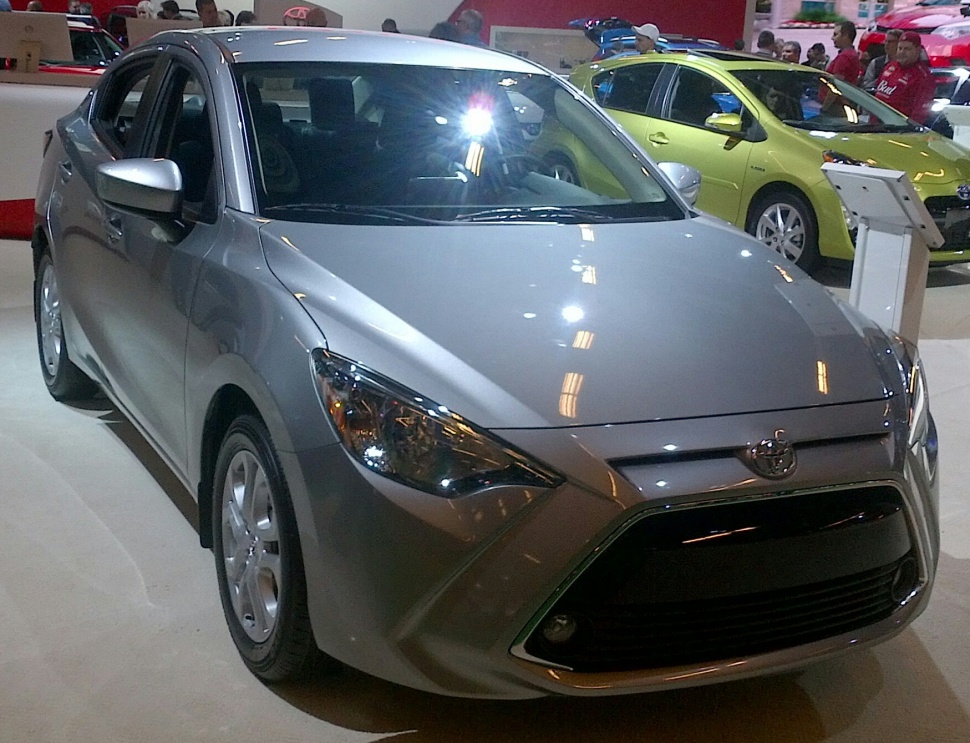
The Toyota Yaris iA, produced from 2016 to 2018, represents a unique chapter in the Yaris lineage, particularly for the North American market. While the Yaris nameplate has a long history globally, the iA was a rebadged version of the Mazda2, a result of collaborative engineering between Toyota and Mazda. This compact sedan aimed to provide an affordable, fuel-efficient, and well-equipped option in the subcompact segment, appealing to first-time buyers and those seeking economical transportation. The 1.5-liter engine, paired with an automatic transmission, delivered a balance of performance and efficiency, making the Yaris iA a practical choice for urban driving.
Toyota Yaris iA: A Collaborative Effort
The Yaris iA’s origins lie in a partnership between Toyota and Mazda. Facing increasing development costs and a desire to broaden their respective lineups, the two manufacturers agreed to share platforms and technologies. The Mazda2, already a well-regarded subcompact, served as the basis for the Yaris iA. Toyota took over production and sales of the vehicle in North America, branding it as a Yaris to leverage the established brand recognition. This strategy allowed Toyota to offer a competitive subcompact sedan without the extensive investment of developing a completely new model. The Yaris iA was discontinued after the 2018 model year, with Toyota subsequently introducing a redesigned Yaris for the 2020 model year, built on the Toyota New Global Architecture (TNGA) platform.
Engine & Performance
The Toyota Yaris iA is powered by a 1.5-liter inline-four cylinder gasoline engine, designated as the P5 engine code. This naturally aspirated engine produces 106 horsepower at 6000 rpm and 140 Nm (103.26 lb.-ft.) of torque at 4000 rpm. The engine features direct fuel injection and a double overhead camshaft (DOHC) valvetrain with Variable Valve Timing-intelligence (VVT-i), optimizing both power delivery and fuel efficiency. Power is delivered to the front wheels via a six-speed automatic transmission. The Yaris iA achieves a combined fuel economy of 6.7 l/100 km (35.1 US mpg, 42.2 UK mpg, 14.9 km/l), making it an economical choice for daily commuting. The weight-to-power ratio of 10.3 kg/Hp and a weight-to-torque ratio of 7.8 kg/Nm contribute to a responsive driving experience, despite its modest power output. The engine’s 70.9 Hp/l power-to-liter ratio demonstrates a relatively efficient design for its class.
Design & Features
The Toyota Yaris iA is a four-door sedan with a relatively compact footprint, measuring 4361 mm (171.69 in.) in length and 1694 mm (66.69 in.) in width. It offers seating for five passengers and provides 382 liters (13.49 cu. ft.) of trunk space. The exterior design, inherited from the Mazda2, is characterized by a sleek profile and a sporty front fascia. Inside, the Yaris iA features a straightforward and functional interior layout. Standard features included a touchscreen infotainment system, Bluetooth connectivity, a rearview camera, and automatic emergency braking. Safety was a key focus, with the Yaris iA earning favorable safety ratings. The McPherson strut front suspension and torsion beam rear suspension provide a comfortable ride quality, while the electric power steering offers light and precise handling. The vehicle’s drag coefficient of 0.30 contributes to its fuel efficiency.
Technical Specifications
| Brand | Toyota |
| Model | Yaris iA |
| Generation | Yaris iA |
| Type (Engine) | 1.5 (106 Hp) Automatic |
| Start of production | August, 2016 |
| End of production | 2018 |
| Powertrain Architecture | Internal Combustion engine |
| Body type | Sedan |
| Seats | 5 |
| Doors | 4 |
| Fuel consumption (urban) | 7.4 l/100 km (31.8 US mpg, 38.2 UK mpg, 13.5 km/l) |
| Fuel consumption (extra urban) | 5.9 l/100 km (39.9 US mpg, 47.9 UK mpg, 16.9 km/l) |
| Fuel consumption (combined) | 6.7 l/100 km (35.1 US mpg, 42.2 UK mpg, 14.9 km/l) |
| Fuel Type | Petrol (Gasoline) |
| Weight-to-power ratio | 10.3 kg/Hp |
| Weight-to-torque ratio | 7.8 kg/Nm |
| Power | 106 Hp @ 6000 rpm |
| Power per litre | 70.9 Hp/l |
| Torque | 140 Nm @ 4000 rpm (103.26 lb.-ft. @ 4000 rpm) |
| Engine layout | Front, Transverse |
| Engine Model/Code | P5 |
| Engine displacement | 1496 cm3 (91.29 cu. in.) |
| Number of cylinders | 4 |
| Engine configuration | Inline |
| Cylinder Bore | 76 mm (2.99 in.) |
| Piston Stroke | 82.6 mm (3.25 in.) |
| Compression ratio | 12:1 |
| Number of valves per cylinder | 4 |
| Fuel injection system | Direct injection |
| Engine aspiration | Naturally aspirated engine |
| Valvetrain | DOHC, VVT-i |
| Engine oil capacity | 4.2 l (4.44 US qt | 3.7 UK qt) |
| Coolant | 5.6 l (5.92 US qt | 4.93 UK qt) |
| Kerb Weight | 1096 kg (2416.27 lbs.) |
| Trunk (boot) space (minimum) | 382 l (13.49 cu. ft.) |
| Fuel tank capacity | 44 l (11.62 US gal | 9.68 UK gal) |
| Length | 4361 mm (171.69 in.) |
| Width | 1694 mm (66.69 in.) |
| Height | 1486 mm (58.5 in.) |
| Wheelbase | 2570 mm (101.18 in.) |
| Front track | 1496 mm (58.9 in.) |
| Rear (Back) track | 1486 mm (58.5 in.) |
| Ride height (ground clearance) | 140 mm (5.51 in.) |
| Drag coefficient (Cd) | 0.30 |
| Minimum turning circle (turning diameter) | 9.8 m (32.15 ft.) |
| Drivetrain Architecture | Front wheel drive, Internal Combustion engine |
| Drive wheel | Front wheel drive |
| Number of gears and type of gearbox | 6 gears, automatic transmission |
| Front suspension | Independent, type McPherson with coil spring and anti-roll bar |
| Rear suspension | Torsion |
| Front brakes | Ventilated discs |
| Rear brakes | Drum |
| Assisting systems | ABS (Anti-lock braking system) |
| Steering type | Steering rack and pinion |
| Power steering | Electric Steering |
| Tires size | 185/60 R16 |
| Wheel rims size | 16 |
The Toyota Yaris iA, though short-lived in its original form, offered a compelling package of affordability, efficiency, and features. Its collaborative development with Mazda resulted in a well-rounded subcompact sedan that provided a viable alternative for budget-conscious buyers. While no longer in production, the Yaris iA remains a noteworthy example of automotive partnerships and a testament to the Mazda2’s inherent quality.